China Top Router CNC Manufacturers for Global Buyers?

Choosing a router CNC from China requires more than comparing prices on a supplier website. Global buyers must examine engineering quality, production consistency, service capability, and export experience. A machine may look impressive in photographs. Its real value appears during installation, calibration, and daily cutting.

Peter Zelinski, editor-in-chief of Modern Machine Shop, once noted, “CNC is not a technology that is going away.” His observation remains relevant for woodworkers, sign makers, furniture factories, and industrial manufacturers. A reliable router CNC can improve repeatability, reduce manual errors, and support complex designs. However, automation does not remove every risk. Poor software settings, weak dust extraction, or unsuitable tooling can still damage materials and waste hours.

China has become a major source of CNC routing equipment. Its manufacturers offer diverse configurations, including three-axis, four-axis, and multi-spindle machines. Buyers can also find options for wood, acrylic, aluminum, composites, and other permitted materials. Yet the market is uneven. Some factories focus on durable systems and documented testing. Others compete mainly through low quotations.

This guide examines China’s leading router CNC manufacturers for global buyers. It considers machine structure, spindle performance, control systems, customization, inspection procedures, training, spare parts, and after-sales support. Practical details matter. Ask about bed thickness, positioning accuracy, electrical standards, packaging, and response times.

No ranking is perfect. Supplier capabilities can change. Even experienced purchasers may overlook maintenance costs or software compatibility. Careful verification remains essential. Factory videos help, but live demonstrations and customer references provide stronger evidence. With disciplined evaluation, buyers can identify a router CNC partner that supports stable production rather than creating another expensive problem.
China Top Router CNC Manufacturers for Global Buyers?

China’s Router CNC Manufacturing Industry and Global Market Role

China’s router CNC manufacturing industry has become a major part of the global machinery supply chain. Its strength comes from dense component networks, skilled technicians, and flexible production capacity. Manufacturers can build machines for woodworking, signage, plastics, and light metal applications. They also support different voltages, bed sizes, spindle powers, and software requirements. For global buyers, this flexibility can reduce development time and equipment costs.

Practical sourcing experience shows that price alone is a weak selection method. Buyers should inspect frame welding, guide rails, spindle cooling, control systems, and electrical documentation. A factory audit can reveal details that photographs hide. Ask for cutting samples using your own material. Check repeatability after several work cycles. Confirm export packaging, installation support, spare parts, and response times. Certificates matter, but testing and traceable records matter more.

Tips: Request a machine video under real load. Compare tolerances, not only specifications. Clarify local safety and electrical requirements before payment. China’s industry is capable, but it is not flawless. Some catalogs look polished while after-sales systems remain uncertain. Even experienced buyers can overlook training needs or software compatibility. A careful contract should define acceptance tests, delivery conditions, warranty duties, and replacement procedures. This extra work may feel slow. It often prevents expensive surprises.

Key Types of Router CNC Machines Made in China

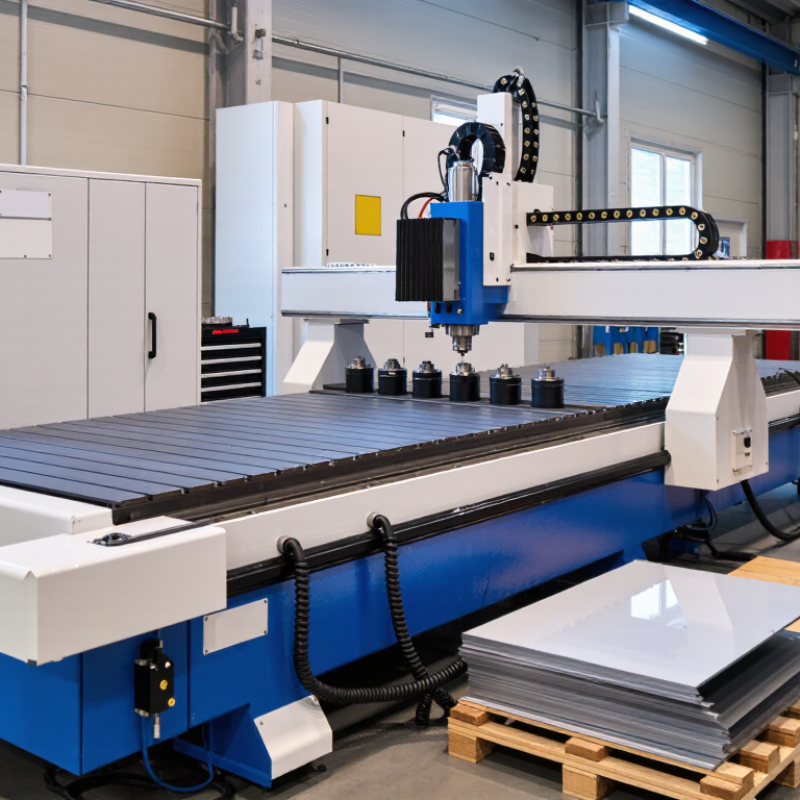
China’s router CNC industry covers several machine types for different production needs. Three-axis routers remain the practical entry point for cutting wood, plastics, foam, and composite sheets. They move along X, Y, and Z axes, making them suitable for cabinets, signs, and interior panels. Four-axis models add rotary cutting, which helps produce columns, chair legs, and other curved parts. Five-axis routers offer more complex tool angles, but require stronger programming skills and stricter calibration.

Automatic tool-change routers suit workshops with varied jobs and shorter setup times. Nested-based systems improve sheet utilization by arranging multiple parts before cutting. This can reduce material waste, although results depend heavily on software and operator experience.

Heavy-duty configurations may process aluminum and other non-ferrous materials, but buyers should check spindle power, frame rigidity, cooling, and dust control rather than trusting advertised speed.

MarketsandMarkets reported that the global CNC machine market could grow from about USD 83.6 billion in 2023 to USD 112.7 billion by 2028. Its findings show rising demand for automation and flexible machining. Grand View Research also identifies automation, digital control, and customized production as major industry drivers. These figures cover CNC machines broadly, not routers alone. That difference matters.

A suitable Chinese router CNC should match material thickness, daily workload, tolerance requirements, service access, and operator training. A lower purchase price may become expensive when alignment drifts or replacement parts arrive slowly. Perhaps the most overlooked specification is local technical support.

How to Evaluate Leading Chinese Router CNC Manufacturers

Evaluating Leading Chinese Router CNC Manufacturers

A serious evaluation starts with the machine’s intended workload, not its advertised price. Define materials, sheet sizes, cutting depth, tolerance, and daily production hours. Ask for complete technical drawings, component specifications, and a written quotation. A clear document reveals more than a polished showroom. Check the frame thickness, gantry structure, spindle power, drive system, and control software. These details affect vibration, accuracy, and maintenance.

Request a live cutting test using your actual material and file. Observe edge quality, dust collection, tool changes, noise, and restart performance after an emergency stop. Ask for test videos with dates and machine identification. Better still, arrange an independent factory inspection. Review incoming-material checks, assembly records, calibration reports, and final testing procedures. Reliable manufacturers should explain how rejected parts are handled. They should not hide behind vague quality promises.

Export experience also matters. Verify packaging methods, manuals, spare-parts availability, remote training, and response times. Ask for references from buyers with similar production needs, where permitted. Certifications should match the destination market and the exact machine model. Do not accept copied certificates or unclear translations. No checklist is perfect. A polished factory can still have weak after-sales support. My own evaluation can miss hidden production pressure, so repeated communication matters. Notice whether technical answers stay consistent. Small contradictions deserve attention.

How to Evaluate Leading Chinese Router CNC Manufacturers

This buyer scorecard assigns a 100-point evaluation framework to the factors that most directly affect CNC router purchasing decisions: machine performance, quality control, compliance, support, delivery, and total cost of ownership. Buyers can adjust the weights according to their materials, production volume, and target market.

Manufacturing Standards, Quality Control, and Customization Options

China Top Router CNC Manufacturers for Global Buyers?

Manufacturing standards reveal more than a polished factory tour. ISO’s 2023 Survey recorded 1,265,216 ISO 9001 certificates across 189 economies. Buyers should still verify how each manufacturer applies that system. Ask for incoming inspection records, spindle runout results, gantry squareness checks, and repeatability data. ISO 230-2 testing can support positioning claims, while IEC 60204-1 helps assess machine electrical safety. A certificate alone is not proof.

Quality control becomes visible in small details. Inspectors should measure ball-screw backlash, tool-holder runout, vacuum-table leakage, and sample-cut accuracy. Request dated reports, not only photographs. The International Federation of Robotics reported 276,288 industrial robot installations in China during 2023, representing about 51% of global installations. This signals strong automation capability, but CNC router quality still depends on calibration discipline and operator training. Numbers can impress.

Customization should match the material and workflow. Buyers can specify bed dimensions, spindle power, automatic tool changing, dust extraction, vacuum zones, rotary axes, and controller language. Aluminum cutting needs rigidity and chip management. Wood production may prioritize faster tool changes and stronger dust collection. Electrical configuration must suit the destination market. I would also request a test piece using the buyer’s actual material. It exposes weak acceleration settings, poor clamping, or uneven finishing. Mistakes happen. The manufacturer’s response matters most.

Purchasing, Exporting, and After-Sales Support for Global Buyers

China Top Router CNC Manufacturers for Global Buyers

Purchasing a router CNC from China requires more than comparing catalog prices. Experienced buyers inspect spindle power, working-table accuracy, control systems, and available materials. Request a video test using your own files or a similar sample. This reveals cutting speed, edge quality, dust collection, and operator access. Ask for inspection records, electrical specifications, packing photos, and a clear production schedule. Small details matter.

Export preparation should begin before the deposit is paid. Confirm the agreed Incoterm, crate dimensions, machine weight, customs documents, and destination voltage. The supplier should provide a commercial invoice, packing list, and applicable compliance documents. Use independent inspection when the order value is significant. It costs more, but it may expose loose cables, damaged panels, or missing accessories. Freight planning also needs realistic time allowances. Port delays happen.

After-sales support is often where a supplier proves its reliability. Require installation guidance, operating manuals, wiring diagrams, and remote troubleshooting procedures. Confirm response times, spare-part availability, warranty coverage, and service language. A useful supplier can diagnose an alarm from photos, parameter files, and short videos. However, no supplier gets every detail right. Buyers should record machine settings and train operators carefully. A rushed handover creates avoidable faults. Clear communication remains essential when production is already waiting.