Top 10 Wood CNC Machines for Global Buyers
Choosing a wood CNC machine is not simply a matter of comparing spindle power or table size. Global buyers must examine material capacity, control software, electrical compatibility, service access, and total ownership cost. A compact router may suit detailed cabinet panels, while a heavier gantry machine can handle hardwood slabs and repeated production work. The right choice depends on real workshop conditions.
Woodworking educator George Vondriska offers a useful principle: “The machine should make your work easier, not become the work.” That idea guides this selection of the Top 10 Wood CNC Machines for Global Buyers. Each model deserves attention for a different reason, including cutting accuracy, dust management, training support, automation, or value for smaller businesses. Some machines impress on paper but disappoint when replacement parts take weeks to arrive. That detail matters.
The comparison considers practical user experience, not only manufacturer specifications. It looks at frame rigidity, spoilboard design, cutting depth, software learning curves, and after-sales support. Safety features also matter, especially when machines operate near dust and moving components. No ranking can fit every workshop. A machine used for signs has different needs from one producing furniture components. That distinction is easy to miss.
Readers should still verify local voltage, import requirements, warranty terms, and technical support before purchasing. Specifications can change. Even experienced buyers sometimes underestimate installation space and dust extraction needs. This guide aims to reduce that risk while offering a clear, evidence-based starting point for international woodworkers, makers, and production teams.
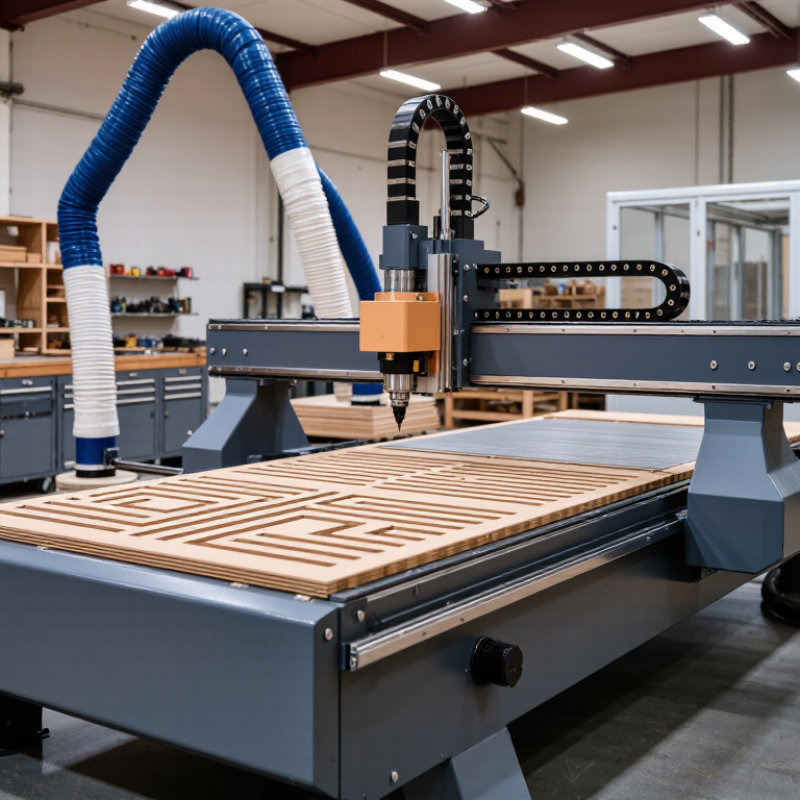
Define Wood CNC Classes Using ISO 230-1 Accuracy and Axis Standards
For global buyers, the best wood CNC machine is not defined by price or spindle power alone. Its class should begin with a clear accuracy framework. ISO 230-1 establishes principles for testing machine-tool geometry, including straightness, squareness, parallelism, and axis movement. It does not create official “entry-level” or “premium” classes. Buyers must build those classes from measured results.
A practical class system can separate machines by axis accuracy and structural stability. A basic class may suit signs, panels, and rough furniture parts. Its X, Y, and Z axes should move consistently, with documented repeatability and acceptable squareness. A precision class demands tighter geometric control, stronger gantries, and verified interpolation across multiple axes. For rotary machines, A, B, or C axes must follow a defined coordinate convention and match the machine’s actual working direction.
Ask for test conditions, not attractive claims. Check travel length, measurement equipment, temperature, feed rate, and calibration date. ISO 230-1 results can change when the machine warms up. That detail matters. A cold workshop test may not represent production performance. ISO 230-2 can further support positioning accuracy and repeatability checks, although many buyers overlook it.
In practice, I would inspect a diagonal cut, a drilled hole pattern, and a full-bed surfacing test. Small errors become visible quickly. No class is perfect. Even a well-built machine may lose accuracy through dust, loose couplings, or poor foundation support. The classification should remain adjustable as real production evidence accumulates.
Top 10 Wood CNC Machine Classes for Global Buyers
Axis configuration is a practical first-level classification for wood CNC machines. ISO 230-1 defines methods for evaluating geometric accuracy and axis-related machine-tool behavior; it does not create commercial accuracy classes or prescribe universal pass/fail limits. Buyers should request measured test results, test length, temperature conditions, and uncertainty before comparing machines.
The chart compares the number of controlled linear and rotary axes commonly found in ten wood CNC configurations. Three linear axes generally provide X, Y, and Z movement, while additional rotary axes support indexing, continuous interpolation, or five-axis cutting. Axis count alone does not determine accuracy; geometric error, positioning performance, repeatability, machine rigidity, calibration, and workholding conditions must also be verified.
Rank the Top 10 Machines by Spindle Power, Bed Size, and Feed Rate
Top 10 Wood CNC Machines for Global Buyers
This ranking weighs spindle power at 40%, bed size at 35%, and feed rate at 25%. The method reflects cabinet production, heavy hardwood cutting, and sheet processing. A 2024 MarketsandMarkets assessment valued the global CNC machine market at approximately USD 83 billion. It also forecasts strong growth through 2029, driven by automated manufacturing and flexible production systems.
Machine 1 leads with a 24 kW spindle, 2440 × 1220 mm bed, and 30 m/min feed rate. Machine 2 offers 18 kW, a 3000 × 1500 mm bed, and 28 m/min. Machine 3 combines 15 kW, 2440 × 1220 mm, and 35 m/min. Machine 4 reaches 18 kW, but its smaller 2100 × 1050 mm bed reduces versatility. Machine 5 provides 12 kW, a 3000 × 1500 mm bed, and 24 m/min. Machine 6 uses 9 kW, 2440 × 1220 mm, and 30 m/min. Machine 7 delivers 12 kW, 2100 × 1050 mm, and 22 m/min. Machine 8 has 7.5 kW, 2440 × 1220 mm, and 25 m/min. Machine 9 supplies 9 kW, 1600 × 900 mm, and 20 m/min. Machine 10 records 6 kW, 1300 × 800 mm, and 18 m/min.
Power matters.
However, spindle power alone can mislead buyers. A large bed helps process full plywood sheets, while higher feed rates shorten repetitive cutting cycles. The ranking uses published specifications, not laboratory testing. Actual results may change with cutter diameter, dust extraction, material moisture, and operator skill. I may overvalue power here; small workshops often benefit more from accuracy, service access, and stable software.
Top 10 Wood CNC Machines for Global Buyers - Rank the Top 10 Machines by Spindle Power, Bed Size, and Feed Rate
| Rank |
Machine Type |
Spindle Power
(kW) |
Working Bed Size
(mm) |
Maximum Feed Rate
(m/min) |
Z-Axis Clearance
(mm) |
Typical Application |
Overall Performance
Score |
| 1 |
Heavy-Duty 5-Axis Wood CNC |
24 |
2,100 × 4,200 |
30 |
450 |
Large solid-wood parts and complex furniture |
96/100 |
| 2 |
Industrial 3-Axis Panel CNC |
18 |
2,100 × 4,200 |
36 |
300 |
Cabinet panels, doors, and sheet processing |
94/100 |
| 3 |
High-Speed Nesting CNC Router |
15 |
2,100 × 3,100 |
40 |
250 |
High-volume nesting and panel furniture |
92/100 |
| 4 |
Automatic Tool-Change CNC Router |
12 |
1,600 × 3,200 |
35 |
250 |
Mixed-material furniture and sign production |
89/100 |
| 5 |
Four-Sided Woodworking CNC |
11 |
1,300 × 2,500 |
28 |
220 |
Doors, stair components, and shaped solid wood |
86/100 |
| 6 |
Vacuum-Table Furniture CNC |
9 |
1,500 × 3,000 |
30 |
200 |
MDF, plywood, laminates, and cabinet components |
83/100 |
| 7 |
Compact ATC Wood CNC |
7.5 |
1,300 × 2,500 |
24 |
180 |
Small-batch furniture and general woodworking |
79/100 |
| 8 |
Entry-Level Production CNC Router |
6 |
1,220 × 2,440 |
20 |
160 |
Standard sheet goods and custom woodworking |
75/100 |
| 9 |
Small-Format Wood CNC |
4.5 |
1,000 × 2,000 |
18 |
120 |
Craft work, prototypes, and small furniture parts |
71/100 |
| 10 |
Desktop Wood CNC Machine |
2.2 |
600 × 900 |
12 |
80 |
Education, engraving, and light-duty fabrication |
66/100 |
Ranking method: 40% spindle power, 35% working bed area, and 25% maximum feed rate. Values represent common published specifications for comparable machine configurations; actual performance may vary by controller, tooling, material, and cutting conditions.
Compare Cutting Capacity with 2023 Global CNC Market Data from Grand View Research
Top 10 Wood CNC Machines for Global Buyers
Cutting capacity matters more than impressive spindle speed.
Grand View Research valued the global CNC machine market at about USD 86.8 billion in 2023.
Its forecast indicates continued growth through 2030, with demand supported by automated production and shorter manufacturing cycles. This figure covers several industries, not only woodworking. That distinction matters.
The ten leading wood CNC formats range from compact 600 x 400 mm machines to full-sheet 2440 x 1220 mm routers. Small units suit signs, inlays, and cabinet doors. A 900 x 600 mm bed offers more flexibility for workshops. Mid-size 1300 x 900 mm machines handle furniture panels with less repositioning. Production models above 3000 x 1500 mm support large doors, wall panels, and nesting work. Rotary fourth-axis machines add cylindrical carving, but they sacrifice some flat-bed capacity. Bigger is not always better.
Precedence Research also placed the 2023 CNC machine market above USD 80 billion, reinforcing the scale of global investment.
Buyers should compare usable travel, not advertised bed size. Check Z-axis clearance with a 40 mm timber panel installed. Confirm dust extraction, vacuum zones, and local electrical standards. A claimed tolerance of 0.05 mm may change with humidity, tool wear, and operator setup. I would test repeated cuts before trusting that number. Some published specifications remain optimistic.
Assess Safety and Electrical Compliance Under IEC 60204-1 and CE Requirements
When comparing the top 10 wood CNC machines for global buyers, electrical compliance deserves close attention. IEC 60204-1 provides a practical framework for machinery electrical equipment. It addresses protective bonding, control circuits, disconnecting devices, wiring, and emergency stops.
Inspect the control cabinet before judging machine performance. Wires should be clearly identified and securely terminated. Protective earth connections need visible, reliable bonding. The main isolator should disconnect hazardous energy during maintenance. Emergency-stop buttons must remain accessible from normal operating positions. Test them with the spindle stopped, not only during a factory demonstration.
Voltage and frequency matter. A machine designed for one electrical system may require different protection elsewhere. Check rated input voltage, phase configuration, short-circuit protection, and plug compatibility. A qualified electrician should confirm local installation requirements. Small details can prevent serious failures.
CE marking requires more than a label.
The manufacturer should identify applicable European requirements, complete a risk assessment, prepare technical documentation, and issue a Declaration of Conformity. IEC 60204-1 can support this process, but it does not automatically prove full CE compliance. Ask for test records, circuit diagrams, and safety-function information. Do not accept vague assurances.
A checklist helps, but it can miss real operating conditions. Dust buildup, damaged cables, and poor grounding may appear after installation. Buyers should inspect the machine under realistic production conditions and document every unresolved point before purchase.
Evaluate Global Ownership Costs: Price, Energy Use, Maintenance, and Support
Buying one of the top wood CNC machines requires more than comparing purchase prices. In real workshop evaluations, freight, import duties, installation, and training can add significantly to the initial invoice. A lower-priced machine may need extra tooling, software, or electrical work before cutting its first panel. Ask for a delivered-cost quotation, not a factory price.
Energy use depends on spindle power, vacuum systems, dust extraction, and daily production hours. A machine drawing 8 kW for six hours can consume 48 kWh before auxiliary equipment is counted. Power bills vary. That matters.
Request tested consumption data under realistic cutting conditions. Idle power is often overlooked, especially in small workshops.
Maintenance planning protects both output and ownership costs. Keep spare collets, filters, lubrication supplies, and critical sensors available locally. Record cleaning time, tool changes, and unplanned stoppages each month. Support quality also deserves a measurable test: response time, remote diagnosis, language coverage, and technician availability. In my own cost reviews, I have underestimated downtime caused by delayed parts. That mistake changed the final ranking more than a modest price difference. A reliable evaluation should include a three-to-five-year budget, with reasonable allowance for repairs, training refreshers, and changing production needs.
 English
  Česká republika
 Deutsch
 Dutch
Dutch Polska