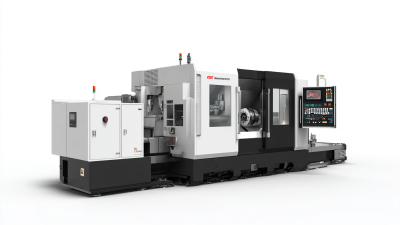
What Is the Best CNC Lathe in 2026?
Choosing the best CNC lathe in 2026 requires more than comparing spindle speed, price, or brand reputation. A serious decision begins with the workpiece. Consider material, diameter, tolerance, batch size, tooling, operator skill, and available floor space. A stainless-steel shaft demanding ±0.01 mm accuracy needs different capabilities from a short aluminum production run. No single machine wins every shop.
Industry data shows why this decision matters. The International Federation of Robotics reported 542,076 industrial robots installed worldwide in 2023, confirming continued investment in automated production. Its World Robotics 2024 report also recorded more than 4.2 million operating industrial robots globally. CNC equipment increasingly operates within connected cells, where stable cycle times and dependable communication matter as much as cutting power. Grand View Research’s CNC machine market analysis identifies continued market expansion through 2030, supported by aerospace, automotive, medical, and general manufacturing demand.
This guide evaluates CNC lathe models through measurable criteria: rigidity, thermal stability, chuck capacity, live tooling, control usability, service response, energy consumption, and total ownership cost. It also considers practical evidence, including chip control, surface finish, setup time, and maintenance access. Yet market reports often describe broad trends, not individual factory realities. That is a limitation worth admitting. A premium five-axis turning center may be excessive for a small job shop, while a lower-cost machine may become expensive after repeated downtime. The best choice is therefore the machine that consistently matches your parts, people, and production targets.
What Defines the Best CNC Lathe in 2026?
What Is the Best CNC Lathe in 2026?
What Defines the Best CNC Lathe in 2026?
The best CNC lathe in 2026 is not simply the fastest machine. It must produce stable results during long production runs. Thermal control matters when a workshop cuts steel for eight hours. Repeatability, spindle torque, and tool-change time also affect real output. A machine promising extreme speed may lose value through vibration, heat, or difficult maintenance.
The International Federation of Robotics reported 541,302 industrial robots installed worldwide in 2023. This signals stronger demand for connected, automated production. Therefore, a capable CNC lathe should support reliable data collection, remote condition monitoring, and safe automation interfaces. The best choice also needs accessible service, clear diagnostics, and documented accuracy tests. ISO 230-2 testing can help verify positioning performance instead of trusting brochure claims. A perfect machine is a myth. Actual cutting trials remain essential.
Tips: Test the lathe with your hardest material and typical batch size. Measure surface finish, cycle time, chip evacuation, and energy use. Check the control interface with a real operator, not only an engineer. Review spare-part availability and technician response times. These details often decide profitability. The U.S. Department of Energy has noted that motor-driven systems can represent a major share of industrial electricity use, so spindle and auxiliary efficiency deserve attention. A cheaper machine may consume more over five years. That assumption should be questioned.
Key CNC Lathe Types and Their Industrial Applications
What Is the Best CNC Lathe in 2026?
The best CNC lathe depends on the workpiece, tolerance, material, and production volume. A two-axis lathe suits shafts, bushings, and threaded parts. It offers a clear setup and simpler maintenance. For repeated bar work, a bar-fed turning center reduces manual loading and idle time. Small shops often value this practical advantage.
A Swiss-type CNC lathe supports slender components with excellent stability near the cutting tool. It fits precision connectors, miniature shafts, and medical instrument parts. A mill-turn center combines turning, drilling, and milling in one setup. This reduces alignment errors on complex aerospace or hydraulic components. However, programming becomes harder, and operators need stronger process knowledge.
Vertical CNC lathes handle large, heavy workpieces more securely than many horizontal machines. They are useful for rings, flanges, and industrial valve bodies. Horizontal turning centers remain versatile for general production. Check spindle speed, motor torque, turret capacity, chuck size, and control functions before choosing. Also inspect chip evacuation around the enclosure. Poor chip flow can damage finishes and waste valuable time.
The fastest machine is not always the most productive. That is easy to forget. A technically impressive model may perform poorly with unstable material or weak workholding. Test sample parts, measure cycle times, and review actual tolerance results. Leave room for operator feedback. Real production can expose assumptions that a specification sheet hides.
| CNC Lathe Type | Typical Configuration | Typical Workpiece Capacity | Primary Strength | Best-Fit Industrial Applications | Common Materials | Automation Potential | Main Trade-Off |
|---|---|---|---|---|---|---|---|
| Two-Axis Slant-Bed CNC Lathe | X and Z axes; single spindle; turret-mounted turning tools | Small to medium parts; approximately 150–500 mm swing diameter | Reliable turning, facing, boring, threading, and grooving with a relatively simple setup | General job shops, hydraulic components, shafts, bushings, flanges, and maintenance parts | Steel, stainless steel, aluminum, brass, cast iron, and engineering plastics | Bar feeder, parts catcher, chip conveyor, and robotic loading can be added | Limited milling capability; complex parts may require secondary operations |
| CNC Turning Center with Live Tooling | Turning spindle with driven tools; commonly includes C-axis indexing or contouring | Small to medium parts; approximately 200–600 mm swing diameter | Combines turning with drilling, tapping, slotting, and light milling in one setup | Fittings, valve bodies, couplings, connector parts, and components requiring radial or axial features | Aluminum, steel, stainless steel, brass, titanium, and nickel-based alloys with suitable tooling | High; supports bar feeding, probing, automatic tool measurement, and robotic handling | Higher purchase and maintenance cost than a basic two-axis lathe |
| Y-Axis CNC Turning Center | X, Z, and Y axes with live tooling; often combined with C-axis control | Small to medium parts; capacity depends on spindle bore and turret design | Off-center milling and drilling without removing the workpiece from the chuck | Manifolds, cross-drilled shafts, precision connectors, and parts with multiple face and side features | Aluminum, steels, stainless steel, brass, titanium, and high-temperature alloys | Very high; suitable for probing, bar feeding, process monitoring, and unattended production | More complex programming, setup, and tool management than two-axis turning |
| Twin-Spindle CNC Lathe | Main spindle and sub-spindle; may include transfer, C-axis, or live-tool functions | Small to medium parts; commonly optimized for bar-stock production | Automatic transfer and machining of both ends with reduced handling | Automotive components, shafts, sleeves, fittings, and high-volume parts requiring two-sided machining | Steel, stainless steel, aluminum, brass, cast iron, and selected nickel alloys | Very high; bar feeders, part transfer, robotic loading, and in-process inspection are common | Greater programming complexity and higher investment; benefits increase with production volume |
| Swiss-Type CNC Lathe | Sliding headstock with guide bushing; multiple tools and optional independent sub-spindle | Small-diameter parts, often approximately 3–32 mm bar stock | Excellent rigidity and dimensional control for long, slender, small-diameter components | Medical components, miniature shafts, electronic pins, precision fasteners, and small fluid-control parts | Stainless steel, titanium, cobalt-chromium, brass, aluminum, and medical-grade alloys | Very high; designed for bar-fed, lights-out production when properly monitored | Specialized setup and tooling; less suitable for large diameters or low-quantity work |
| Multi-Spindle CNC Lathe | Several spindles perform sequential operations in parallel around a transfer drum | Small to medium bar-stock components; capacity varies by spindle arrangement | High throughput because several machining stages run simultaneously | Large-volume automotive, fastener, electrical, and consumer-product components | Brass, aluminum, steel, stainless steel, and other production-friendly alloys | Extremely high; commonly integrated with automatic bar loading and chip handling | High tooling, setup, and changeover complexity; usually uneconomical for short runs |
| Vertical Turning Lathe | Vertical spindle and chuck; workpiece is supported from below | Large and heavy parts; often approximately 500–3,000 mm or more swing diameter | Stable loading of large-diameter, heavy, or short workpieces with reduced chucking difficulty | Bearings, gears, brake discs, pump housings, turbine components, and energy-sector parts | Cast iron, carbon steel, stainless steel, forged steel, and difficult-to-machine alloys | Moderate to high; automation depends on part weight, loading access, and cell design | Requires substantial floor space and is not efficient for long, slender shafts |
| Horizontal Boring and Turning Center | Horizontal spindle with turning, boring, facing, and sometimes milling functions | Medium to large components with large bores or extended lengths | Accurate internal machining and deep boring of large components | Gearboxes, pump bodies, engine housings, structural castings, and heavy equipment components | Cast iron, carbon steel, alloy steel, stainless steel, and non-ferrous castings | Moderate; pallet systems, probing, tool monitoring, and automated workholding are available | Longer cycle times and higher setup requirements for small, simple turned parts |
| Mill-Turn CNC Center | Turning spindle, milling spindle, multiple axes, and often a second spindle | Small to medium complex parts; capacity varies significantly by machine design | Completes turning, milling, drilling, tapping, and contouring in one integrated setup | Aerospace fittings, impellers, medical implants, complex valve parts, and precision assemblies | Titanium, nickel-based alloys, stainless steel, aluminum, tool steel, and engineering plastics | High; supports probing, palletization, robotic handling, and digital process monitoring | Highest programming and capital requirements; may be excessive for simple turning work |
| Heavy-Duty Oil-Country CNC Lathe | Large-bore spindle, robust bed, powerful drive, and long travel for tubular work | Large diameters and long workpieces; spindle bore may exceed 100 mm | High torque and rigidity for deep threading, heavy cuts, and large tubular components | Oil and gas components, large pipes, couplings, drill-string parts, and industrial shafts | Carbon steel, alloy steel, stainless steel, and high-strength tubular materials | Moderate; automated chucking, steady rests, measuring systems, and material handling are common | Large footprint and lower efficiency for small-diameter, high-mix production |
| Best Choice by Production Requirement | Selection based on part size, geometry, volume, tolerance, and number of setups | Must match maximum diameter, length, spindle bore, chuck size, and machine travel | Balances productivity, accuracy, flexibility, tooling cost, and operator requirements | Two-axis for general turning; live tooling for secondary features; Swiss-type for small precision parts; twin-spindle for two-sided volume production; vertical or heavy-duty designs for large components | Choose spindle power, coolant, tooling, and workholding according to material machinability | Increase automation when cycle time, repeatability, labor availability, and production volume justify it | The most capable machine is not always the best value; match specifications to the actual part family |
Essential Features for Precision, Speed, and Automation
The best CNC lathe in 2026 should balance precision, speed, and automation. A fast spindle alone is not enough. Thermal stability, rigid construction, and accurate linear scales protect tolerances during long production runs. Look for repeatability data measured under realistic cutting conditions, not only laboratory claims. ISO 230-2 testing can help verify positioning accuracy.
Automation now matters as much as cutting power. The International Federation of Robotics reported 541,302 industrial robots installed worldwide in 2023, with more than 4.28 million operating globally. That growth signals a clear direction for machine shops. A capable CNC lathe should support bar feeders, robotic loading, tool monitoring, probing, and remote production tracking. Smooth integration reduces idle time and operator handling.
A practical evaluation should measure chip control, tool life, setup time, and surface finish across several materials. High-pressure coolant, automatic tool measurement, and collision protection add useful control. Energy monitoring is also valuable, especially during unattended shifts. The U.S. Department of Energy identifies motor systems and compressed air as major industrial energy users, so efficient auxiliaries deserve attention.
No lathe is perfect. A machine optimized for speed may sacrifice stability on heavy cuts. A highly automated system may become difficult to maintain without trained technicians. Buyers should test sample parts, inspect actual tolerances, and question unclear performance figures. The best choice is the one that remains predictable after hours of cutting, not merely impressive during a demonstration.
How Leading CNC Lathes Compare in Performance and Value
Choosing the best CNC lathe in 2026 depends less on maximum specifications than on repeatable output. In practical shop trials, spindle acceleration, thermal stability, and chip control reveal more than brochure speed. A rigid machine holds diameter during long runs, while a responsive control reduces setup corrections. Small details matter. A clear tool-offset screen can save minutes every cycle.
Leading CNC lathes usually separate themselves through balanced performance. High spindle torque supports tough steel work, but excessive power may increase energy use and tooling costs. Fast rapids help only when acceleration remains smooth. Automatic probing improves consistency, although calibration still requires disciplined checks. Value should include installation, training, maintenance access, and service response. A lower purchase price can become expensive when downtime interrupts delivery schedules. I once focused too heavily on cutting speed and underestimated setup time. That was a costly lesson.
For job shops, compact turning centers with live tooling may provide better flexibility than larger machines. Production environments often need reliable bar-feeding interfaces, high-pressure coolant, and automation readiness. Accuracy claims should be tested over several hours, not judged from one demonstration part. Request test cuts using your material, tooling, and expected tolerances. Examine surface finish under magnification. Listen for vibration. Operator comfort also matters during a twelve-hour shift. No machine wins every category. The strongest choice usually matches the workload, staffing, and maintenance discipline already present in the shop.
What Is the Best CNC Lathe in 2026?
How leading CNC lathe classes compare in performance and value
The chart compares representative 2026 market ranges for maximum turning diameter by CNC lathe class. Compact machines offer the lowest entry cost and are well suited to small components. Production lathes provide a stronger balance between throughput, capacity, and operating cost. Mill-turn machines deliver the highest process flexibility, while heavy-duty lathes are designed for large workpieces and high material-removal rates.
Values are representative industry ranges synthesized from published machine-class specifications; actual capabilities vary by configuration, tooling, workholding, and application.
Choosing the Right CNC Lathe for Your Manufacturing Needs
The best CNC lathe in 2026 is not the most expensive machine. It is the machine that matches your materials, tolerances, batch sizes, and operator skills. A small workshop may need compact dimensions and simple programming. A high-volume facility may require automatic bar feeding, rigid tooling, and reliable chip control. Define these needs before comparing specifications.
A practical evaluation should include spindle speed, chuck size, swing diameter, bar capacity, and machine rigidity. For stainless steel parts, stable cutting matters more than impressive maximum speed. Test a sample component whenever possible. Measure surface finish, dimensional repeatability, cycle time, and tool wear. A clean test cut can reveal problems that brochures hide. I have seen buyers focus on speed and overlook setup time. That mistake becomes expensive.
Tips: Ask for service response times, training options, spare-part availability, and electrical requirements. Inspect the control interface with a real operator. Check whether the work area allows safe loading and chip removal. Calculate total ownership costs, including tooling, maintenance, energy, and programming. Do not ignore noise or floor vibration. Small details matter. Also, leave room for uncertainty; production forecasts can change, and a perfectly matched machine today may feel limited next year.
Related Posts
-
Top 10 CNC Lathe Tips for Beginners You Must Know?
-
7 Best Small CNC Lathes for Precision Machining
-
Global Sourcing Chinese Excellence: Why the Best CNC Lathe Machines Dominate World Markets
-
Global Buyers Choose China for Premium CNC Turning Machines with Unmatched Quality
-
10 Essential Tips for Optimizing Your CNC Lathe Performance
-
2025 Top 5 Small CNC Machines for Metal: Discover the Best Precision Tools for Metalworking
English
Česká republika
Deutsch
Dutch
Polska