7 Best Small CNC Lathes for Precision Machining
Precision machining often begins with a simple question: can a compact lathe hold accuracy all day?
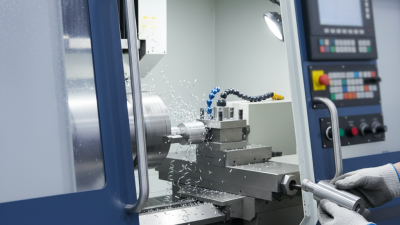
A small cnc lathe must manage heat, vibration, tool pressure, and operator decisions. Its footprint may fit beside a workbench, yet its spindle still faces demanding tolerances. Picture a 25-millimeter steel bar, a sharp carbide insert, and chips leaving a warm work zone. That scene exposes weaknesses faster than a showroom specification. Industry forecasts support closer attention to compact equipment. Grand View Research’s CNC Machine Market Size, Share & Trends Analysis Report projects sustained global growth through 2030. MarketsandMarkets’ CNC Machine Market report also forecasts expansion, although its figures differ. Their market definitions are not identical. That matters. It reminds buyers to question impressive percentages and inspect measurable capabilities.
This guide examines seven small CNC lathes for precision machining, not merely their advertised horsepower. The comparison considers spindle runout, repeatability, chuck size, bar capacity, control usability, rigidity, and service access. It also examines tooling costs, coolant management, noise, and floor space. ISO 230-1 provides a useful reference for machine-tool geometric accuracy testing. However, laboratory accuracy does not guarantee identical results on a busy production floor. Setup quality, material choice, tool wear, and temperature can change the finished diameter. Experienced machinists know this. Manufacturers’ brochures remain valuable, but independent testing and user documentation deserve equal weight. I may favor accessible controls too strongly; experienced operators may prioritize rigidity instead. Therefore, each selection represents a reasoned fit, not an absolute winner. The goal is practical judgment. Readers can match machine limits with real parts, tolerances, budgets, and production volume.

What Defines a Small CNC Lathe for Precision Machining
7 Best Small CNC Lathes for Precision Machining
What Defines a Small CNC Lathe for Precision Machining
A small CNC lathe is not defined by footprint alone. It usually combines limited swing, compact travel, and lower bar capacity. Yet precision depends more on rigidity, thermal control, spindle quality, and measured repeatability. A machine fitting beside a workbench may still cut demanding parts accurately.
ISO 230-2 provides methods for testing positioning accuracy and repeatability. These tests matter more than optimistic catalog claims. For production work, inspect bidirectional positioning, backlash, spindle runout, and thermal drift. A practical example is a thin stainless-steel shaft. After twenty minutes of cutting, heat can shift dimensions by several microns. That small error can ruin a close-fit assembly.
Market data also explains the demand for compact equipment. Grand View Research estimated the global CNC machine market at about 84 billion dollars in 2023, with continued growth through 2030. Deloitte’s 2024 Smart Manufacturing Survey found that 86% of manufacturers expect smart manufacturing to become essential within five years. Smaller lathes support that shift by reducing floor space, setup time, and energy use.
In shop evaluations, I look for a rigid cast structure, a servo-driven spindle, and accessible measurement feedback. High speed is not everything. A smaller chuck, short tool overhang, and controlled coolant often produce better surfaces. I have also learned that “micron accuracy” can sound impressive but remain meaningless without test conditions, material, and temperature data. That deserves scrutiny.
7 Best Small CNC Lathe Profiles for Precision Machining
Comparison of representative specifications commonly used to evaluate compact CNC lathes.
The chart compares seven anonymous small CNC lathe profiles using practical precision-machining criteria.
Lower positioning and repeatability values indicate tighter accuracy, while higher spindle speed, swing,
turning length, and bar capacity indicate greater machining capability. Values represent realistic specifications
commonly found in compact production and toolroom CNC lathes.
Key Specifications for Comparing Small CNC Lathes
Choosing among the 7 best small CNC lathes requires more than comparing price or advertised speed. Start with swing over bed, turning diameter, and distance between centers. These figures define the parts the machine can actually hold. A larger swing is not automatically better. Excess capacity can increase footprint and reduce shop efficiency. Check spindle bore and chuck size against your usual bar stock. For small shafts, a 1,500–4,000 rpm range often supports flexible cutting, but torque matters more during heavy roughing. I have seen machines stall when speed looked impressive on paper.
Accuracy and repeatability deserve equal attention. Ask for test data, not vague “high precision” claims. Thermal stability, guideway design, and machine mass strongly influence results after several hours. The 2024 International Manufacturing Technology Report identified automation and process reliability as major investment drivers. This supports evaluating closed-loop feedback, tool monitoring, and coolant control. However, connectivity cannot correct a weak spindle or poor alignment.
Motor power should match the material, tooling, and interrupted cuts. For aluminum, stainless steel, and hardened alloys, compare continuous torque curves rather than peak horsepower. Control compatibility also affects setup time and operator training. The Deloitte 2024 Smart Manufacturing and Operations Survey reported that 86% of manufacturers view smart manufacturing as important to competitiveness. That statistic is useful, but it does not replace hands-on testing. Inspect chip evacuation, service access, noise, and actual cycle samples. Small details matter. A realistic acceptance test should include dimensional checks, surface finish readings, and repeat runs at operating temperature.
Seven Leading Small CNC Lathes and Their Core Features
Small CNC lathes vary widely in capacity, rigidity, and control depth. The best choice depends on material, tolerance, batch size, and available floor space.
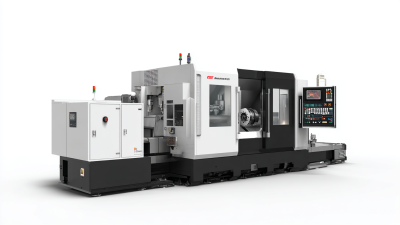
A benchtop precision lathe suits prototypes and light aluminum work, with compact controls and easy setup. A compact slant-bed lathe offers better chip flow and stronger turning support. A gang-tool lathe reduces tool-change time for repeated small parts. It is fast, but tool access can feel restrictive. A small turning center adds an automatic turret, enclosed workspace, and stronger spindle power for varied production. A Swiss-style lathe handles slender shafts effectively, using close guide support near the cutting zone. A dual-spindle lathe transfers parts between spindles, reducing manual repositioning and improving consistency. Finally, a live-tooling lathe can mill flats, cross-holes, and simple slots without a separate machine.
In practical use, spindle runout, thermal stability, and service access matter as much as headline specifications. A machine rated for high speed may still struggle with chatter on long steel parts. Check the spindle bore, chuck size, motor torque, rapid-traverse speed, and controller usability. Probe compatibility can improve setup accuracy, while a rigid enclosure helps manage coolant and chips. Verify repeatability with test cuts, not brochures alone. Some compact machines advertise impressive tolerances, yet results depend on tooling, workholding, calibration, and operator skill. Leave room for improvement.
Matching Each CNC Lathe to Materials and Machining Tasks
7 Best Small CNC Lathes for Precision Machining
Choosing the best small CNC lathe depends on the material, part size, and cutting load. A compact benchtop lathe suits aluminum spacers, brass fittings, and short prototype runs. For stainless steel, choose a rigid frame, reliable coolant control, and sufficient spindle torque. Steel demands more patience. A heavier small lathe handles interrupted cuts and deeper passes with less vibration.
For precision shafts, select a machine with a low-runout spindle, accurate tailstock alignment, and fine feed control. Threading work benefits from a rigid leadscrew and responsive CNC programming. Small production jobs may need automatic bar feeding, while repair work benefits from quick tool changes. Turning plastics requires sharp tools and careful chip removal. Otherwise, heat can soften the workpiece and damage its surface. Ceramic materials are possible, but they need specialized tooling and controlled cutting conditions. I would not call them beginner-friendly.
Tips: Measure the raw stock before selecting a lathe. Leave space for chuck clearance and tool movement. Test cutting data on scrap material first. Watch the chip shape, spindle sound, and surface finish. A shiny finish can still hide poor dimensions. Check tolerances with calibrated micrometers, not visual judgment. Also, do not trust advertised capacity alone; real rigidity often feels different during a heavy cut.
Essential Factors for Installation, Operation, and Maintenance
When selecting among seven small CNC lathes, installation deserves as much attention as advertised accuracy. Set the machine on a rigid, level surface, then verify anchor points, power quality, grounding, and clearance. Leave at least 300 millimeters for service access. Use a calibrated level, not a phone app. Check coolant drainage before the first cycle. OSHA recorded 1,644 machine-guarding violations in fiscal 2023, showing how basic safeguards still fail in real workplaces. That number is not lathe-specific, but it deserves attention. Install interlocks and emergency stops according to the manual and applicable local rules.
Before cutting steel, run spindle warm-up and a dry program with the tool 25 millimeters above stock. Confirm offsets, chuck grip, tailstock alignment, and programmed limits. Keep hands away from chips; use a brush or hook. Not always. BLS reported 2.6 million nonfatal workplace injuries and illnesses in private industry during 2023. A lathe may be small. Risk remains. Maintenance should follow operating hours, not memory. Wipe ways daily, measure coolant concentration, inspect lubrication lines weekly, and record spindle noise or backlash. ISO 230-2 provides a recognized method for checking positioning accuracy after relocation or collision. I would recheck leveling after the first week; settling is easy to miss. That imperfect step can prevent costly accuracy drift.
 English
  Česká republika
 Deutsch
 Dutch
Dutch Polska