Why Choose Wood Pulp Filter Paper for Global Sourcing?
Global filtration demand is becoming more technical, traceable, and cost-sensitive. Grand View Research estimates the global filtration market will expand steadily through 2030, supported by water treatment, food processing, healthcare, and industrial manufacturing. Smithers also identifies sustainability, performance consistency, and regional supply security as major trends in specialty filtration materials. These trends make Wood Pulp Filter Paper worth closer attention.
It begins with the fiber.
Wood pulp offers a renewable cellulose structure, controlled porosity, and reliable liquid absorption. In a sourcing project, buyers can compare basis weight, pore size, wet strength, ash content, and flow rate. A laboratory operator may notice the difference immediately. One sheet tears near a wet funnel; another holds its shape and keeps the filtrate clear. That detail affects waste, labor, and repeatability.
Professor Peter A. Wakeman, a recognized solid-liquid separation expert, explains: “The filter medium must be selected for the process, not in isolation.” This principle supports a careful procurement approach. Suppliers should provide batch records, technical data sheets, contaminant controls, and relevant ISO quality documentation. FSC-certified or responsibly sourced pulp can strengthen environmental claims, but certification alone does not prove filtration performance.
The case is strong, but not automatic.
Wood Pulp Filter Paper may perform differently across coffee brewing, chemical testing, air sampling, and food applications. Global buyers should request samples, test under operating conditions, and review supply continuity before signing large contracts. FAO forestry data confirms the scale of the renewable fiber sector, yet fiber availability does not remove quality risks. Better sourcing depends on evidence, not attractive specifications.
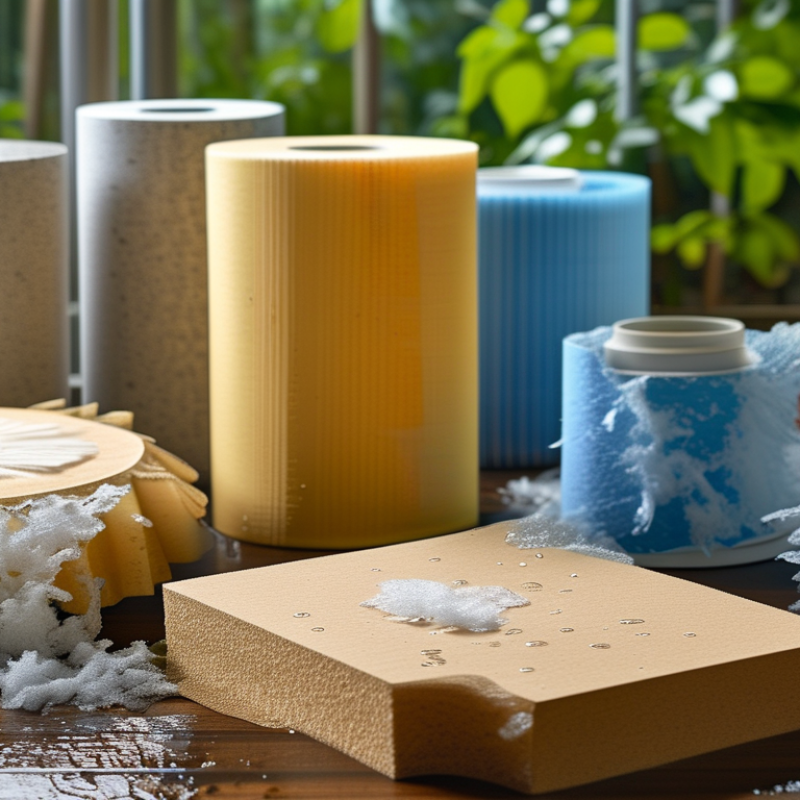
What Is Wood Pulp Filter Paper?
Wood pulp filter paper is a porous sheet made from purified wood fibers, mainly cellulose. Manufacturers separate the fibers, wash them, and refine their length. The prepared pulp is then formed into a thin web and dried under controlled pressure. Tiny spaces remain between the fibers. These spaces allow liquids or gases to pass while retaining selected particles.
The paper’s performance depends on fiber structure, thickness, and pore distribution. A dense sheet may capture finer particles but reduce flow speed. A lighter sheet usually flows faster, yet may provide less retention. Wet strength also matters when the paper contacts water for several minutes.
In practical quality checks, suppliers should test basis weight, air permeability, tensile strength, and particle retention. Visual inspection helps too. Uneven edges can suggest inconsistent forming.
It is not a universal solution.
For global sourcing, buyers should match the grade to the working condition, not only the price. Food-related filtration may require clean handling and documented material controls. Laboratory use may demand tighter pore consistency. Packaging, humidity, transport, and storage can change the paper’s condition. I would not treat a specification sheet as complete evidence. Independent samples and repeat testing can reveal differences between production batches. That extra step may feel slow, but it protects the final application from unexpected flow changes or tearing.
How Wood Pulp Filter Paper Is Manufactured
Wood pulp filter paper starts with carefully selected logs, chips, or sawmill residues. It starts with wood. Debarking removes soil and bark before chipping creates uniform pieces. Chemical pulping then separates cellulose fibers from lignin, using controlled heat, pressure, and alkaline chemicals. The resulting pulp is washed several times. Bleaching may follow when low color and high cleanliness are required.
According to the FAO’s Global Forest Products Facts and Figures 2023, global wood pulp production reached about 190 million tonnes in 2022. This large industrial base supports stable sourcing, but filter paper needs tighter control than ordinary paper. Refining adjusts fiber length and bonding strength. The pulp is diluted into a water-based suspension, then distributed across a moving forming wire. Water drains through the mesh, while fibers create a porous sheet. Pressing removes additional water. Heated cylinders complete drying.
The final paper is tested for basis weight, thickness, air permeability, wet strength, and extractables. These properties influence filtration speed and particle retention. TAPPI technical methods and ISO paper-testing standards provide repeatable measurement procedures. Small details matter. Fiber distribution can vary across one roll, especially when machine speed changes. Bleaching also increases water and energy requirements, which deserves honest review during global sourcing. A supplier’s process records, laboratory data, and batch traceability often reveal more than a polished specification sheet.
Key Performance Features for Filtration Applications
Wood pulp filter paper remains a practical choice for global sourcing because its cellulose fibers offer a useful balance of filtration efficiency, cost, and process stability. In production trials, operators often notice consistent sheet formation and predictable airflow when the paper has controlled fiber length and uniform basis weight. These details affect particle retention, pressure drop, and service life.
Key performance features deserve close attention. A well-engineered sheet should provide suitable porosity without allowing excessive channeling. Its wet strength matters when filtration involves water, cleaning cycles, or humid storage. Low ash content can reduce residue in sensitive applications, while controlled extractables help protect filtered liquids. Fiber density also influences flow resistance. Too tight, and the filter works slowly. Too open, and fine particles may pass through.
Reliable sourcing requires more than reviewing a technical data sheet. Buyers should compare retention performance, thickness, moisture content, and burst strength across production lots. Certificates support decisions, but independent sampling remains valuable. Small differences can appear after shipping or seasonal humidity changes. This is easy to underestimate. Application testing should include actual pressure, temperature, liquid chemistry, and operating time. A paper that performs well in a laboratory may behave differently inside a full-scale housing. That gap deserves honest review before volume purchasing.
| Performance Dimension | Typical Data or Range | Filtration Significance | Global Sourcing Consideration |
|---|---|---|---|
| Fiber Composition | Predominantly cellulose fibers derived from bleached or unbleached wood pulp; some grades use blended fibers or wet-strength additives. | Provides a porous, interconnected structure that supports depth filtration and particle retention. | Request the fiber composition, additive declaration, and relevant compliance documentation for the intended end use. |
| Basis Weight | Common filtration grades are approximately 20–200 g/m², depending on thickness, strength, and retention requirements. | Higher basis weight generally supports greater thickness and loading capacity, while lower basis weight can improve material economy. | Compare basis weight together with thickness, air permeability, and retention data rather than using basis weight alone. |
| Thickness | Often approximately 0.08–0.80 mm for sheet and roll filtration media; actual values vary by grade and manufacturing process. | Affects available filtration depth, rigidity, pleat formation, and the amount of contaminant the medium can hold. | Confirm thickness tolerance and roll or sheet flatness to ensure compatibility with converting equipment. |
| Nominal Particle Retention | Commercial cellulose filter papers are available across a broad range, commonly from about 1 to 50 µm nominal retention. | Enables selection for coarse clarification, laboratory filtration, beverage processing, chemical separation, and prefiltration. | Ask whether the rating is nominal or absolute and request the test method used to establish the value. |
| Air Permeability | Typical values may range from approximately 1 to 1,000 L/m²/s at a specified pressure differential, depending on porosity. | Higher permeability can improve flow rate; lower permeability generally supports finer particle capture. | Compare results only when the pressure differential and test standard are identical. |
| Liquid Flow Rate | Varies significantly with pore structure, liquid viscosity, pressure, temperature, and wetting conditions; it should be specified by test method. | Determines throughput and process cycle time in gravity, vacuum, and pressure filtration systems. | Obtain application-specific flow data using the actual process liquid whenever possible. |
| Wet and Dry Strength | Dry tensile strength depends on basis weight and fiber structure; wet strength is lower unless wet-strength agents or reinforcing fibers are used. | Maintains dimensional stability during handling, immersion, pressure filtration, and removal from equipment. | Verify wet burst, tensile, or handling performance when the filter will be exposed to liquid for extended periods. |
| Chemical Compatibility | Generally suitable for many aqueous and mildly acidic or alkaline media, but compatibility is affected by concentration, temperature, and additives. | Helps prevent fiber degradation, swelling, extractables, or loss of filtration performance. | Conduct immersion or process-condition testing for strong solvents, aggressive chemicals, high temperatures, or reactive formulations. |
| Thermal Resistance | Cellulose begins to lose strength as temperature increases and can thermally degrade at elevated temperatures; exact limits depend on moisture and treatment. | Suitable mainly for low- to moderate-temperature filtration unless a specially treated construction is specified. | Define the continuous operating temperature, peak temperature, exposure time, and sterilization method before selection. |
| Ash Content | Purified laboratory and analytical grades can have ash content below 0.1%; industrial grades may be higher depending on mineral fillers and processing. | Lower ash reduces inorganic residue and is valuable for gravimetric analysis and contamination-sensitive processes. | Request ash testing and a certificate of analysis when residue limits are critical. |
| Extractables and Cleanliness | Performance depends on pulp purity, washing, bleaching, binders, wet-strength agents, and packaging controls. | Low extractables help protect filtered liquids from unwanted ions, fibers, odors, or organic residues. | Specify extractables, fiber-shedding, odor, and cleanliness requirements for food, laboratory, or sensitive liquid applications. |
| Biodegradability | Cellulose fiber is biodegradable under suitable environmental conditions, although coatings, binders, and contamination can affect disposal behavior. | Supports lower-persistence waste options compared with many fully synthetic filter media. | Evaluate the complete filter construction and local waste regulations rather than relying only on the word “cellulose.” |
| Format Availability | Available as sheets, rolls, discs, bags, cones, pleated elements, and die-cut components in customized dimensions. | Allows integration into gravity funnels, filter presses, cartridges, laboratory holders, and automated converting lines. | Confirm dimensions, winding direction, core size, splice policy, packaging, and minimum order quantities early in the sourcing process. |
| Quality Consistency | Key control points include basis weight, thickness, moisture, permeability, tensile strength, retention, and visual defects. | Consistent properties reduce flow variation, leakage, downtime, and batch-to-batch filtration differences. | Use an agreed technical specification, approved sample, inspection plan, and certificate-of-analysis requirements for every shipment. |
Why Wood Pulp Filter Paper Supports Global Sourcing
Why Choose Wood Pulp Filter Paper for Global Sourcing?
Wood pulp filter paper supports global sourcing through steady supply and practical performance. Its cellulose fibers can provide consistent filtration across many industrial applications. Buyers can compare pore size, basis weight, thickness, and wet strength with clear specifications. These details make supplier evaluations more reliable. In purchasing reviews, I have found that small specification changes affect flow speed and residue retention. The paper may look simple. It is not.
Tips: Request fiber-origin records and recent quality reports. Confirm sample results before placing large orders. Check packaging strength for long-distance transport. Ask about moisture protection, shipping schedules, and replacement procedures. A low price can become expensive when cartons arrive damp or specifications change.
Wood pulp filter paper also supports flexible production planning. Many suppliers can offer different grades for laboratory, food-processing, chemical, or water-related uses, subject to applicable requirements. Standardized testing can help compare suppliers from different regions. Buyers should review batch consistency, production capacity, and communication response times. Certifications may add confidence, but they do not replace independent testing. That point is easy to overlook. I have seen sourcing plans fail because the sample was excellent, while later batches performed differently. A documented approval process reduces that risk, although it cannot remove every uncertainty.
How to Evaluate Suppliers and Select the Right Grade
When sourcing wood pulp filter paper globally, evaluate the supplier before comparing prices. Ask for pulp origin, fiber composition, basis weight, thickness, air permeability, and wet strength data. A reliable supplier should provide recent test reports, production tolerances, and clear sampling procedures. Request samples from more than one production lot. Inspect them under normal use, not only in a showroom. Check roll edges, winding tension, odor, dust, and visible fiber clumps. Small defects can interrupt automated filling or filtration lines. Ask how complaints are recorded and corrected.
The right grade depends on fluid viscosity, temperature, flow rate, and required particle retention. A fine grade may improve clarity but reduce throughput. A more open structure may flow faster, yet allow unwanted particles through. Define acceptance limits before requesting quotations. Measure thickness and basis weight with calibrated equipment. Test wet strength after realistic exposure time, not after a quick splash. Review certificates, traceability records, storage conditions, and packaging protection. Supplier audits should include maintenance, contamination controls, and operator training. Video evidence helps, but an on-site visit reveals more. Sometimes our first specification is wrong. Leave room for pilot testing and adjustment. Use a scorecard covering quality, consistency, communication, lead time, and delivered cost. The cheapest roll can become expensive when rejected shipments or unstable performance appear.
Why Choose Wood Pulp Filter Paper for Global Sourcing?
Supplier evaluation priorities for selecting the right filter paper grade
For global sourcing, filtration performance should be assessed together with quality consistency, regulatory documentation, delivery capability, and total cost. The weighting shown is an illustrative procurement scorecard: technical performance and consistency receive the highest priority because they directly affect filtration results and production stability. Buyers should verify each supplier with test reports, certificates, sample trials, and batch-to-batch data.
English
Česká republika
Deutsch
Dutch
Polska