Why Choose an Outdoor Musical Fountain for Your Project?
Why Choose an Outdoor Musical Fountain for Your Project? The answer begins with changing expectations for public spaces. Visitors increasingly seek memorable experiences, not merely attractive architecture. An Outdoor Musical Fountain combines water, light, sound, and movement into one visible destination. It can transform an entrance, plaza, resort, retail complex, or civic park into a stronger gathering point.
The numbers matter. The 2023 TEA/AECOM Theme Index reported 244.6 million visits across the world’s top 25 theme parks, reflecting a 23.1% annual increase. This result suggests that immersive entertainment continues to influence visitor decisions. Similarly, the International Association of Amusement Parks and Attractions identifies experience design as a major factor in repeat visitation and guest satisfaction. A musical fountain extends that principle beyond ticketed attractions. It creates scheduled shows, photo opportunities, and evening activity within an open environment.
However, spectacle alone is not enough. The fountain must support reliable operation, accessible circulation, water-quality control, energy efficiency, and responsible maintenance. The United Nations World Water Development Report 2024 emphasizes growing pressure on freshwater resources, making filtration, recycling, and consumption monitoring essential design considerations. Project teams should also assess pump redundancy, acoustic limits, weather protection, and local operating costs before construction. These details often determine whether an installation remains impressive after its opening season. The technology is powerful. It is not automatically sustainable. A thoughtful Outdoor Musical Fountain balances emotional impact with measurable performance, practical maintenance, and long-term value. That balance may be the real reason to choose it.
What Is an Outdoor Musical Fountain?
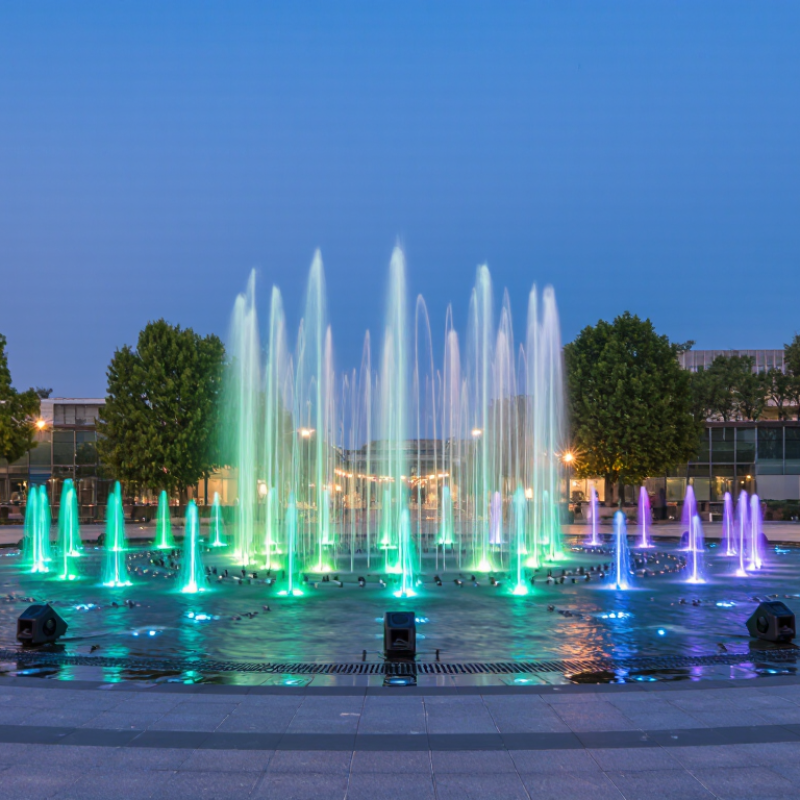
An outdoor musical fountain is a programmed water installation combining pumps, nozzles, lighting, sound, and digital control. Water rises, arcs, or forms curtains in time with selected music. Each movement depends on hydraulic pressure, nozzle design, lighting angles, and precise timing.
It is not simply a larger decorative pond. A controller coordinates multiple pump zones and lighting fixtures, creating scenes that may change every few seconds. Engineers also design filtration, drainage, access routes, and emergency shutoffs. The 2024 UN World Water Development Report states that agriculture accounts for approximately 70% of global freshwater withdrawals. This makes recirculation and leakage control important project decisions, even for entertainment spaces.
A practical system usually stores and reuses the same water. Sensors can monitor level, pump status, and water quality. Operators still need regular cleaning and inspection. Technology cannot replace maintenance. In public settings, clear viewing areas, slip-resistant surfaces, and controlled electrical installation matter as much as visual effects. The International Energy Agency’s Energy Efficiency 2024 report emphasizes the continuing importance of efficient equipment and system management. Variable-speed pumps may reduce unnecessary energy use, although real savings depend on programming and maintenance.
The strongest designs fit their surroundings. A fountain beside a plaza needs different sound control from one near apartments. Some projects also underestimate wind. Water may drift beyond the intended basin. That detail can change visitor safety, cleaning costs, and daily operation.
How Outdoor Musical Fountains Work
An outdoor musical fountain combines hydraulics, lighting, control software, and sound into one coordinated performance. Its pumps draw water from a balancing tank, then push it through nozzles at programmed pressures. Each nozzle shapes the stream, while valves adjust height, rhythm, and direction.
The water is recycled. A filtration system removes debris before the next cycle. Sensors can monitor tank level, pump pressure, and water quality. A central controller then matches these signals with music and lighting cues. Millisecond timing matters. Even a small delay can make a water arc look disconnected from the sound.
Energy planning deserves equal attention. The International Energy Agency reports that lighting represents about 15% of global electricity use. Efficient LED fixtures can reduce this burden, especially during long evening schedules. The U.S. Department of Energy also reports that LEDs use up to 90% less energy than incandescent lighting. Water use needs discipline too. The EPA WaterSense program uses a 20% efficiency benchmark for qualifying products, offering a useful design reference for recirculating systems.
In real projects, the first control sequence is rarely perfect. Wind changes the spray pattern. Music may expose weak timing. Operators should test the fountain at different flow rates, temperatures, and audience distances. A practical commissioning record should include nozzle pressure, pump load, filtration intervals, and emergency shutoff responses. Small omissions become visible when hundreds of visitors watch the same performance.
Key Benefits for Public and Private Projects
An outdoor musical fountain can give public and private projects a memorable social center. This matters as cities grow. UN-Habitat’s World Cities Report 2022 states that 56.2% of people lived in urban areas in 2021. By 2050, this share may reach 68%. A well-designed fountain can turn a hard plaza into an active gathering space. Music, light, and moving water create clear visual cues. Visitors may pause, take photographs, or return for scheduled performances. In private developments, the feature can strengthen arrival areas, courtyards, hotels, and mixed-use spaces. It should support the project’s purpose, not overpower it.
The benefits are practical, too.
Recirculating systems can reduce routine water demand, while timed programs help control energy use. The U.S. Environmental Protection Agency identifies efficient fixtures, leak control, and smart operation as key water-management measures. Public fountains can also support inclusive design when viewing areas include shade, seating, step-free routes, and quieter zones. These details are easy to miss. A beautiful show may still fail if glare disturbs nearby homes or maintenance access is blocked.
Tips: Test sound levels before opening. Specify corrosion-resistant materials. Plan filtration, drainage, and winter protection early. Record water and energy use after launch.
The data may challenge the original assumptions, which is useful. A smaller program with reliable maintenance often serves visitors better than an oversized installation that frequently closes.
Design, Site, and Budget Considerations
Why Choose an Outdoor Musical Fountain for Your Project?
An outdoor musical fountain can turn an ordinary plaza into a memorable public experience. Its success depends on thoughtful design, not only dramatic water effects. Match nozzle height, lighting, and music to the site’s scale. A small courtyard may need gentle arcs, while a civic square can support wider movement and stronger sound. Consider viewing angles from entrances, seating areas, and nearby roads. Water spray can create slippery surfaces, glare, or unwanted noise. These details are easy to underestimate.
Site conditions also shape the budget. Check soil stability, drainage, wind direction, underground utilities, and access for construction equipment. A fountain may look affordable until excavation, pumps, filtration, controls, electrical work, and safety systems are included. Plan for routine cleaning and seasonal servicing. Energy and water use deserve attention too. A lower initial cost is not always the lower long-term cost. Sometimes, a simpler design performs better. That is a useful lesson, though it can challenge ambitious concepts.
Tips: Prepare a site survey before design approval. Request several technical estimates with identical specifications. Reserve money for maintenance and unexpected ground conditions. Test sound levels at nearby buildings. Leave clear access for technicians. Avoid placing delicate components where falling leaves collect. A beautiful plan can still fail when maintenance access is ignored. Review the design with operators, engineers, and local approval professionals before construction begins.
Why Choose an Outdoor Musical Fountain for Your Project? - Design, Site, and Budget Considerations
| Consideration | Compact Fountain | Medium Fountain | Large Destination Fountain | Planning Implication |
|---|---|---|---|---|
| Typical footprint | 20–60 m² | 60–180 m² | 180–600+ m² | Reserve space for equipment rooms, access routes, drainage, and visitor circulation. |
| Recommended water depth | 0.25–0.45 m | 0.35–0.60 m | 0.45–0.80 m | Final depth depends on nozzle type, splash control, local safety rules, and maintenance access. |
| Approximate water display height | 1–4 m | 3–8 m | 6–15+ m | Higher jets require greater setback distances and stronger wind-management measures. |
| Indicative installed budget | US$80,000–250,000 | US$250,000–750,000 | US$750,000–2,500,000+ | Ranges are planning estimates and can vary with civil works, finishes, lighting, controls, and site conditions. |
| Electrical demand | 15–60 kW | 60–180 kW | 180–600+ kW | A qualified electrical engineer should confirm supply capacity, protection, grounding, and backup requirements. |
| Music and lighting capability | Preset sequences; basic LED lighting | Programmable shows; multi-zone LED lighting | Synchronized shows; advanced control and event programming | Confirm audio zoning, public-volume limits, content licensing, and show scheduling before design. |
| Typical construction period | 8–16 weeks | 16–28 weeks | 28–52+ weeks | The schedule excludes extended permitting, utility upgrades, severe weather, and major landscaping work. |
| Water treatment approach | Filtration plus routine chemical control | Filtration, chemical dosing, and automatic monitoring | Redundant filtration, dosing, monitoring, and water-quality management | Treatment requirements increase with water volume, visitor exposure, heat, dust, and operating hours. |
| Routine maintenance | Daily visual checks; weekly cleaning | Daily checks; weekly cleaning; monthly equipment inspection | Dedicated operator; scheduled cleaning; preventive servicing | Plan for debris removal, nozzle inspection, filter cleaning, water testing, and seasonal shutdowns. |
| Annual operating cost | US$8,000–25,000 | US$25,000–75,000 | US$75,000–250,000+ | Includes indicative electricity, water treatment, cleaning, inspections, and minor replacement parts. |
| Wind and weather exposure | Low to moderate | Moderate; wind sensors recommended | High; wind sensors and automatic show adjustment essential | Use wind data, prevailing-direction analysis, splash modeling, and automatic jet-height control. |
| Best project applications | Hotels, courtyards, private developments, small parks | Public plazas, retail areas, resorts, cultural spaces | Theme parks, waterfronts, civic landmarks, major entertainment venues | Match scale and show intensity to visitor numbers, operating hours, and the intended destination value. |
| Key approval requirements | Drainage, electrical safety, slip resistance, basic public access control | Building and electrical permits, public safety review, noise assessment | Full civil, structural, electrical, environmental, accessibility, and crowd-management review | Verify requirements with the local authority and design team before fixing the fountain layout. |
Note: Budget, power, schedule, and operating-cost figures are indicative planning ranges in US dollars for outdoor musical fountains. Actual values depend on local labor rates, site preparation, water and electrical infrastructure, climate, materials, control complexity, and applicable regulations.
Planning Installation, Operation, and Maintenance
An outdoor musical fountain can turn an open plaza into a memorable public experience. However, the design should begin with operation, not decoration. The 2023 ASHRAE Handbook recommends evaluating pump systems under real load conditions, because oversized equipment often wastes energy through throttling. Variable-speed control can match water movement to music, crowd size, and operating hours. The water should look lively, not aggressively overpowered.
Installation needs practical planning. A level foundation, accessible drainage, and protected electrical routes reduce future disruption. According to the U.S. Environmental Protection Agency, household leaks waste nearly one trillion gallons of water annually in the United States. A fountain is not a household system, but the warning is relevant: small losses become expensive when pumps run daily. Flow meters, automatic level controls, and visible inspection points make problems easier to detect.
Maintenance must be treated as part of the visitor experience. The World Health Organization’s Guidelines for Safe Recreational Water Environments emphasize routine monitoring of water quality and facility conditions. Operators should record filter pressure, chemical readings, nozzle performance, and unusual pump noise. Keep records.
Some designs still underestimate access. Technicians may need to lift heavy grates during rain, which is unsafe and slow. I have seen beautiful layouts become difficult to service. Leave working space around pumps and valves, label every connection, and test the full music sequence before opening. A quiet maintenance plan matters.
English
Česká republika
Deutsch
Dutch
Polska