Why Choose a Diaphragm Slitting Machine?
Battery production is scaling quickly, and small process errors become expensive at high throughput. The International Energy Agency’s Global EV Outlook 2024 reports global electric-car battery demand reached about 750 GWh in 2023. That was roughly 40% higher than in 2022. This figure describes demand, not separator output. Still, it shows why stable converting operations matter. A separator may look like a thin, quiet web on a roll. In production, its edges, width, tension, and cleanliness can affect downstream handling and cell consistency.
A Diaphragm Slitting Machine cuts wide separator rolls into narrower formats for battery assembly. Its value is not simply speed. Operators need repeatable slit widths, controlled web tension, clean edges, low dust generation, and quick changeovers. A drifting blade or uneven rewind can turn a neat roll into a wrinkled, telescoping one. That is easy to overlook.
Choosing equipment should begin with the material. Compare separator thickness, coating, width range, roll diameter, and required line speed against documented machine trials. Ask suppliers for measured tolerances, inspection methods, and references involving similar films. IEA market data cannot prove a particular machine’s performance. Request evidence from the actual process. Small tests help.
There is no universally best configuration. Even a strong specification can miss factory constraints, such as operator experience or limited space for dust control. This guide explores why manufacturers choose diaphragm slitting equipment, which features deserve verification, and what trade-offs merit a second look. The details matter.
What Is a Diaphragm Slitting Machine?
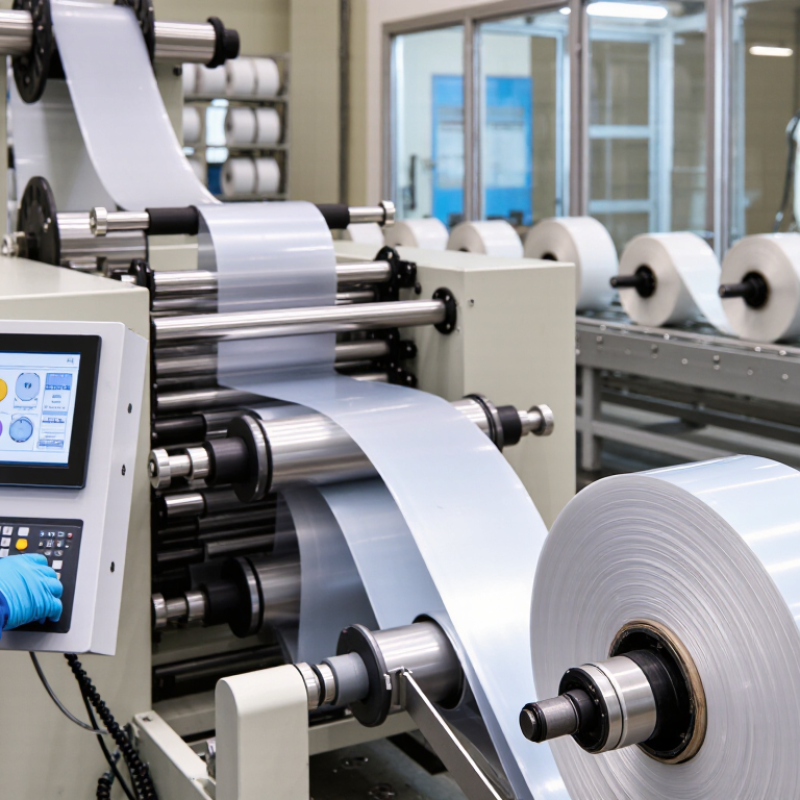
A diaphragm slitting machine converts a wide roll of thin separator film into narrower rolls. The film unwinds, passes through guiding and tension-control sections, then meets slitting blades. Those blades cut the moving web lengthwise. Rewinding shafts collect the finished rolls. In battery production, consistent width and clean edges help the separator fit later assembly steps. The machine does not make the diaphragm itself. It processes material that has already been manufactured.
Cutting quality depends on more than blade sharpness. Operators typically check web tension, blade alignment, roll winding, and edge condition during setup. A small alignment error can cause uneven edges or drifting material. Dust and static may also affect handling, especially with delicate, porous films. Results vary with material thickness and machine configuration, so a setting that works for one film may not suit another. No setup is perfect. That is worth remembering.
Tips: Inspect a sample roll before a long run. Check for burrs, wrinkles, and width variation. Record settings that work, but verify them again when the material changes.
How Does the Slitting Process Work?
Why Choose a Diaphragm Slitting Machine?
How Does the Slitting Process Work?
The process begins with a wide diaphragm roll mounted on an unwind shaft. Operators guide the thin web over rollers and adjust tension to keep it flat without stretching or wrinkling. The material then passes through rotary knives, which divide it into narrower rolls. Blade spacing sets the strip width. Small errors matter.
After cutting, separate rewind shafts collect each strip into a finished roll. Rewind tension must suit the diaphragm’s thickness and stiffness. Too much pressure can deform the edges; too little may leave loose, uneven rolls. A clean blade and stable web path help reduce burrs, dust, and wandering cuts.
Before a production run, operators can check blade alignment and run a short sample. They should inspect the cut edges and measure several strips across the web, not just one. Static or tiny particles can affect delicate material, so housekeeping and suitable handling matter. A setup may look correct yet produce inconsistent rolls as tension changes. That is easy to overlook, and a brief trial does not guarantee every roll will match. Regular checks during the run help catch drift early.
Why Choose a Diaphragm Slitting Machine? - How Does the Slitting Process Work?
| Process Stage | What Happens | Key Controls | Why It Matters |
|---|---|---|---|
| 1. Unwinding | A master roll of diaphragm or separator film is mounted and fed into the machine. | Roll alignment, web path, and unwind tension are set for the material and roll condition. | Stable feeding helps prevent wrinkles, edge damage, and uneven tension across the web. |
| 2. Web guiding and tension control | Guiding and tension systems keep the moving film on its intended path before it reaches the cutting section. | Edge position, tension consistency, and speed coordination are monitored. | Thin porous films can be sensitive to stretching and misalignment, which may affect slit quality and roll formation. |
| 3. Slitting setup | Cutting tools are positioned to divide the master web into the required strip widths. | Tool spacing, blade condition, overlap or clearance where applicable, and web alignment are checked. | Accurate setup helps achieve consistent widths and clean edges while reducing material waste. |
| 4. Cutting | The web is slit using a method suited to the film and production requirements, such as razor, shear, or crush slitting. | Cutting method, blade sharpness, contact, and line speed are selected and adjusted for the material. | The right cutting approach helps limit burrs, tearing, dust, or other edge defects. The best method depends on the film construction and process conditions. |
| 5. Strip separation | Slit strips are guided apart and directed toward their individual rewind positions. | Strip tracking, spacing, and tension are kept stable. | Proper separation helps prevent strips from overlapping, rubbing, or winding together incorrectly. |
| 6. Rewinding | Each slit strip is wound onto a core to form a finished roll. | Rewind tension, winding alignment, roll hardness, and core positioning are controlled. | Consistent winding helps produce rolls that can be handled, stored, and fed into downstream processes reliably. |
| 7. Inspection and roll handling | Finished rolls are checked against the production specification and prepared for packaging or the next operation. | Typical checks include slit width, visible edge condition, roll alignment, and defects identified by the applicable quality plan. | Inspection helps identify process issues and confirm that rolls meet the requirements agreed for the application. |
| Why choose a diaphragm slitting machine? | It converts a wide master roll into narrower rolls in a controlled, repeatable operation. | Suitable tooling, stable web handling, adjustable width setup, and process monitoring support production needs. | It can improve width consistency, reduce manual handling, and support efficient roll preparation. Results depend on the machine configuration, material, and operating conditions. |
Process note: Diaphragm materials vary in thickness, porosity, strength, and surface characteristics. Cutting settings and quality limits should therefore be established through material-specific trials and the applicable product specification.
What Advantages Does Diaphragm Slitting Offer?
A diaphragm slitting machine converts wide battery-separator rolls into narrower, specified widths. Its key advantage is repeatable edge control. Accurate slitting helps downstream winding or stacking, where uneven edges can cause wrinkles, misalignment, and rejected material. Operators can adjust blade spacing and tension for different web widths. Clean cuts matter. They reduce loose particles that may interfere with sensitive production steps. A stable machine also makes roll changes and batch comparisons more consistent, especially when settings and inspection results are recorded.
The International Energy Agency’s Global EV Outlook 2024 reports that electric-car battery demand reached about 750 GWh in 2023, a 40% increase from 2022. That growth raises the value of reliable separator processing, though it does not prove that slitting alone improves factory output. The real result depends on blade condition, web tension, material properties, and operator checks. A faster line is not automatically a better one. Excessive speed can worsen edge quality or create waste. Regular inspection remains essential, and even careful setups sometimes need adjustment.
Which Materials and Industries Use These Machines?
Diaphragm slitting machines convert wide rolls into narrower rolls for downstream processing. Common materials include PET, BOPP and polyethylene films, aluminum foil, coated paper, release liners, nonwovens and multilayer laminates. Each behaves differently: thin film can stretch, foil can wrinkle, and paper may shed dust at the cut edge. Small defects matter.
The material range reflects substantial packaging demand. Plastics Europe’s Plastics – the Fast Facts 2023 report estimates global plastics production at 400.3 million tonnes in 2022; this is not a slitting-machine figure, but it shows the scale of polymer use. The Flexible Packaging Association reported US flexible-packaging sales of $42.9 billion for 2022. These substrates serve food and consumer-goods packaging, pressure-sensitive labels, hygiene products, medical packaging, electronics and building materials. Converters typically match blade geometry, tension and rewind settings to the roll. A setting that works on paper may distort a soft film. There is a catch: material names alone cannot predict cut quality. Adhesives, coatings, thickness variation and humidity all matter, so a production trial is often needed before setting final tolerances.
Why Choose a Diaphragm Slitting Machine?
Diaphragm slitting machines convert wide rolls into narrower rolls with consistent widths and clean edges. They are used to process materials such as plastic films, battery separator films, and metal foil for packaging, battery manufacturing, electronics, and industrial converting.
Approximate material density (g/cm³): Density is a material property, not a machine-capacity rating. Actual values vary by grade and formulation. Film and foil slitting is also used in packaging, label production, electrical insulation, and flexible electronics.
What Factors Matter When Choosing a Machine?
Choosing a diaphragm slitting machine starts with the material, not the advertised speed. Note its width, thickness, flexibility, and how it behaves when unwound. A soft film may stretch under excess tension, while a stiffer sheet can expose weak blade alignment. Test your actual roll. That matters.
Next, check whether the machine can hold the required slit width across a full production run. Ask how operators adjust tension, blade position, and feed speed, and how repeatable those settings are after a changeover. A clean test cut is useful, but inspect the edges and winding quality after several minutes. Short trials can hide drift.
Consider daily operation, too. How long does blade replacement take? Are guards easy to use, and can operators reach routine service points without awkward work? Confirm that the machine fits your upstream and downstream equipment, including roll handling and available floor space. Request maintenance intervals and spare-part lead times in writing. A brochure may make setup look effortless; real changeovers are often less tidy. Build in time to train operators and verify performance with different materials before committing to a production target.
English
Česká republika
Deutsch
Dutch
Polska