 English
  Česká republika
 Deutsch
 Dutch
Dutch Polska


What Are the Top Ethernet Gateway Suppliers?
Choosing the right Ethernet Gateway supplier is not simply a matter of comparing prices. It requires careful attention to network performance, industrial durability, security features, and long-term technical support. An Ethernet Gateway may sit inside a factory cabinet, a smart building, or a remote utility enclosure. Each environment creates different demands. Heat, vibration, limited bandwidth, and outdated field devices can quickly expose weak designs.
David Law, an IEEE 802.3 Ethernet standards expert, has described Ethernet as “the most pervasive networking technology in the world.” That observation remains important when evaluating leading suppliers. Established companies often provide broader compatibility, stronger testing procedures, and clearer firmware policies. However, market visibility does not guarantee the best fit. A smaller supplier may offer better customization, faster engineering support, or a gateway designed for a specific protocol.
The comparison should examine more than brand recognition. Look for support for Modbus, CAN, PROFINET, EtherNet/IP, MQTT, or other required protocols. Check processing capacity, port configuration, cybersecurity updates, cloud integration, and lifecycle commitments. Ask how the supplier handles failed units and emergency firmware issues. These details matter in real operations.
Some evaluations still overemphasize headline throughput. That can be misleading. A gateway with impressive speed may perform poorly under protocol conversion or unstable power conditions. Supplier claims also deserve verification through datasheets, certifications, field references, and independent testing. This guide examines the top Ethernet Gateway suppliers through those practical criteria, while acknowledging that no supplier leads in every application.
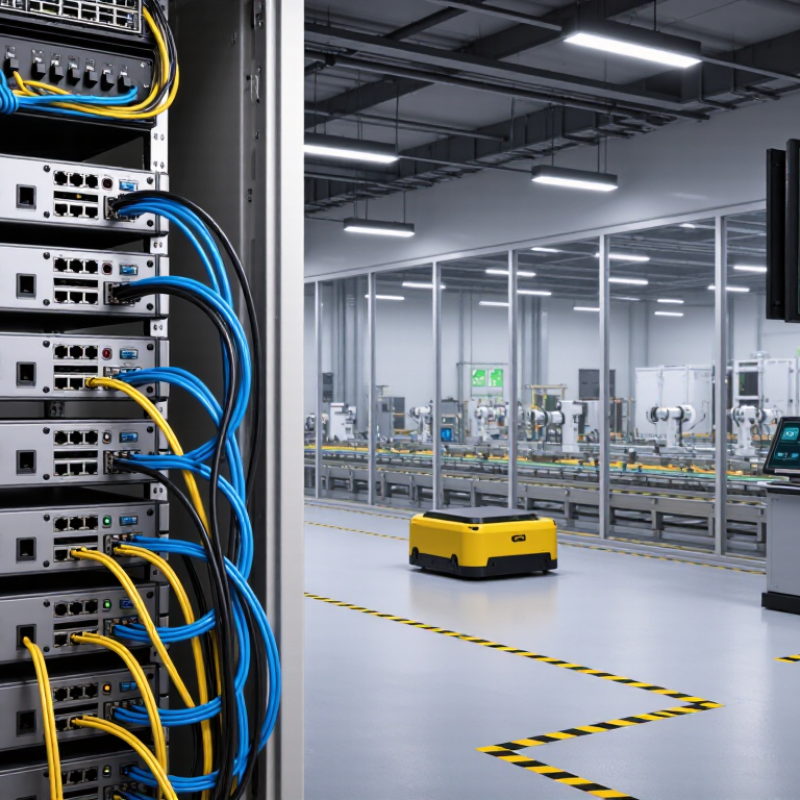
Define Ethernet Gateways by L2/L3 Routing, NAT, and IEEE 802.3 Standards
What Are the Top Ethernet Gateway Suppliers?
The name sounds simple. The details are not. Ethernet gateways connect local networks, industrial devices, and upstream services. Their real value depends on how they handle Layer 2 and Layer 3 traffic.
At Layer 2, a gateway can bridge Ethernet frames using MAC addresses. At Layer 3, it routes packets between separate IP subnets. This distinction matters on a factory floor. A sensor network may need isolation, while a control server needs a carefully filtered route. NAT translates private addresses before traffic reaches another network. It can reduce address conflicts, but it may complicate diagnostics and inbound access.
IEEE 802.3 compliance should support the physical Ethernet connection. Check the exact standard, such as 802.3u for Fast Ethernet or 802.3ab for Gigabit Ethernet. Do not treat one certification as proof of every feature. A supplier should provide clear routing tables, NAT limits, VLAN behavior, and test conditions. Firmware support also matters.
Small details matter most. Ask how the gateway behaves after a power loss. Review packet captures, temperature ratings, and recovery times. In practical evaluations, a clean web interface helps, but reliable logs matter more. I have seen impressive throughput figures hide weak multicast handling. That mistake is easy to repeat. Top suppliers combine standards knowledge with documented testing, responsive engineering support, and stable product updates. Claims should be measurable. Otherwise, comparison becomes guesswork.
What Are the Top Ethernet Gateway Suppliers? - Define Ethernet Gateways by L2/L3 Routing, NAT, and IEEE 802.3 Standards
| Gateway Category | Primary Function | L2/L3 Capability | NAT Function | Relevant IEEE Standards | Typical Interfaces | Common Deployment |
|---|---|---|---|---|---|---|
| Layer 2 Ethernet Gateway | Forwards Ethernet frames according to MAC addresses. | L2 bridging; no native inter-subnet routing. | Not applicable. | IEEE 802.3, IEEE 802.1Q, IEEE 802.1D-compatible bridging concepts. | Copper or fiber Ethernet ports; optional SFP/SFP+ slots. | LAN segmentation, VLAN aggregation, and transparent network extension. |
| Layer 3 Ethernet Gateway | Routes traffic between separate IP networks. | IPv4 and, where supported, IPv6 routing; static routes and dynamic routing may be available. | Optional; commonly includes one-to-one NAT or port translation. | IEEE 802.3, IEEE 802.1Q, and often IEEE 802.1X for access control. | Multiple copper or fiber Ethernet interfaces; management port may be separate. | Enterprise, campus, data-center edge, and industrial network interconnection. |
| NAT Firewall Gateway | Connects private networks to external networks while enforcing traffic policies. | L3 routing with stateful inspection and policy-based forwarding. | Typically supports NAT44, NAPT/PAT, port forwarding, and configurable address pools. | IEEE 802.3 and IEEE 802.1Q; security functions are generally specified outside the IEEE 802.3 family. | WAN, LAN, DMZ, and optional management Ethernet ports. | Internet edge, branch offices, remote sites, and protected control networks. |
| VPN Ethernet Gateway | Provides encrypted connectivity between remote users, sites, or networks. | L3 routing; may also provide VLAN-aware L2 extension through tunneling. | Usually supports NAT and NAPT for overlapping or private address spaces. | IEEE 802.3 and IEEE 802.1Q; VPN protocols commonly include IPsec or TLS-based mechanisms. | WAN and LAN Ethernet ports; optional cellular or fiber uplinks. | Site-to-site connectivity, secure remote access, and multi-location operations. |
| Industrial Ethernet Gateway | Connects operational technology networks, controllers, sensors, and enterprise systems. | May combine L2 bridging, L3 routing, VLANs, and protocol-aware segmentation. | Optional; used when plant, machine, and enterprise address spaces must remain separated. | IEEE 802.3, IEEE 802.1Q, IEEE 802.1X, and in some designs IEEE 802.3ad link aggregation. | Rugged copper or fiber Ethernet; serial, fieldbus, or cellular interfaces may be integrated. | Factory automation, substations, transportation, utilities, and remote monitoring. |
| Managed PoE Ethernet Gateway | Aggregates and manages Ethernet connectivity and power delivery for powered devices. | Usually combines L2 switching with optional L3 routing and VLAN support. | Optional and dependent on the gateway platform. | IEEE 802.3, IEEE 802.3af, IEEE 802.3at, IEEE 802.3bt, and IEEE 802.1Q. | PoE copper Ethernet ports; uplink ports may use copper or fiber. | Wireless access points, IP cameras, VoIP endpoints, access control, and building systems. |
| Time-Sensitive Networking Gateway | Transports time-critical Ethernet traffic with bounded latency and synchronized timing. | L2 switching is central; L3 routing may be included for network-domain integration. | Generally avoided in deterministic traffic paths; may be used at a controlled network boundary. | IEEE 802.3, IEEE 802.1AS, IEEE 802.1Qbv, IEEE 802.1Qbu, and IEEE 802.1Qci. | Industrial copper or fiber Ethernet with hardware timestamping where required. | Motion control, automotive networks, professional audio/video, and deterministic automation. |