What Are the Best Construction Aluminum Profiles?
“What Are the Best Construction Aluminum Profiles?” depends on how and where the profiles will be used. A window frame exposed to coastal air has different demands from a beam inside a dry warehouse. Construction Aluminum Profiles come in varied shapes, alloys, wall thicknesses, and finishes, so appearance alone is a poor guide. Strength matters. So does weight. A narrow extrusion may look tidy but flex under load if its design or support is unsuitable. Even a small change in wall thickness can affect stiffness, weight, and how securely fasteners hold.
A sound selection starts with the project requirements: expected loads, span, exposure, connection method, and applicable building specifications. Alloy and temper influence strength and workability, while anodizing or coating can help protect surfaces in demanding environments. Check dimensions, tolerances, and supplier documentation rather than relying on a product photo or a broad “heavy-duty” label. Ask how the profile will be cut, joined, and maintained; a design that is difficult to assemble can create delays and weak connections. Small details count.
There is no single profile that suits every structure, and this is easy to overlook when comparing prices. A lower-cost option may require extra reinforcement, while a premium finish may add little value indoors. The best choice balances verified performance, fabrication needs, service conditions, and budget. This guide explains common profile types and practical checks for narrowing the options. It also leaves room for judgment: drawings and product data are essential, but qualified project professionals should confirm that a profile meets the specific design requirements.
What Are Construction Aluminum Profiles and How Are They Made?
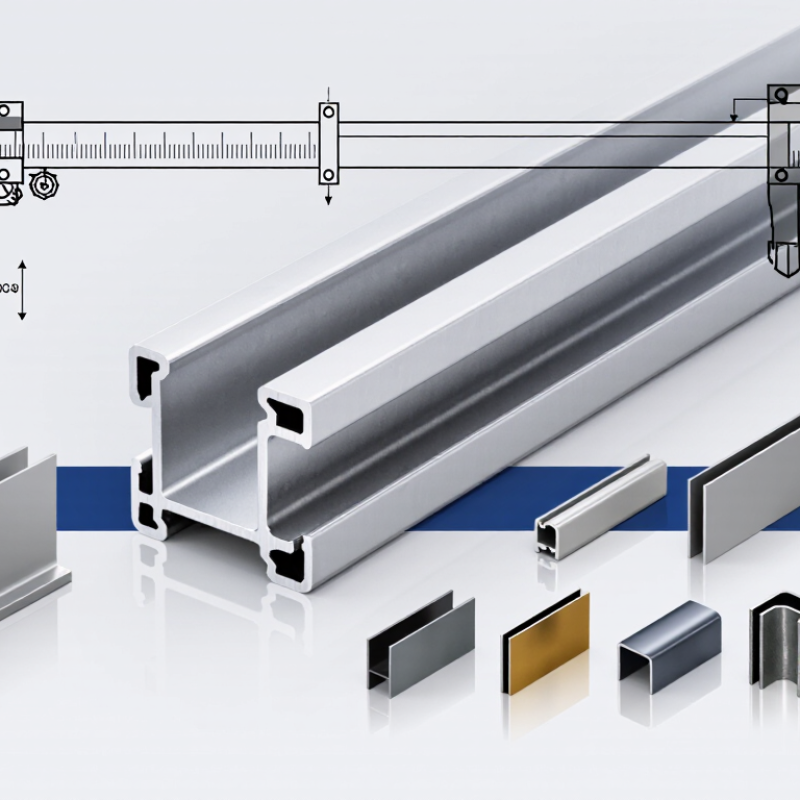
Construction aluminum profiles are shaped sections used in window frames, curtain walls, partitions, roof supports, and other building systems. Their cross-sections may be simple rectangles or detailed shapes with grooves, ribs, and hollow chambers. These features help manage weight, stiffness, drainage, or connections. The right design depends on the load, span, climate, and installation method—not appearance alone.
Most profiles are made by extrusion. A solid aluminum billet is heated, then pressed through a shaped steel die. The emerging section is cooled and stretched to help straighten it. It is then cut to length and heat-treated when the alloy and temper require it. Small details matter. Die design, cooling, and dimensional checks can affect how consistently a profile fits on site.
Finishing may include anodizing or a coating, depending on appearance and exposure conditions. Some building systems also use thermal breaks to reduce heat transfer through the frame. Fabricators may drill, machine, or cut profiles to suit project drawings. A practical reminder: profiles that look alike are not automatically interchangeable. Check alloy, temper, wall thickness, tolerances, and connection details against the project requirements. It is easy to focus on shape and overlook those details; I would treat that as a design risk, not a minor afterthought.
Which Properties Determine a Profile’s Suitability for Construction?
A construction aluminum profile is suitable only when its alloy, temper, geometry, and exposure match the job. The Aluminum Association’s Aluminum Design Manual gives 6063-T5 a minimum yield strength of about 110 MPa; that is a useful reference, not a guarantee for every extrusion. A deep, thin-walled section may still deflect under wind or glass loads. Check the supplier’s certified properties, then verify span, connection details, and tolerances against the project design. Small gaps matter.
Weight and heat flow matter too. ASM Handbook data place aluminum’s density near 2,700 kg/m³, far below common structural steel, while its high thermal conductivity can create a cold bridge through an unbroken frame. For exterior windows or curtain walls, thermal breaks and drainage paths are practical design requirements, not decorative extras. Corrosion resistance also depends on alloy, coating, cut edges, and contact with dissimilar metals; the Aluminum Association’s Aluminum Design Manual and project exposure conditions should guide selection. A polished sample can hide a weak corner joint. Ask for finish-thickness records, dimensional inspection results, and test evidence for the complete assembly—not just the profile itself.
What Types of Aluminum Profiles Are Used in Building Projects?
Construction projects use aluminum profiles in several forms, each shaped for a particular job. Window and door systems commonly use hollow frame sections, tracks, and glazing beads. These pieces hold glass, guide sliding panels, and create clean edges around openings. Curtain walls use vertical mullions and horizontal transoms to support glazing across a building façade. They must be selected as a system, since wind pressure, panel size, and connection details affect performance.
For partitions, canopies, and light interior structures, builders may use square or rectangular tubes, channels, and angle profiles. Tubes provide a neat finish around posts and frames; channels can carry panels or conceal edges. Extruded framing sections with grooves also allow brackets and fasteners to attach at adjustable points. Useful, but not automatically structural.
Profile choice depends on the load, span, exposure, and installation method. A coastal façade may need a durable finish, while a large glazed opening requires careful checks of deflection and anchorage. Thermal breaks can reduce heat transfer through window frames, though their value depends on the complete assembly. One detail is easy to overlook: a profile that looks substantial may still be unsuitable if its wall thickness or alloy temper does not match the design. Verify specifications and connection details before ordering, and coordinate them with the project engineer.
How Do You Choose the Best Profile for a Specific Application?
Choosing an aluminum profile starts with the job it must do, not its appearance. A display frame needs clean edges and easy assembly. A machine guard may need greater stiffness across a wide span. Check the expected load, unsupported length, mounting points, and acceptable deflection. A thick-looking profile can still twist if its shape poorly resists the actual load. In practice, the connection often matters as much as the extrusion.
Tips: Sketch the load path before choosing a section. Note the span, fasteners, and nearby moving parts. Compare profile dimensions and wall thickness, then verify manufacturer load data. Allow room for brackets, tools, and cable routing. Small clearances are easy to forget.
Match the alloy and finish to the environment. Outdoor or damp installations may need extra attention to corrosion and drainage. For a moving assembly, consider weight, vibration, and repeated loading. Also confirm that connectors and machining methods suit the profile. A neat drawing can still miss an awkward bolt position; mock up one joint before ordering a full set. When loads are safety-critical, have a qualified engineer check the design rather than relying on a simple rule of thumb.
What Are the Best Construction Aluminum Profiles?
Compare common extrusion alloys by their specified minimum tensile strength to help match a profile to its application.
How to choose: 6063-T5 is commonly used for architectural frames and applications where formability and finish matter. 6063-T6 offers higher strength for more demanding frames. 6061-T6 is a stronger option for structural components. Values shown are commonly specified minimums; exact requirements vary with product standard and thickness. Confirm design loads and applicable specifications before selection.
How Do Installation and Maintenance Affect Long-Term Performance?
For construction aluminum profiles, long-term performance depends less on the alloy alone than on how carefully it is installed. A level frame, consistent fastener spacing, and unobstructed drainage paths help prevent distortion and trapped water. Installers should also separate aluminum from dissimilar metals where moisture can create galvanic corrosion. Small mistakes matter. A crushed gasket or poorly sealed cut edge can invite water into a joint, where damage may stay hidden.
Maintenance is equally practical: inspect sealant, fasteners, drainage slots, and coating damage at least annually, with extra checks near coastal roads or industrial sites. The NACE IMPACT study estimated that corrosion costs about $2.5 trillion worldwide each year, or 3.4% of global GDP; it also found that corrosion management could save 15–35% of those costs. That figure covers many industries, not aluminum profiles alone, but it shows why routine checks are worthwhile. The U.S. Department of Energy reports that windows account for 25–30% of residential heating and cooling energy use, so frame alignment and intact seals can affect comfort and energy performance. Still, maintenance schedules are often treated as optional. That deserves a second look.
 English
 Česká republika
 Deutsch
 Dutch
 Polska