What Are the Top China CNC Turning Manufacturers?
China’s CNC turning sector has moved beyond low-cost production. Many manufacturers now supply machines for automotive, aerospace, medical, and precision engineering applications. Yet choosing a reliable supplier requires more than comparing prices or catalog photos.
Professor Yusuf Altintas, a leading machining researcher, writes, “Machining is a process of removing material from a workpiece by means of a cutting tool.” His definition highlights the central issue: consistent material removal. In CNC turning, that consistency depends on spindle accuracy, thermal control, guideway quality, cutting stability, and software integration. A polished machine can still produce disappointing parts. Small errors matter.
This guide examines leading China CNC turning manufacturers through practical criteria. These include machine construction, control systems, inspection procedures, production experience, customization ability, and after-sales support. It also considers real workshop details, such as chuck repeatability, bar-feeder compatibility, surface finish, and cycle-time stability. Technical certifications help, but they do not tell the whole story. Factory audits, sample machining, and customer references remain valuable.
No ranking is perfect. Buyer needs differ. A compact lathe may suit a small workshop, while an automated production line requires stronger integration and service support. Some manufacturers communicate clearly before the sale, then respond slowly afterward. That weakness deserves attention. The strongest suppliers combine engineering depth with dependable delivery and transparent documentation. This overview aims to help readers compare them carefully, ask better questions, and avoid choosing a machine based only on an attractive quotation.
What Is CNC Turning and Why Does China Lead This Industry?
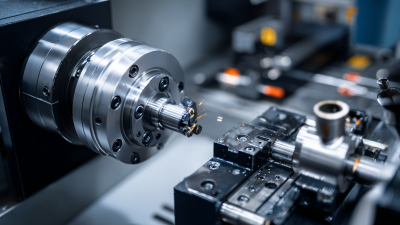
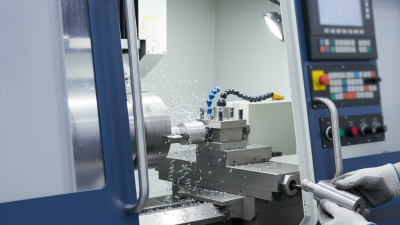
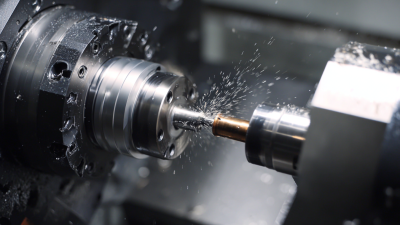
CNC turning removes material from a rotating workpiece with a stationary cutting tool. It produces shafts, bushings, threads, and precise cylindrical parts. In a typical shop, bar stock enters a chuck, while programmed tools shape its diameter, shoulders, grooves, and bore. Live monitoring helps control tool wear and dimensional drift. A coordinate measuring machine then verifies critical features.
China leads this industry through dense supplier networks, skilled technicians, and strong machinery production capacity. Grand View Research estimated the global CNC machine market at about USD 86.8 billion in 2023. It also forecast a compound annual growth rate of approximately 9.5% from 2024 to 2030. China’s large automotive, electronics, medical, and industrial equipment sectors create steady demand for turned components.
Scale matters. So does speed.
Many Chinese manufacturers combine automated lathes, multi-axis equipment, and in-house inspection. This can shorten sampling cycles and support competitive production costs. However, China’s advantage is not automatic. A low quotation may hide weak process control, unstable material batches, or incomplete inspection records. That assumption needs checking. Buyers should review tolerance capability, first-article reports, material certificates, and capacity during peak orders. ISO 9001 certification can support reliability, but it cannot replace practical audits. The strongest suppliers explain their machining sequence clearly and provide measurable evidence, not only attractive promises.
What Are the Top China CNC Turning Manufacturers? — What Is CNC Turning and Why Does China Lead This Industry?
CNC turning uses computer-controlled lathes to remove material from rotating workpieces, producing precise cylindrical components. China’s large manufacturing base, extensive supplier network, engineering workforce, and growing automation capacity support a strong CNC turning ecosystem.
Chart: Annual industrial robot installations in China, 2018–2023. Rising automation adoption is a broad indicator of the production infrastructure supporting CNC machining and precision manufacturing; it is not a ranking of individual manufacturers.
Source: International Federation of Robotics, World Robotics reports. Values are units installed and rounded where reported.
What Types of CNC Turning Manufacturers Operate in China?
China’s CNC turning manufacturers generally operate in four categories: equipment builders, contract machining factories, precision specialists, and integrated automation suppliers.
Equipment builders produce CNC lathes and turning centers for domestic and export markets.
Contract manufacturers purchase these machines and make shafts, bushings, connectors, and hydraulic parts for external customers.
Precision specialists focus on tight tolerances, difficult alloys, or small production batches.
Integrated suppliers add robotic loading, inspection, tooling, and production monitoring.
The market is broad, but capability varies sharply.
The International Federation of Robotics reported 276,288 industrial robot installations in China during 2023, representing 51% of global installations.
This figure indicates strong automation capacity, although robots do not guarantee accurate turning results. Process control still depends on trained operators, stable cutting parameters, calibrated instruments, and disciplined maintenance.
The China Machine Tool Industry Association also tracks CNC equipment production, consumption, and industry performance, making its releases useful when comparing domestic capacity with export activity. Data should be checked against factory evidence.
Look beyond a polished website. Ask for sample inspection reports, equipment lists, material certifications, and measured cycle times.
A factory serving automotive parts may not suit medical components or prototype work.
Some suppliers overstate tolerance performance.
I have seen specifications look excellent on paper, then weaken during repeated production. That gap matters.
How to Evaluate the Quality of Chinese CNC Turning Manufacturers
What Are the Top China CNC Turning Manufacturers?
How to Evaluate the Quality of Chinese CNC Turning Manufacturers
A polished website proves little. Quality begins with process control, not attractive photographs. Ask whether the manufacturer can hold your required tolerances consistently. Review machine age, spindle condition, cutting tools, and preventive maintenance records. A capable factory should explain its inspection method clearly. Look closely.
Request sample parts made from the same material and produced under normal conditions. Check dimensions with a coordinate measuring machine, micrometer, or optical comparator. The inspection report should identify drawing revisions, measurement equipment, and actual results. Do not accept only a pass-or-fail statement. Traceability matters when several batches look identical.
I have found that communication often reveals more than sales promises. Engineers should discuss tool wear, surface roughness, burr control, and fixture stability. They should also ask practical questions about your drawings. A supplier that never challenges unclear tolerances may create avoidable costs. That happened in one project I reviewed. The part met the drawing, but the design overlooked assembly access. The supplier followed instructions, yet the result was inconvenient. This is worth reflecting on.
Evaluate material certificates, process records, corrective-action reports, and final inspections. Independent audits can add confidence, but they cannot replace production evidence. Visit the facility when possible, or request a live video inspection. Check whether operators use controlled work instructions and calibrated tools. Reliable manufacturers welcome specific questions, admit limitations, and improve their process when problems appear.
What Technologies and Services Do Top Manufacturers Provide?
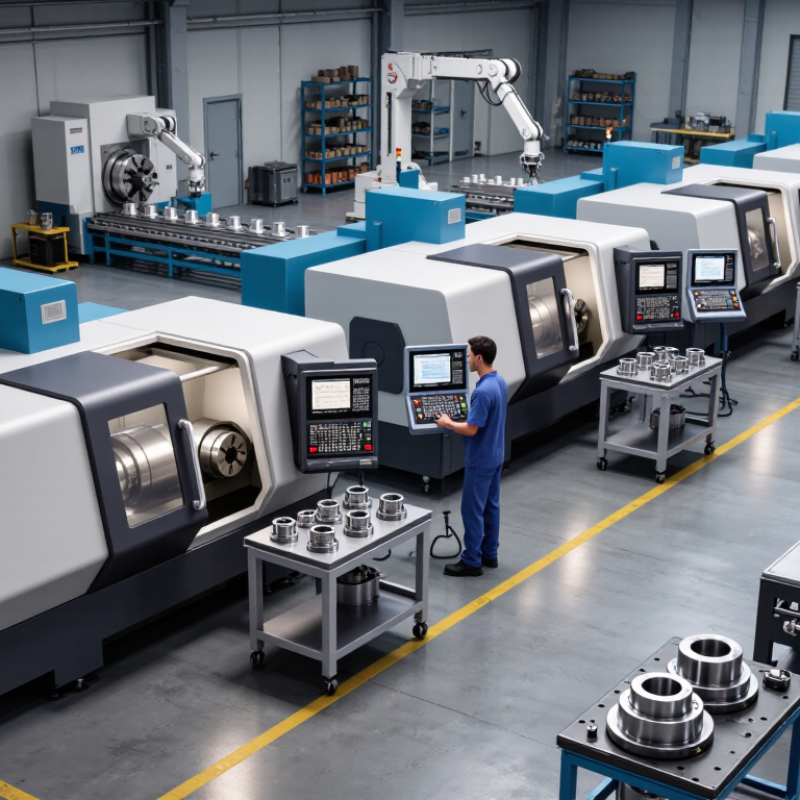
Top China CNC turning manufacturers increasingly combine precision machining with connected production systems. Their core equipment includes multi-axis turning centers, mill-turn machines, Swiss-type lathes, live tooling, and automatic bar feeders. These systems can complete drilling, milling, threading, and turning in fewer setups. That reduces handling errors and improves repeatability. It also shortens production cycles.
According to the International Federation of Robotics’ World Robotics 2024 report, 541,302 industrial robots were installed worldwide in 2023. This growth explains why leading machining facilities invest in robotic loading, machine vision, and palletized workflows.
The strongest manufacturers provide more than metal cutting. Their services often include design-for-manufacturing reviews, rapid prototypes, first-article inspection, statistical process control, and full material traceability. Coordinate measuring machines verify critical dimensions, while in-process probing detects tool wear before defects spread. Digital production records can connect drawings, inspection results, and shipment data.
Useful details matter: a supplier should explain its tolerance capability, surface-finish method, inspection frequency, and response time for nonconforming parts. ISO 9001-based quality systems can support reliability, but certification alone proves little. A polished facility can still miss a difficult tolerance. Buyers should request sample inspection reports and realistic production evidence. Automation helps, though it is not magic. According to Deloitte’s 2024 smart manufacturing survey, 86% of surveyed manufacturers viewed smart manufacturing as important to competitiveness within five years. The figure is persuasive, yet implementation quality remains uneven.
 English
 Česká republika
 Deutsch
 Dutch
 Polska