10 Tips for Choosing a Screw Dry Vacuum Pump?
Choosing the right Screw Dry Vacuum Pump is rarely a simple catalog decision. A pump may promise deep vacuum, yet perform poorly with moisture, solvents, dust, or frequent start-stop cycles. The real test begins at the process line, where vapor condenses, temperatures shift, and production pressure changes without warning.
Vacuum technology author John F. O’Hanlon wrote, “Vacuum technology is a technology of surfaces.” His observation remains practical. Internal clearances, sealing materials, rotor coatings, and chamber cleanliness can affect performance more than a headline specification. This guide, “10 Tips for Choosing a Screw Dry Vacuum Pump,” examines those details through an engineering and maintenance perspective. It considers ultimate pressure, pumping speed, gas composition, condensable loads, corrosion resistance, operating temperature, energy consumption, noise, controls, and service access.
Look beyond the brochure.
A reliable selection should match the pump to the entire duty cycle, not only the desired vacuum level. Ask how quickly the pump must evacuate a chamber. Check whether the exhaust system can handle vapor safely. Confirm the manufacturer’s test conditions, because figures measured with dry air may not represent your process. Total ownership cost also matters. A cheaper unit can become expensive when filters clog, oil-free stages wear, or technicians struggle to reach the service panels.
No choice is perfect.
Even experienced engineers can overlook seasonal humidity, powder carryover, or unexpected chemical mixtures. That is why field data, supplier documentation, and a small-scale trial deserve attention. The following ten tips provide a practical framework for choosing a Screw Dry Vacuum Pump with greater confidence, while leaving room to question convenient assumptions.
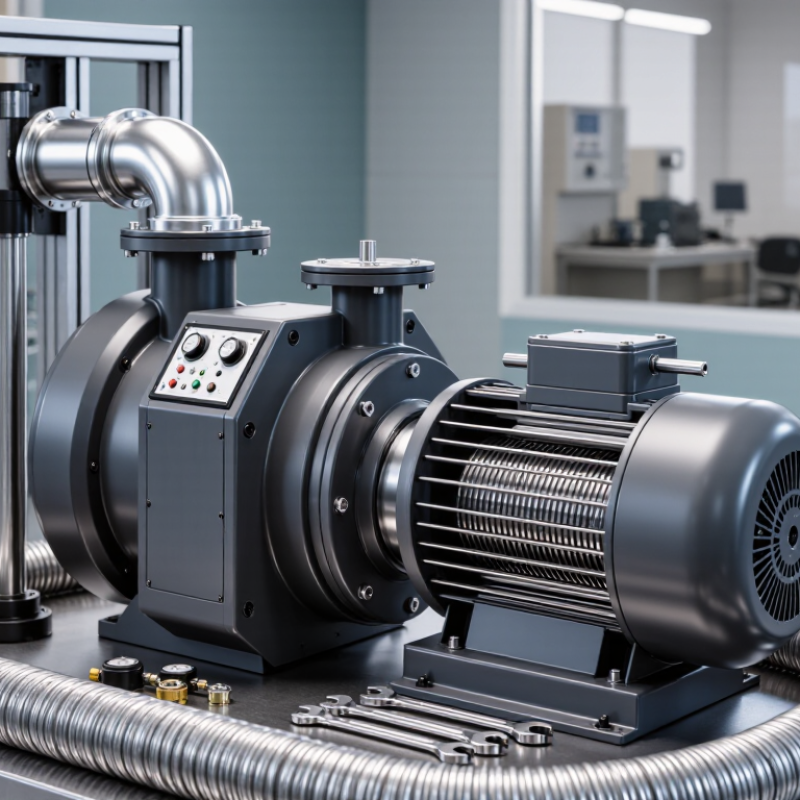
Define Your Vacuum Requirements and Operating Conditions
Before choosing a screw dry vacuum pump, define the actual vacuum task. Record target pressure, pumping speed, gas load, cycle time, and acceptable leakage. Pressure alone misleads.
ISO 21360-1:2020 requires pump-performance measurements to state inlet pressure, gas type, and operating conditions. Use those details when comparing specifications. A chamber needing 10 mbar continuously differs greatly from one reaching 0.01 mbar briefly. At approximately 1 mbar, water can boil near 7°C, according to NIST thermodynamic data. Moisture may therefore enter the pump as vapor, not liquid. Include evaporation rates, solvent composition, and condensable volume in the sizing calculation.
Operating conditions deserve equal attention. Check inlet temperature, ambient temperature, altitude, corrosion risk, dust, and exhaust restrictions. A process running twelve hours daily needs different thermal margins than an occasional laboratory cycle. The European Commission’s energy-efficiency studies repeatedly identify part-load operation and poor system sizing as major sources of industrial energy waste. Do not select capacity from peak flow alone. Estimate the complete gas load, then allow practical headroom without oversizing excessively.
A common field mistake is trusting ultimate pressure as the main selection criterion. It is only one result. Real performance can fall when valves, hoses, filters, and vapors add resistance. I would also test the pump with representative process gas, not clean air alone. That extra test costs time, but it can expose contamination, corrosion, or unstable pressure control before installation.
Compare Pump Capacity, Pressure Range, and Performance
10 Tips for Choosing a Screw Dry Vacuum Pump
When choosing a screw dry vacuum pump, compare capacity under real operating conditions. A larger rated flow does not always mean faster evacuation. Check the pumping speed at your working pressure, not only at the inlet. A vacuum chamber may contain moisture, dust, or process vapor. These factors can reduce effective capacity. Ask for pump-down curves and test data when available. Numbers matter.
Pressure range deserves equal attention. Confirm the ultimate pressure, operating pressure, and maximum inlet pressure. These values describe different conditions. A pump reaching low pressure in a clean laboratory may perform differently beside a warm production chamber. Check whether the pump can handle pressure changes without overheating. Also review tolerance for condensable vapor. I have seen specifications look excellent until wet vapor entered the system.
Performance includes more than speed and pressure. Listen for abnormal vibration during startup. Record motor temperature after several hours. Examine maintenance intervals, seal arrangements, and access to wear parts. Energy use also affects long-term cost, especially during continuous operation. A pump with slightly lower capacity may provide steadier performance and fewer interruptions. That trade-off can be sensible. However, selecting by price alone is a weak method. Compare measured performance, service records, and expected process loads. Leave a safety margin, but do not oversize blindly. An oversized pump may cycle poorly and consume unnecessary energy.
| No. | Selection Tip | Key Dimension to Compare | Typical Engineering Range | Practical Guidance |
|---|---|---|---|---|
| 1 | Match Pump Capacity to System Volume | Nominal pumping speed | Approximately 10–1,000 m³/h | Estimate the required pump-down time and gas load. Select capacity using the effective pumping speed at the chamber, not only the pump inlet rating. |
| 2 | Verify the Required Ultimate Pressure | Ultimate inlet pressure | Typically 0.01–1 mbar, depending on design | Choose a pump whose tested ultimate pressure is lower than the process target. Confirm whether the figure is measured with clean, dry, blanked-off inlet conditions. |
| 3 | Compare Performance Across the Working Range | Pumping speed at operating pressure | Review data from atmospheric pressure down to the target pressure | A pump may have high nominal capacity but reduced speed at low pressure. Request a pumping-speed curve rather than relying on one rated point. |
| 4 | Allow for Gas Load and Leakage | Gas throughput and leak rate | Gas load may range from a few mbar·L/s to hundreds of mbar·L/s | Include process gases, outgassing, intentional purge flow, and system leakage. A capacity margin of about 20–30% is commonly used when the gas load is well defined. |
| 5 | Check Condensable Vapor Handling | Water-vapor tolerance and gas ballast | Confirm the manufacturer’s vapor-tolerance value; it is often specified in mbar | For humid or solvent-heavy processes, select a pump with an appropriate gas-ballast or purge function and verify performance at the actual vapor load. |
| 6 | Evaluate Corrosion Resistance | Material compatibility and protective treatment | Depends on gas chemistry, concentration, temperature, and exposure time | For corrosive gases, verify rotor, chamber, seal, coating, and exhaust-path materials. Use compatible purge gas and do not assume that “dry” means corrosion-proof. |
| 7 | Compare Power Consumption | Motor power and specific energy | Common motor ratings are approximately 1.5–30 kW | Compare kW at the same inlet pressure and pumping speed. Variable-speed control can reduce energy use during partial-load operation. |
| 8 | Review Temperature and Cooling Requirements | Exhaust temperature and cooling method | Process-dependent; many systems require air or water cooling | Check ambient-temperature limits, cooling-water quality, ventilation, and exhaust temperature. High process gas loads can raise temperature significantly. |
| 9 | Assess Noise, Vibration, and Installation | Sound level, vibration, footprint, and inlet size | Industrial sound levels are commonly around 60–75 dB(A), depending on operating point | Confirm measured noise conditions, foundation requirements, service clearances, inlet piping diameter, and allowable exhaust back-pressure before installation. |
| 10 | Calculate Lifecycle Cost and Maintenance Needs | Service interval, replacement parts, and total cost of ownership | Routine inspection intervals commonly range from 4,000–8,000 operating hours, but vary by duty | Include electricity, cooling, filters, seals, overhaul labor, downtime, and disposal costs. Confirm the recommended service schedule for the actual process duty. |
Evaluate Materials, Sealing Methods, and Gas Compatibility
Choosing a screw dry vacuum pump starts with the process gas, not the catalog pressure. Map every gas, vapor, and cleaning agent entering the chamber. Oxygen-rich streams can accelerate corrosion or create heat concerns. Chlorinated compounds may attack unsuitable metals and elastomers. Check the wetted materials, including screw rotors, casing, shaft seals, and exhaust parts. Stainless steel helps in corrosive service, but it is not a universal answer. That assumption causes trouble.
Sealing deserves equal attention. A dry pump can still leak through shaft seals, purge connections, or worn O-rings. Compare contact seals, labyrinth arrangements, and purge-assisted designs against pressure, temperature, and gas exposure. For abrasive powders, ask where particles collect and how technicians inspect the seal area. A small purge flow may protect the seal, yet it can change gas composition and operating cost. Request compatibility tables rather than accepting “chemical resistant” as proof. Too vague.
Review gas compatibility at startup, normal load, venting, and shutdown. Condensing vapor can harden deposits inside narrow clearances. Reactive gases may need dilution, controlled temperature, or a corrosion-resistant coating. Use actual concentration, moisture, temperature, and cycle data when consulting a vacuum specialist. I would also test a small sample before approving full installation. That step is sometimes skipped. Do not skip it.
Check Maintenance Needs, Reliability, and Total Ownership Cost
Choosing a screw dry vacuum pump starts with maintenance, not the purchase price. Ask how technicians will reach filters, bearings, and sealing areas. Service access matters when the pump sits beneath crowded pipework. Check recommended inspection intervals, cleaning procedures, and replacement times. Shorter service intervals can erase an attractive initial discount. Keep records from similar installations. Real operating data is more useful than polished claims.
Reliability depends on process conditions. Confirm the pump can handle vapor, dust, temperature changes, and frequent cycling. Review vibration limits, thermal protection, overload response, and restart behavior. Request tested performance data at your actual pressure range. A pump may look stable on a brochure curve, yet behave differently with wet gas. I once underestimated condensation during startup. That mistake increased cleaning work and caused avoidable downtime. Humility helps here.
Total ownership cost includes electricity, labor, spare parts, installation, and lost production. Compare energy use at normal operating pressure, not only at maximum capacity. Estimate the cost of an unplanned shutdown. Also check local technical support and spare-part availability. Waiting weeks for a simple component is expensive. Consider noise, cooling requirements, and control integration. Choose a design your team can maintain confidently. The cheapest option is not always the economical one. Recheck every assumption.
Verify Safety Features, Supplier Support, and System Compatibility
Choosing a screw dry vacuum pump starts with the process, not the catalogue. In field installations, I check ten practical points, but safety features receive early attention. Look for thermal protection, pressure monitoring, a non-return valve, and an accessible emergency stop. Guards should prevent contact with hot surfaces and rotating parts. Ask how alarms behave during power loss. Silent failures are dangerous. Request test records, operating limits, and clear maintenance intervals from the supplier.
Supplier support matters after delivery. A reliable supplier should review your gas composition, vapor load, inlet pressure, and duty cycle before recommending a pump. They should provide installation drawings, wiring details, commissioning guidance, and spare-parts advice. Response time matters when a pump stops at 2 a.m. Ask for named technical contacts and escalation procedures. Training should include filter changes, seal inspection, and contamination control. I once assumed the manual covered everything; it did not. That mistake slowed commissioning and exposed a gap in our checklist.
System compatibility is equally important. Compare the flow curve with actual operating pressure, not only the advertised maximum vacuum. Check electrical supply, exhaust routing, cooling water, noise limits, and floor space. Materials must suit corrosive gases, solvents, or fine dust. Confirm compatibility with sensors and plant controls. A small mismatch can cause overheating or unstable pressure. If the process changes later, ask whether software, valves, or protection settings can be updated safely. Keep every answer in writing.
10 Tips for Choosing a Screw Dry Vacuum Pump
Suggested evaluation weighting for safety, support, and system compatibility
Safety features and system compatibility receive the highest weighting because they directly affect operator protection, process stability, and installation requirements. Supplier support, ultimate pressure, flow capacity, and lifecycle cost should then be reviewed against the intended vacuum process and operating environment.
English
Česká republika
Deutsch
Dutch
Polska