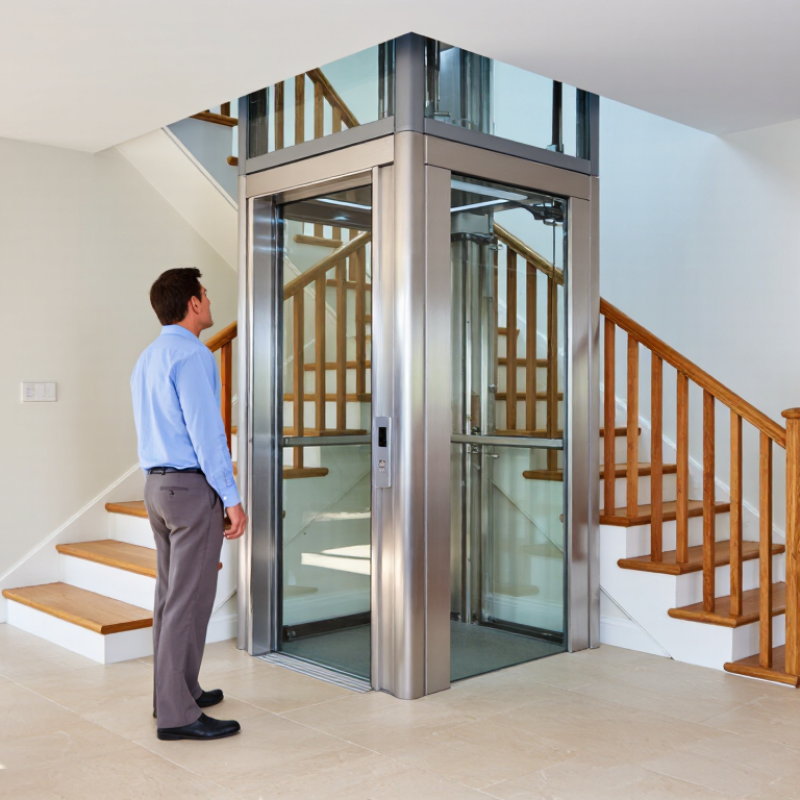
10 Tips for Buying a Household Elevator
Choosing a Household Elevator is not just a question of adding convenience. It can affect daily access, usable floor space, noise, and future maintenance. A compact lift beside the stairwell may look simple in a brochure. In a real home, door clearance, turning space, and the route to each floor matter just as much.
The wider market offers useful context, but it should not be mistaken for household-specific demand. Grand View Research estimated the global elevator and escalator market at USD 88.59 billion in 2023 and forecast growth through 2030. Its report covers a broad industry, not only residential lifts. Meanwhile, the U.S. Census Bureau counted 55.8 million Americans aged 65 or older in 2020. That figure highlights an aging population, but it does not tell us which homes need elevators. The distinction matters.
Accessibility pioneer and architect Ron Mace defined universal design as “the design of products and environments to be usable by all people, to the greatest extent possible, without the need for adaptation or specialized design.” His principle offers a practical lens for evaluating a household lift: consider who will use it now, and who may need it later. Fit matters. The following ten tips examine capacity, installation space, drive systems, safety features, energy use, service support, and total cost. A floor plan and a site assessment can reveal constraints early. Still, no checklist replaces a qualified, in-home evaluation; that is an inconvenient truth, but an important one.
Assess Household Needs, Users, and Accessibility Goals
Assessing household needs starts with the people who will use the elevator, not the floor plan. In the United States, 55.8 million people were 65 or older in 2020, according to the U.S. Census Bureau. The CDC has also reported that about 1 in 4 U.S. adults has a disability. These figures describe broad populations, not your household. Still, they are a reminder to plan for changing mobility, not just today’s stairs.
List who needs access, which floors matter, and what they carry. A wheelchair, walker, laundry basket, or sleeping child can change the space required. Measure doorways and landings, and note tight turns or doors that open into the route. Think about visitors, too. A caregiver may need room to stand beside a user. Small detail. Often missed.
Accessibility goals should be specific: independent travel between bedrooms, access to a bathroom, or fewer risky stair trips after surgery. AARP’s 2021 Home and Community Preferences Survey found that 77% of adults aged 50 and older want to remain in their homes as they age. That preference does not mean every home modification will work for every person. Discuss transfer needs, controls, backup plans, and future care with qualified accessibility and elevator professionals. Be honest about uncertainty; household needs can change, and an early plan may need revision.
10 Tips for Buying a Household Elevator - Assess Household Needs, Users, and Accessibility Goals
| Tip | What to Assess | Questions to Ask | Practical Next Step |
|---|---|---|---|
| 1. Identify who will use the elevator | Consider all regular users, including people with limited mobility, children, older adults, and caregivers. | Will users ride independently? Will someone need to accompany them? | Write down each user's mobility needs and expected level of assistance. |
| 2. Define the accessibility goal | Clarify whether the main goal is easier floor-to-floor access, wheelchair access, carrying items, or planning for future mobility changes. | What tasks should the elevator make possible that are difficult today? | Prioritize essential needs before comparing equipment or layouts. |
| 3. Measure the items and mobility devices | Measure wheelchairs, walkers, mobility scooters, and any equipment that must enter the car, including turning and transfer space. | Can the largest device pass through the doorway and fit inside with its user or caregiver? | Share measured dimensions with a qualified elevator professional; verify clear openings and usable interior space. |
| 4. Map the route between floors | Review which floors need access, where the elevator could stop, and how users will reach each landing. | Are the landings convenient, step-free, and close to the rooms users need? | Sketch the route and note door swings, corridors, stairs, and likely construction obstacles. |
| 5. Check the home’s structure and available space | Potential locations may affect floors, walls, utilities, or the building structure. Existing homes can have concealed conditions. | Will the proposed location require structural changes or relocation of plumbing, wiring, or heating equipment? | Arrange an on-site assessment before choosing a design or finalizing a budget. |
| 6. Compare capacity with real usage | Account for passengers, mobility devices, a caregiver, and occasional loads such as groceries or laundry. | What is the maximum expected load, and how does it compare with the equipment’s rated capacity? | Use the manufacturer’s rated capacity and have a professional confirm that the proposed layout suits the intended use. |
| 7. Evaluate controls and ease of use | Consider control height, button size, visibility, reach, hand strength, and whether controls are usable while seated. | Can each intended user operate the controls comfortably and understand the indicators? | Ask to review control placement and available accessibility features during the design consultation. |
| 8. Ask about power interruptions and emergency procedures | Understand how the elevator behaves during a power failure, how occupants can communicate, and how authorized help can respond. | Is there an emergency lowering or backup feature? What are its limits and operating instructions? | Request written emergency instructions and discuss the plan with everyone who may use the elevator. |
| 9. Confirm local permits and safety requirements | Applicable building, electrical, accessibility, and inspection requirements depend on the location and project. | Which permits, inspections, and code requirements apply to this home and installation? | Check with the local building authority and confirm who is responsible for permits and inspections. |
| 10. Plan for maintenance and long-term needs | Consider scheduled servicing, repair access, expected operating costs, household changes, and the availability of trained service support. | What routine maintenance is recommended, and what happens if the elevator needs repair? | Review the maintenance plan, warranty terms, service response arrangements, and total ownership costs before purchasing. |
Note: Space, capacity, accessibility, permitting, and safety requirements vary by equipment and location. Confirm project-specific details with qualified professionals and local authorities.
Compare Elevator Types, Drive Systems, and Cabin Options
A household elevator can look simple in a brochure, but its type determines how much space and building work it needs. A through-floor lift may suit a home with limited room, while a shafted elevator can offer a larger cabin and more configuration choices. Measure doorways, ceiling height, and the landing area before comparing quotes. Small details matter.
Drive systems change the ride and installation requirements. Hydraulic models often provide a smooth trip, but may need space for equipment and routine service. Traction systems use cables and counterweights; check overhead clearance and the proposed equipment location. Screw-drive lifts can fit some compact homes, though ride speed and operating sound deserve attention. Ask for the expected noise level near bedrooms, not just in the showroom. That matters.
Cabin options affect daily comfort more than appearance alone. Compare clear floor space, door opening width, handrail placement, lighting, and control height. If someone uses a walker or wheelchair, test the turning space with that equipment before choosing a cabin size. A glossy finish cannot fix a cramped entry. Also ask how the lift behaves during a power interruption and what maintenance visits involve. I might be tempted to choose the smallest model to save space, but that decision can feel inconvenient every day. Have a qualified elevator professional assess the home and explain any structural changes before you commit.
Check Space, Structural Requirements, and Local Building Rules
Before comparing household elevator options, measure the proposed route from every floor. Record the available width, depth, ceiling height, and door locations. A stairwell corner may look spacious until you account for a landing or nearby doorway. Small details matter. Check headroom above the top stop and whether the design needs a pit below the lowest floor. Also note pipes, wiring, heating ducts, and windows that could affect the shaft. Sketch the measurements, but verify them on site; walls are not always square.
The elevator’s weight and movement place demands on the supporting structure. Ask a qualified structural professional to assess the floor, framing, and foundation before settling on a layout. Do not assume an existing closet or unused corner can carry the load. It is easy to overlook how equipment access affects future maintenance, too. Keep a clear route for service work where possible. Local building rules may set requirements for permits, fire separation, accessibility, or inspections, and these vary by location and project. Contact the local building department early, then confirm the proposed dimensions and structural plans with the relevant professionals. I would measure twice; even then, a site visit can reveal something the sketch missed.
Estimate Purchase, Installation, and Long-Term Operating Costs
A household elevator’s purchase price is only one part of the budget. Ask for an itemized quote covering the lift, controls, doors, delivery, and installation. The home itself can change the cost. A narrow stairwell, reinforced floor, or new opening may require extra construction. Get a site assessment before comparing quotes. A low equipment price can look less attractive after building work is included.
Installation costs may also include electrical work, inspections, and repairs to walls or flooring. Ask who coordinates each task and what is excluded. Request separate estimates for standard conditions and likely changes. That adds up. A written allowance for unexpected work can help, though it is not a guarantee. Local labor rates and the home’s layout make broad online figures unreliable.
Long-term costs deserve equal attention. Check expected electricity use, routine servicing, replacement parts, and the cost of urgent repairs. Ask how often maintenance is recommended and whether visits are included in any service plan. A lift that runs quietly today may still need attention years later. Compare the total cost over several years, not just the first invoice. Keep some budget aside for repairs; even careful planning misses things.
Verify Safety Features, Installer Credentials, and Maintenance Support
A household elevator should feel uneventful: doors close smoothly, the car stops level, and nobody has to guess what to do during a fault. Ask the installer to demonstrate the door interlock, emergency lowering, alarm, and backup power. The U.S. Consumer Product Safety Commission’s 2017 residential elevator safety alert reported six child deaths and two serious injuries linked to entrapment hazards. That history makes the gap between the car door and landing door worth checking in person. Have the installer explain how the chosen design controls that space and what users should do if the elevator stops. One detail is easy to miss.
Installer qualifications matter as much as the equipment. Request proof of applicable licenses, insurance, elevator-specific training, and recent residential references; verify these with the relevant local authority. Ask who handles callbacks, how quickly they respond, and whether replacement parts remain available. ASME A17.1/CSA B44 is a major elevator safety code, but local requirements and adopted editions can differ. Get the applicable standard and inspection requirements in writing. Maintenance support should include a documented service schedule, emergency contact, and clear prices for routine visits and repairs. A low purchase price can become frustrating if service is distant or vague. I would not treat a polished brochure as proof; a specific maintenance plan is more useful, even if the details feel less exciting.
10 Tips for Buying a Household Elevator
Verify safety features, installer credentials, and maintenance support before choosing an elevator.
The chart groups the 10 recommended checks in this guide: 4 for safety, 3 for installer credentials, and 3 for maintenance support. These are checklist counts, not survey results.
English
Česká republika
Deutsch
Dutch
Polska