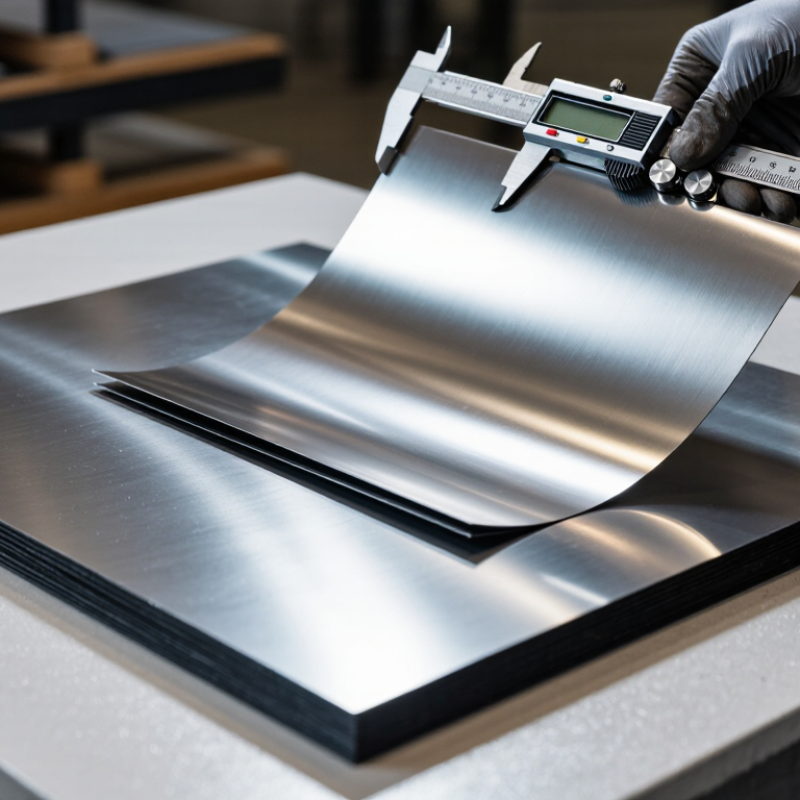
How to Choose 1.5mm Stainless Steel Sheet in 2026
Choosing a 1.5mm Stainless Steel Sheet in 2026 means looking beyond its thickness. The right choice depends on where the sheet will work, how it will be formed, and what finish the job requires. J. R. Davis, editor of ASM Specialty Handbook: Stainless Steels, offers a useful technical foundation. A practical takeaway, paraphrased from his work, is: “Choose for the service environment, not thickness alone.” It is a simple rule. But it is easy to overlook.
Start with the grade. Type 304 often suits general indoor use, while chloride exposure may make Type 316 worth considering. Confirm the grade against the actual environment and project specifications. Then check the mill test certificate, stated thickness tolerance, flatness, and surface finish. A bright sheet can look flawless under warehouse lights, yet still be unsuitable for a tight bend or a demanding finish. Ask the supplier how the sheet was measured and whether protective film is included. Small details matter.
This guide explains how to compare those details without treating a low price as proof of value. It also covers fabrication needs, supplier questions, and common buying mistakes. Not every project needs a premium grade. And not every 1.5mm sheet behaves the same. I would still verify the certificate before ordering; a confident product listing is not a substitute for traceable material data.
Identify the Stainless Steel Grade for Your Application
How to Choose 1.5mm Stainless Steel Sheet in 2026
Identify the Stainless Steel Grade for Your Application
Start with the environment, not the price. Grade 304 suits many indoor fittings, kitchen equipment, and general fabrication needs. It offers useful corrosion resistance and is commonly available. For coastal sites, salt spray, or regular contact with chlorides, grade 316 is often a stronger candidate. Its molybdenum content improves resistance to pitting. Still, it is not immune to corrosion. Cleaning and exposure conditions matter.
For dry interiors or decorative panels, grade 430 may be adequate and can cost less. It is magnetic, unlike many common 304 and 316 products, but a magnet alone cannot confirm grade. Ask for material test documentation and verify the stated grade with a qualified supplier. Check the sheet’s finish, flatness, and suitability for bending or welding, too. At 1.5mm, tight bends can mark or distort the sheet if the tooling is unsuitable. A frequent mistake is choosing a grade from a short product description, then discovering the service environment was different. It is worth reviewing actual contact with water, salt, cleaners, and heat before ordering.
No grade fits every job.
Define Sheet Dimensions, Tolerances, and Performance Requirements
For a 1.5mm stainless steel sheet, specify more than nominal thickness. State the required length and width, and clarify whether dimensions are finished sizes or cutting sizes. Include thickness tolerance and flatness requirements on the drawing or purchase specification. A sheet that measures 1.5mm nominally may vary within its applicable product standard; do not assume every supplier uses the same limits. Small details matter.
Match performance requirements to the part’s actual use. Identify the stainless grade, surface finish, and exposure conditions, such as indoor humidity, cleaning chemicals, or outdoor weather. If the sheet will be bent, welded, or drilled, describe those operations and any visible-face requirements. For example, a cabinet panel may need a consistent brushed finish, while a formed bracket may prioritize bendability and dimensional stability. I would still verify a sample before committing to a large order; drawings alone can miss issues such as waviness or edge marks.
Tips: Record the measurement method and inspection points, especially for flatness and finish. Ask for a material certificate when traceability matters, and confirm packaging protects the surface during transport. Keep the specification practical. Overly tight tolerances can add cost without improving the finished part.
Compare Surface Finishes and Fabrication Options
For a 1.5 mm stainless sheet, choose the finish around its working environment and fabrication route. A 2B finish is smooth and practical for covered parts, enclosures, and general forming. A No. 4 brushed finish hides light handling marks, but its grain can look uneven if cut panels are rotated. BA has a brighter, reflective appearance; fingerprints show quickly. Euro Inox’s guide to stainless-steel surface finishes explains that finish affects both appearance and cleaning, not just price. Small detail, big effect.
Check the forming sequence before ordering. Brushing direction should match across visible panels, and protective film can reduce scratches during laser cutting and bending. Ask the processor to confirm whether the film suits the cutting method; heat can leave residue. For a folded sample, inspect the outside bend under angled light. It may reveal surface cracking or an inconsistent grain that a flat sample misses. I would still test the actual batch, since finish descriptions alone do not guarantee identical appearance.
ASTM A480 identifies common sheet finishes, but does not make a finish choice for your application. World Stainless reported 58.4 million tonnes of global stainless crude-steel production in 2023. That industry figure shows the material’s scale, not which finish performs best on your part. For food-contact or high-cleanliness equipment, specify the required finish and cleaning conditions, then verify the fabricator’s process and inspection criteria. Don’t assume “brushed” means one fixed roughness.
How to Choose 1.5 mm Stainless Steel Sheet in 2026
Compare grade chemistry first, then select a finish and fabrication route for the part’s environment and appearance.
The bars show specified minimum-to-maximum composition ranges by weight for common sheet grades, based on ASTM A240/A240M limits. Confirm the applicable specification and grade with your supplier.
Surface finishes and fabrication
A 2B finish is a common general-purpose choice; BA provides a brighter, smoother appearance; No. 4 has a directional brushed look. For 1.5 mm sheet, laser cutting, punching, and press-brake bending are common options. Protect visible finishes during handling and forming, and confirm bend radius, tooling, and grain direction with the fabricator.
Check Standards, Certifications, and 2026 Compliance Needs
How to Choose 1.5mm Stainless Steel Sheet in 2026
Check Standards, Certifications, and 2026 Compliance Needs
A 1.5mm sheet can vary in thickness, grade, finish, and intended use. Before ordering, identify the application and destination market. Then confirm which material and product standards apply; requirements can differ by industry and country. In 2026, check that the cited standard edition is current, not simply copied from an older purchase order. Ask for a mill test certificate showing the grade, chemical composition, mechanical properties, and batch identification. Keep records.
Certificates are useful only when their scope matches the sheet being supplied. Check that the supplier’s quality certification is valid, relevant to the product, and issued by an appropriate certification body. Compare the document’s heat or batch number with the packing label. Measure sample sheets with a calibrated micrometer at several points, since thickness and flatness can affect fitting. Paperwork can look complete and still leave gaps. I would not treat a general certificate as proof that every sheet meets a specific project requirement.
Tips: Put the required grade, standard edition, thickness tolerance, finish, and documentation in the purchase specification. Keep a sample and inspection results with the order records. If a certificate lists unclear codes, request clarification before accepting the material. Check twice.
Evaluate Suppliers, Pricing, and Quality Assurance
When comparing suppliers for 1.5 mm stainless steel sheet, request the same grade, width, finish, and delivery terms from each. Otherwise, a low quote may hide differences in usable yield or surface quality. The World Stainless Association’s Stainless Steel in Figures 2024 reports 58.4 million tonnes of global stainless crude-steel production in 2023, underscoring the scale of a market where supply conditions can shift. Ask suppliers to explain how alloy surcharges, freight, and quote validity affect the final price. Details matter.
Quality assurance should be specific, not just a promise. Check the mill test certificate against the purchase order, including grade, heat number, and chemical composition. ASTM A240 covers stainless steel plate, sheet, and strip for pressure vessels and general applications; confirm the applicable specification and delivery condition before ordering. On receipt, measure thickness at several points with a calibrated micrometer, then inspect edges and surfaces under consistent lighting. A clean certificate is useful, but it cannot verify every sheet in the bundle.
Request sample sheets when appearance or forming performance matters, and agree in writing on acceptable surface marks and flatness. Keep a record of measurements and packaging condition. It takes time. Yet one detail is easy to overlook: a supplier’s quality system may be strong while a particular shipment still falls short. Review the evidence, not only the sales assurances.
English
Česká republika
Deutsch
Dutch
Polska