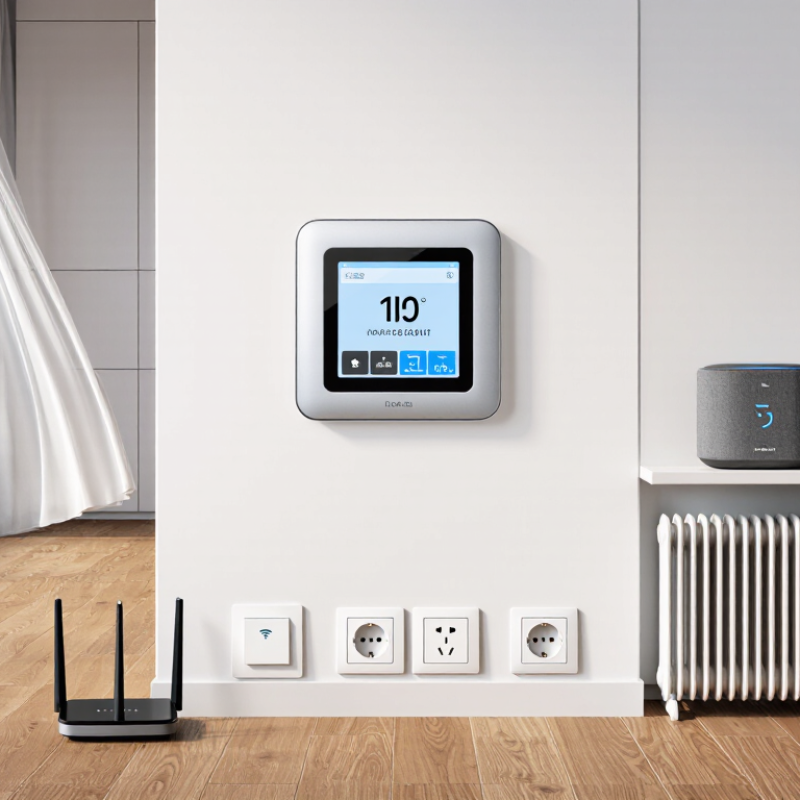
How to Design Smart Home Electronics for Global Markets?
Designing connected devices for many countries is not a matter of translating one app. Smart Home Electronics Design must account for different power systems, wireless conditions, languages, household layouts, and user expectations. A thermostat may sit beside a drafty window in one home and control underfloor heating in another. The interface, sensors, and installation steps must still feel clear. Small details matter.
Design researcher Don Norman has observed, “Good design is actually a lot harder to notice than poor design.” That principle is useful for connected homes: reliable pairing, readable status lights, and straightforward recovery should fade into everyday life. This outline explores how teams can research regional needs, choose adaptable hardware, plan software localization, and evaluate connectivity, privacy, usability, and product safety for each target market. Local requirements vary, so qualified specialists should verify them before launch. A checklist helps, but it cannot replace testing with real households. That is easy to overlook. Even a polished product may fail when a router drops its signal or an instruction uses unfamiliar terms. Global design is always a set of trade-offs, and some choices deserve another review.
Define Target Markets and Local User Requirements
A smart-home product should start with a specific household, not a vague global customer. Choose target markets by studying housing types, internet access, climate, and typical home layouts. A sensor that works well in a dry apartment may struggle in a humid coastal home. Small details matter. Interview residents, installers, and local support teams before fixing the design. Ask how people name rooms, share access with family, and handle connectivity outages. A simple task can reveal more than a broad survey: watch someone pair a device in a dim hallway with an older phone.
Translate user needs into clear design choices. Check local power standards, wireless requirements, language, accessibility expectations, and applicable product rules with qualified local specialists. Keep setup instructions readable on a small screen, and avoid assuming every household has fast Wi-Fi or a dedicated router. Test with different accents, phone settings, wall materials, and household routines. Test in homes. Record where people hesitate, even when the app reports success. We sometimes get this wrong: a feature that feels intuitive to the design team can confuse a first-time user. Revise the flow, then test it again with people who were not involved in development.
Map Regional Regulations, Safety Standards, and Certifications
Design compliance into the product brief, not the final packaging review. Build a country-by-country matrix for radio approvals, electrical safety, privacy, cybersecurity, and labeling. A smart plug may need different radio tests, plug dimensions, and safety evaluations across markets. Check whether CE marking, national approvals, or third-party testing applies; CE is not a universal safety certificate. Small details matter.
IoT Analytics estimated 18.8 billion connected IoT devices worldwide by the end of 2024, showing the scale of products crossing borders. But each market sets its own conditions. In the EU, applicable internet-connected radio equipment has faced cybersecurity requirements under the Radio Equipment Directive since August 2025. ENISA’s 2024 Threat Landscape analyzed 11,079 incidents from July 2023 through June 2024. That evidence makes secure setup, update support, and data protection practical design requirements, not optional extras.
Map requirements against the exact product category and sales territory. For electrical safety, review the relevant IEC standard and its national adoption; for radio, check local spectrum and testing rules. Keep test reports, declarations, component records, and firmware versions together. Requirements change. No matrix stays complete for long. A useful review also asks what the product does after support ends, because that question is easy to postpone and hard to fix later.
Design Adaptable Hardware, Power Systems, and Connectivity
A smart home device should tolerate more than one wall socket, climate, or installation style. Design the power input around the regions you plan to serve, and verify voltage, frequency, plug, and adapter requirements with qualified local specialists. A wide-input supply can simplify hardware, but it may add cost and heat. Measure temperatures inside the enclosure during long operating cycles, not only on a cool workbench. Small details matter. Leave room for cable strain relief and clear access to reset controls.
Connectivity needs the same flexibility. A home’s thick walls, crowded wireless bands, and router placement can change performance dramatically. Test devices in apartments, detached homes, and real rooms with doors closed. Support updates and recovery when connections drop; users should not need to dismantle a sensor to restore it. Keep antennas away from metal and noisy power components, then check performance in the finished enclosure. One honest limitation: a universal design can become bulky or expensive. It may be better to offer a small set of carefully validated hardware configurations than force one board to serve every market.
Build in Privacy, Cybersecurity, and Cross-Platform Compatibility
Smart home electronics earn trust through small, visible choices. A camera should have a clear indicator when recording, while a sensor should collect only the data its function requires. Process routine events locally where practical, and explain plainly when information leaves the home. Give users simple controls to review, delete, or disable stored data. No hidden surprises.
Cybersecurity needs attention throughout a product’s life, not just before shipping. Use encrypted connections, secure startup checks, and signed software updates. Set a realistic support period, then make update status easy to find. A forgotten device can become a weak point. These measures add cost and effort, and they do not eliminate every risk; that trade-off deserves honest review.
Global compatibility also means more than translating an app. Test devices with different routers, network conditions, languages, and accessibility settings. Support established, interoperable communication standards where possible, and provide a basic local control path if internet access fails. Real homes vary. A setup that works in a quiet test room may struggle behind thick walls or on a crowded network. Field testing across housing types can reveal these gaps, though no test sample represents every household. Keep compatibility requirements documented, and revisit them as software and regional infrastructure change.
How to Design Smart Home Electronics for Global Markets? — Build in Privacy, Cybersecurity, and Cross-Platform Compatibility
| Design Dimension | Recommended Product Baseline | Global Market Considerations | Verification and Evidence |
|---|---|---|---|
| Cross-platform interoperability | Use Matter where it fits the product’s function and hardware capabilities. Design connectivity around documented, widely adopted IP networking technologies. | Matter supports device communication over technologies including Wi-Fi, Thread, and Ethernet. Confirm that the intended device type and required features are covered by the applicable Matter specification. | Test commissioning, core device functions, and recovery after a network reset with multiple compatible controllers and platforms. |
| Privacy by default | Collect only data needed for clearly described functions. Keep optional analytics, microphones, cameras, and cloud features off until the user enables them. | Privacy requirements differ by market. Review applicable laws, including the GDPR in the European Union and PIPL in China, with qualified local counsel. | Maintain a data inventory that records each data type, purpose, destination, retention period, and user control. |
| Local processing and cloud reliance | Keep essential device functions available locally where technically feasible; clearly identify features that depend on an internet connection or cloud service. | Cloud-region availability, data-transfer rules, latency, and connectivity conditions can vary across markets. | Test core operation during internet outages and document which features stop working, degrade, or continue locally. |
| Secure account and device access | Do not ship products with shared universal passwords. Require unique device credentials or secure, user-guided account setup, and provide a safe recovery process. | Setup instructions and account recovery should be understandable in each supported language and appropriate to local account and authentication practices. | Verify that initial setup changes or establishes credentials securely and that reset procedures remove prior user access. |
| Encryption and communication security | Protect sensitive data in transit and at rest using current, widely reviewed cryptographic protocols and properly managed keys. | Network capabilities and legal requirements may differ by country. Avoid relying on hard-coded secrets or undocumented communication protocols. | Review protocol configuration, certificate validation, key storage, and network traffic using security testing and code review. |
| Software updates and vulnerability handling | Provide authenticated software updates, a vulnerability-reporting channel, and a defined support period. A five-year support period after the last sale is a practical design target, not a universal legal rule. | Update, disclosure, and product-security obligations vary by jurisdiction. The EU Cyber Resilience Act introduces phased obligations, so manufacturers should check applicable dates and product scope. | Test signed-update installation, interrupted-update recovery, rollback protections, and the published security-support policy. |
| Security engineering guidance | Use established IoT security guidance such as ETSI EN 303 645 and NISTIR 8259A as inputs to product requirements and risk assessment. | Guidance and certification expectations may differ by market and product category; these references do not replace applicable regulatory assessment. | Map product controls to the selected guidance and retain threat models, test reports, and remediation records. |
| Radio and regional configuration | Use region-appropriate radio configurations, power limits, and supported channels; prevent users from selecting settings that are not permitted in their region. | Radio equipment requirements and permitted spectrum vary by jurisdiction. Hardware and firmware variants may be needed for different markets. | Keep a market-by-market approval checklist and verify the final production configuration against applicable radio requirements. |
| Accessibility and localization | Provide clear setup, privacy, security, and troubleshooting instructions in supported languages. Use readable text, accessible controls, and understandable consent choices. | Language, accessibility, labeling, and consumer-information requirements can differ across countries and regions. | Conduct translated usability testing and review packaging, applications, help content, and safety information for each launch market. |
| End-of-life and account removal | Offer a straightforward factory reset, account unlinking, and secure data deletion process. Explain what happens when cloud support ends. | Consumer rights, data deletion rules, and service-continuity expectations vary by market. | Test reset and resale scenarios, confirm credentials and personal data are cleared, and publish an end-of-support notice process. |
Test, Localize, and Prepare Products for Global Deployment
Smart home products need more than a successful bench test. Test the complete system: device, app, router, cloud connection, and recovery after a power cut. IoT Analytics estimated 18.8 billion connected IoT devices worldwide by the end of 2024, a 13% annual increase. That scale makes dependable onboarding and firmware updates essential. Try weak Wi-Fi, crowded radio channels, and a phone set to another language. Test the edge cases. A product that works only on a fast office network is not ready for a typical home.
Localization affects both hardware and daily use. Check plugs, voltage ranges, radio settings, temperature units, date formats, voice prompts, and translated safety instructions for each target market. The ITU’s Facts and Figures 2024 estimated that 5.5 billion people used the internet, while 2.6 billion remained offline. Design clear local setup flows, but also explain what happens when connectivity drops. Regional testing should include homes with older routers and inconsistent service. A lab can miss those conditions. That is an uncomfortable gap, and one worth admitting. Before launch, verify regional safety and radio requirements, privacy disclosures, cloud behavior, and support procedures with qualified local reviewers. Keep test records, document unresolved issues, and retest changes on representative hardware.
Designing Smart Home Electronics for Global Markets
Typical household mains voltage differs by market—a key electrical compatibility check before global deployment.
Typical nominal supply values; actual voltage tolerances, frequency, plug types, and certification requirements vary. Confirm local requirements during product testing and localization.
English
Česká republika
Deutsch
Dutch
Polska