How to Choose the Right 90 Degree Long Radius Elbow
A 90° Long Radius Elbow redirects flow through a full quarter-turn while providing a broader curve than a short-radius fitting. That geometry can help reduce abrupt flow changes, but it does not guarantee a suitable pressure drop or service life. Selection depends on the complete piping system, not the elbow alone.
The World Steel Association’s World Steel in Figures 2024 reports 1,892.2 million tonnes of crude steel production in 2023. This shows the scale of the material supply chain, not the performance of any particular fitting. For dimensions and tolerances, engineers commonly consult ASME B16.9, which covers factory-made wrought buttwelding fittings. Under that standard, a long-radius elbow generally has a center-to-face dimension of 1.5 times the nominal pipe size. Verify the applicable edition, size, and fitting details before specifying it.
Start with the operating conditions: pipe size and schedule, design pressure and temperature, fluid composition, corrosion risks, and available installation space. Check that the elbow’s material grade matches the line specification and that its wall thickness is compatible with adjoining pipe. A wider bend may suit some layouts, yet it still needs adequate clearance and support.
Small details matter. A mismatch can complicate welding or inspection. So can an assumption. Confirm manufacturer documentation, applicable project requirements, and the actual routing before ordering. The best choice is not always the longest radius; it is the fitting that meets the system’s verified needs.
Understand the Design and Function of a 90-Degree Long Radius Elbow
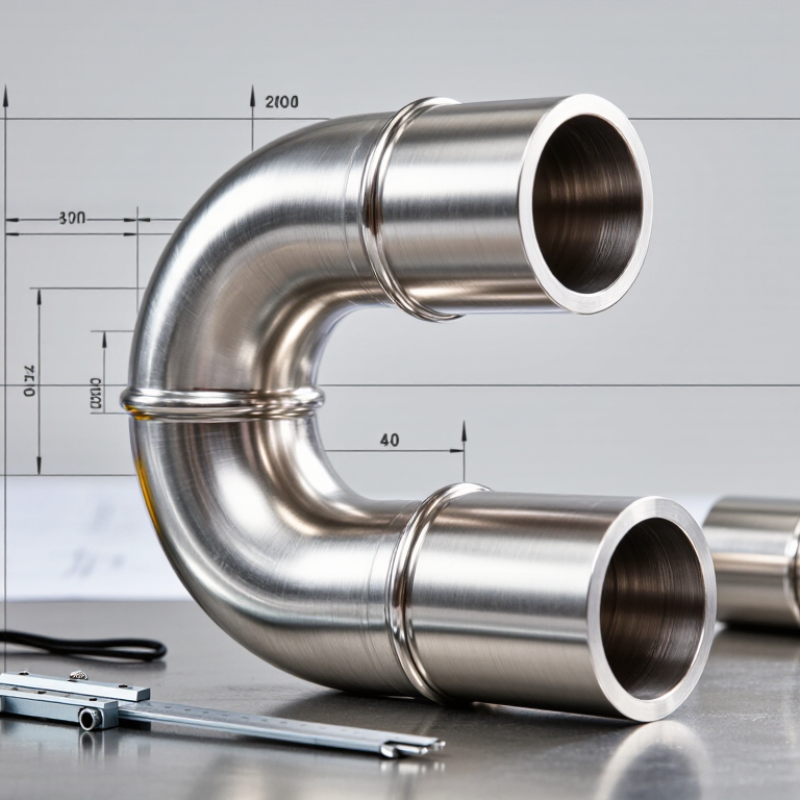
A 90-degree long-radius elbow turns a pipe through a quarter circle, with a centerline radius typically equal to 1.5 times the nominal pipe size. The curve spreads the change in direction over more distance than a short-radius elbow. That geometry matters. ASME B16.9 dimensional tables specify a 3-inch center-to-end dimension for an NPS 2 long-radius elbow. This gives installers a concrete fit-up reference, but center-to-end dimension is not the same as the elbow’s outside radius.
The wider turn generally creates less abrupt flow separation than a tight bend, though actual pressure loss depends on flow rate, fluid properties, surface condition, and nearby fittings. Crane Technical Paper No. 410 evaluates fitting losses using resistance coefficients, a useful reminder that elbow shape alone cannot predict system performance. In practice, check the pipe schedule, material, connection type, and available clearance against the design documents. A compact layout may favor a short-radius fitting, but that choice can increase turbulence and pressure loss. I would not size by appearance alone. Small dimensional assumptions can complicate alignment, especially where supports or adjacent valves leave little room.
Identify the Pipe Size, Schedule, and Connection Requirements
Start with the line’s nominal pipe size (NPS), not its measured inside diameter. ASME B36.10M lists NPS 4 steel pipe with a 4.500-inch outside diameter. Schedule 40 wall thickness is 0.237 inch; Schedule 80 is 0.337 inch. That difference affects the bore and fitting weight. “Four-inch” alone is not enough. Check the pipe marking and project drawings.
Then match the elbow’s size, schedule, material, and end connection to the adjoining pipe. ASME B16.9 specifies dimensions for factory-made wrought butt-welding fittings. For an NPS 4 long-radius elbow, its center-to-end dimension is 6 inches. ASME B16.25 covers butt-welding end preparation, including bevel details. Small mismatch, big problem.
Confirm whether the specification calls for butt-weld, socket-weld, or threaded ends; they are not interchangeable. Verify the material grade and service conditions, too. A correct NPS can still fail a fit-up check when wall thickness or bevel details were assumed rather than confirmed. Recheck the drawing before ordering.
Evaluate Material Compatibility and Operating Conditions
A 90-degree long-radius elbow should match the fluid, temperature, and pressure it will actually encounter. Start with the pipe material and the fluid’s chemistry. Water, steam, oils, and cleaning solutions can affect metals and polymers differently. Check the manufacturer’s compatibility data, especially when the fluid contains chlorides, acids, or abrasive particles. A material that looks suitable on a drawing may degrade in service.
Temperature matters, too. Heat can reduce a material’s pressure capacity, while repeated heating and cooling may stress joints. Consider the maximum operating pressure, temperature range, flow rate, and any pressure surges. Small details count. For example, a hot line that cycles each day may need different allowances than a steady, cool line. Confirm the elbow’s pressure rating at the expected temperature, not just at room temperature.
The long radius helps reduce abrupt flow changes, but it does not prevent erosion or vibration in every installation. Look for signs of wear at nearby supports and joints. A site check is useful. One assumption worth revisiting is that the pipe and elbow will always share the same conditions; transitions, insulation, and outdoor exposure can change that. When data is incomplete, verify the operating envelope with a qualified engineer before specifying the component.
Check Applicable Standards, Pressure Ratings, and Dimensions
How to Choose the Right 90 Degree Long Radius Elbow
A 90-degree long-radius elbow can reduce flow disruption, but the right choice depends on more than angle. Check the project specification and applicable standard, such as ASME B16.9 for many butt-weld fittings. Requirements vary by application, so confirm the governing documents before ordering. A typical long-radius elbow has a centerline radius around 1.5 times the nominal pipe size; verify the required dimensions against the selected standard.
Pressure suitability depends on material, wall thickness, temperature, and the connected piping—not just the elbow’s shape. Match the fitting’s material grade and schedule to the pipe, then check pressure-temperature limits against the design conditions. Confirm outside diameter, wall thickness, center-to-end dimensions, and end preparation. A small mismatch can complicate fit-up. Drawings help, though a field measurement can still reveal details the drawing missed.
Tips: Compare the elbow dimensions with the mating pipe and available installation space. Check whether the line uses a specific corrosion allowance or inspection requirement. Keep the standard and material records with the order. One detail is easy to overlook: nominal size does not always equal the measured outside diameter.
Compare Suppliers and Confirm the Final Elbow Selection
Choosing a 90 degree long radius elbow means checking more than its angle and price. Compare supplier drawings against your piping specification, including outside diameter, wall thickness or schedule, center-to-end dimensions, material grade, and connection type. Confirm the required pressure and temperature range, plus the conveyed fluid and corrosion conditions. A dimensional mismatch can complicate installation, even when the elbow looks correct on a product page. One detail is easy to miss.
Tips: Request a current dimensional drawing, material documentation, and stated manufacturing tolerances. Ask how the supplier verifies dimensions and marks materials for traceability. Compare delivery dates, packaging, and technical support alongside price. Keep the replies in writing.
Before approving an elbow, check that the supplier can provide the documents your project requires and that the offered item matches the approved specification. Clarify any deviations instead of assuming “equivalent” means identical. A supplier’s response to a specific question can reveal whether they understand the application, but it is not a substitute for engineering review. It is tempting to choose the lowest quote; I would pause if key dimensions or material details remain vague. Have the final selection reviewed against the piping design and applicable project requirements before placing the order.
How to Choose the Right 90° Long-Radius Elbow
Centerline Radius: Long-Radius vs. Short-Radius
For these common elbow designations, a long-radius (LR) elbow has a centerline radius of 1.5 times the nominal pipe size; a short-radius (SR) elbow has a radius of 1 times the nominal pipe size. Values shown are calculated from nominal pipe size, in inches, and are not supplier-specific dimensions.
When comparing suppliers, confirm the governing standard, nominal size, material grade, wall thickness or schedule, end preparation, and dimensional requirements. Verify these details against the project specification and the supplier’s drawings before making the final selection.
 English
 Česká republika
 Deutsch
 Dutch
 Polska