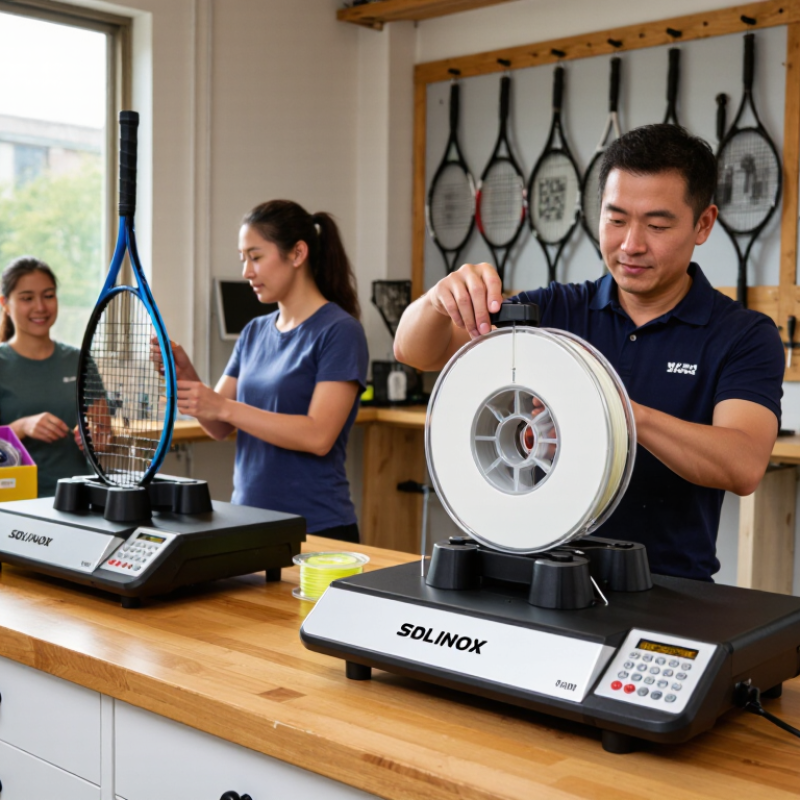
How to Choose the Best Solinco String Machine for Your Business
Choosing the best Solinco String Machine for your business starts with the work happening at your stringing bench. A neighborhood shop handling a few racquets each day has different needs from a busy club restringing match frames between court bookings. Daily volume, staff experience, available space, and budget all affect the decision. Small details matter. A clear control panel, comfortable mounting system, and accessible tools can make routine jobs easier. But a feature that sounds impressive may not save time in your actual workflow. The best choice is the one your team can use consistently.
This guide looks at the practical questions behind a purchase: how often you string, which frame types you handle, and how much automation your staff needs. It also considers setup, maintenance, training, and the machine’s total cost over time. Compare current specifications and warranty details with information from Solinco or a trusted seller; product availability and features can change. If possible, ask for a demonstration and test the controls before committing. A machine may appear straightforward in a product photo. In practice, the clamp feel, screen layout, and loading process can shape a full day’s work. I would not choose from price alone, either. There is no perfect setup for every shop, and estimating your future workload is imperfect. Still, a careful comparison can help you select equipment that suits your customers, staff, and business plans.
Assess Your Business’s Stringing Volume and Service Needs
A stringing machine should match your actual weekly workload, not an ambitious forecast. The USTA’s 2024 Tennis Participation Report counted 25.7 million U.S. tennis players, a record. That signals a sizable potential customer base, but it does not show how many local players will pay for restringing. Track completed jobs, peak-day queues, and repeat bookings for four to six weeks. Your own log is more useful than a national participation figure.
For occasional jobs, a straightforward machine may be sufficient. A shop handling daily walk-ins, tournament deadlines, or varied racket frames benefits from consistent tension, quick mounting, and easy-to-use controls. Consider who will operate it, too. A faster machine is less helpful if staff need extensive training or setup takes too long. Estimate busy-week demand, then leave room for growth. My first estimate would still be imperfect; seasonal spikes can surprise even experienced operators.
Tips: Record each job’s turnaround time and requested service. Note rush jobs separately. Compare your busiest week with an ordinary one before choosing capacity.
Compare Solinco String Machine Types and Key Features
A drop-weight stringing machine suits a small shop with modest daily volume. Its tension arm is simple to inspect, and it needs no motor. The trade-off is speed: the operator must let the arm settle before each pull. A crank machine locks tension quickly, making it a practical middle ground for clubs or growing businesses. Check the locking mechanism regularly; wear can affect consistency. Neither type rewards rushed setup.
Electronic constant-pull machines maintain tension as the string stretches, which can help produce more repeatable results across a busy workday. Look for clear controls, reliable clamps, a stable turntable, and a calibration function. A larger screen is convenient, but it matters less than accurate tension and parts that are easy to replace. Ask about service access before buying. Downtime gets expensive.
Match the machine to actual workload, not hoped-for demand. If you string a few racquets each week, an electronic model may add cost without saving much time. For frequent jobs, compare cycle speed and clamp adjustment in person. Bring a racquet, if possible, and test the mounting points. Small details matter. Still, no machine corrects inconsistent technique, and that is easy to overlook.
Evaluate Speed, Precision, Capacity, and Ease of Use
A stringing machine should match the work your shop actually handles. The ITF’s 2021 Global Tennis Report estimated 87 million tennis players worldwide, but that figure does not predict demand at your counter. Track local restringing jobs, peak-season queues, and average turnaround time. Then compare machine speed with your real workload. A fast pull helps during a rush, but setup and mounting time matter too. Seconds add up.
Precision is about repeatable results, not just a digital display. Check whether tension calibration is straightforward, clamps hold without slipping, and the turntable stays stable during a full racket job. Ask how often calibration is recommended and whether maintenance instructions are clear. Small inconsistencies matter. A loose clamp can undo careful work. Even a well-rated machine needs routine checks.
Capacity and ease of use affect daily output. Consider how many rackets you can mount comfortably, whether the machine fits your bench, and how easily staff can learn its controls. Compare the manufacturer’s cycle claims with a timed trial using your usual strings and patterns. The ITF figure shows a broad player base, not guaranteed sales; I’d avoid buying for imagined demand. A modest machine may be enough—or not. Test before committing.
Estimate Purchase Costs, Maintenance, and Long-Term Value
For a stringing business, the purchase price is only the starting point. Compare machines by workload, not by the longest feature list. A shop handling ten racquets a day may benefit from electronic tension control, while a club restringing a few each week may not recover that added cost quickly. Check that clamps hold securely and adjustments feel repeatable. Ask what is included: mounting supports, tools, calibration, and warranty coverage can change the real upfront cost.
Budget for upkeep before buying. Electronic models may need periodic calibration or service; mechanical models still require cleaning, clamp inspections, and replacement parts. Keep a simple log of service dates and restringing volume. Small costs add up. Also estimate consumables, repair shipping, and downtime. If a machine stops during a busy tournament week, delayed orders may cost more than the repair. Confirm local service access and typical turnaround times rather than relying on optimistic estimates.
Long-term value depends on usable years, repairability, and time saved per racquet. Add the purchase cost and expected maintenance, then divide by the number of racquets you realistically expect to string. Compare that figure with labor time and your current service fee. These projections are imperfect; demand changes, so revisit them after a season. Leave room in the budget for a slow month, and avoid paying for features your staff will rarely use.
Choose a Machine That Fits Your Shop’s Current and Future Needs
A stringing machine should fit the work your shop handles today, not just the busiest week of the year. Track how many racquets you string each week, how often customers request different tensions, and how much bench space you can spare. A compact tabletop model may suit a small counter, while steady daily volume can justify a sturdier machine with faster adjustments. Measure the space first. A crowded bench slows stringing and makes tools harder to reach.
Think about who will use the machine and how often. Clear tension controls, secure mounting points, and smooth clamps can help staff work consistently, especially during busy seasons. Ask about calibration checks, replacement parts, training, and warranty support before buying. These practical details affect downtime as much as the machine’s headline features. A lower purchase price is not always the lower operating cost.
Leave room for growth without paying for capacity you may never use. If your shop plans to add another stringer or serve more players, compare how easily a machine handles repeated jobs and varied racquet frames. Check the manufacturer’s specifications, then ask a qualified service provider about maintenance needs. It is easy to overestimate future demand; I would review actual order records before choosing a high-volume setup. Keep a little bench space for the next step.
How to Choose the Best String Machine for Your Business – Choose a Machine That Fits Your Shop’s Current and Future Needs
| Buying Consideration | Drop-Weight Machine | Crank / Lockout Machine | Electronic Constant-Pull Machine |
|---|---|---|---|
| How tension is applied | A weighted bar applies tension through gravity. The bar must be positioned correctly for each pull. | A crank pulls string until the mechanism reaches its set tension, then locks out. | A motor pulls string and continues adjusting tension to maintain the selected setting during the pull. |
| Power requirement | Does not require electricity for tensioning. | Most manual crank models do not require electricity for tensioning. | Requires a suitable power source for the electronic tension head. |
| Typical workflow | Simple operation, but each pull requires careful bar positioning. A good fit when stringing volume is modest. | Faster tensioning workflow than a drop-weight setup for many operators; string is pulled to the set point before lockout. | Convenient and consistent tensioning workflow, with less manual effort at the tension head. |
| Tension behavior | Applies a steady load when the bar is level and the string is seated correctly. | Stops pulling when the mechanism locks. String stretch after lockout is not automatically compensated for. | Continues pulling as the string stretches, helping maintain the selected tension during the pull. |
| Setup and learning | Mechanically straightforward, though operators need to learn correct bar positioning and string handling. | Requires learning the crank, clamps, mounting system, and safe operating sequence. | Requires familiarity with the controls, settings, calibration checks, clamps, and mounting system. |
| Calibration and upkeep | Check the tension scale and inspect the bar, gripper, clamps, and mounting components periodically. | Check tension accuracy and inspect the crank mechanism, gripper, clamps, and mounting components. | Follow the manufacturer’s calibration procedure and inspect the tension head, clamps, and mounting components; electronic parts may require service. |
| Initial investment | Generally the simplest and least costly machine category to enter, depending on construction and features. | Typically costs more than a basic drop-weight machine; price varies with build quality and included features. | Often the highest-cost category, with price depending on controls, features, and machine construction. |
| Best fit for current needs | A new or low-volume shop prioritizing a straightforward setup and lower initial equipment cost. | A shop handling regular restringing that wants a mechanical workflow and does not need electronic tensioning. | A busy shop that values a convenient tensioning workflow and is prepared for the higher purchase and service requirements. |
| Room to grow | Can support a shop as it starts out, but higher order volume may make the manual workflow a limiting factor. | Can suit a growing service operation; consider expected daily workload and operator time before purchasing. | May suit a shop planning for higher service demand, provided the budget, workspace, power, and maintenance plan are adequate. |
| What to verify before buying | Confirm racket compatibility, mounting stability, clamp design, gripper suitability for the strings you use, available parts and service, warranty terms, workspace requirements, and the seller’s calibration guidance. Compare the complete machine setup rather than tension-head type alone. | ||
Selection tip: Match the machine to your expected restringing volume, staffing, budget, and service goals. Tension accuracy and stringing results also depend on calibration, clamps, mounting, technique, and consistent procedures.
English
Česká republika
Deutsch
Dutch
Polska