 English
  Česká republika
 Deutsch
 Dutch
Dutch Polska


How to Choose the Best Crucible for Copper
Choosing the right Crucible For Copper is a practical decision, not a simple purchasing task. Copper melts at approximately 1,085°C, yet the crucible must tolerate higher working temperatures, repeated heating, and chemical interaction. A small furnace may look harmless, but its orange interior can expose weak materials quickly.
Industry data shows why this decision matters. The U.S. Geological Survey reported global copper mine production at roughly 22 million metric tons in 2023. The International Copper Study Group has also highlighted continuing growth in refined copper demand, supported by power networks, electric vehicles, and renewable-energy equipment. More copper processing means more melting cycles, and more opportunities for contamination, cracking, or metal loss. These reports describe market scale, not every workshop’s reality. That distinction matters.
A reliable selection process should compare graphite, silicon-carbide, clay-graphite, and alumina crucibles. Each option behaves differently under thermal shock, oxidation, slag contact, and repeated pouring. Graphite can offer strong thermal conductivity, while silicon carbide often provides better mechanical durability. However, furnace atmosphere and alloy chemistry can change the result. Brass, bronze, and recycled copper may require different protection from zinc fumes, oxides, or residual coatings. The best Crucible For Copper is therefore the one matched to temperature, capacity, alloy, furnace design, and pouring frequency. Not merely the cheapest option. A careful guide must also admit that manufacturer ratings are not always directly comparable. Real performance depends on handling, preheating, storage, and operator judgment. Mistakes still happen. That is why practical evidence should support every specification.
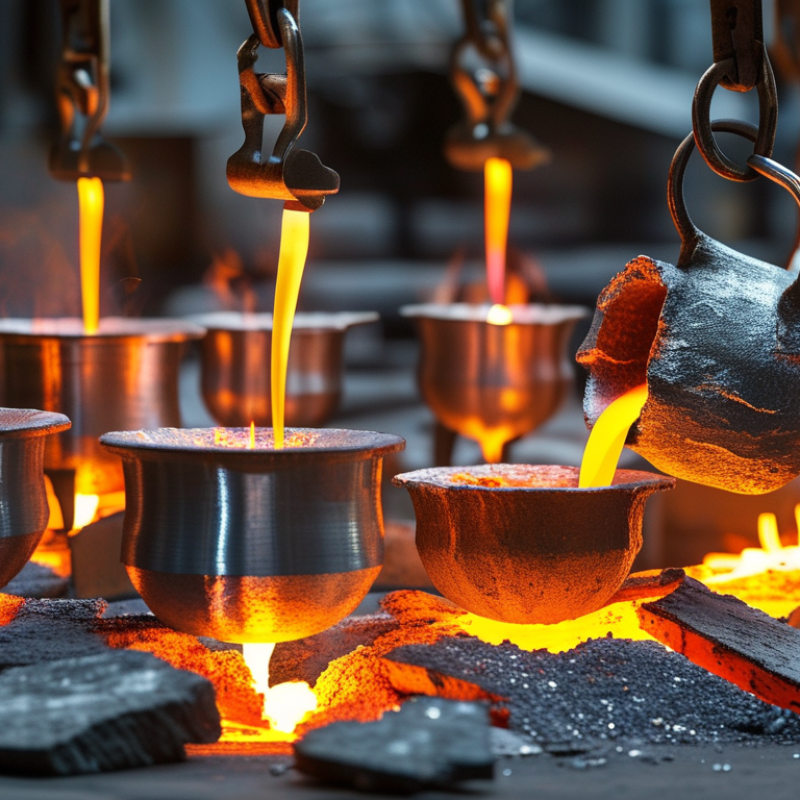
Identify Copper Melting Requirements and Operating Conditions
Choosing a crucible for copper starts with the melt, not the furnace. Pure copper melts at 1,084.62°C, according to the NIST Chemistry WebBook. Copper alloys require different liquidus temperatures and often need a practical pouring range near 1,150–1,250°C. Check the alloy certificate first. Guessing here is expensive.
The operating atmosphere matters just as much. Oxygen can increase surface oxidation, while moisture may create dangerous spattering during charging. A covered crucible, dry tools, and controlled furnace airflow reduce these risks. Graphite, silicon carbide, and high-alumina materials are common choices, but each behaves differently under repeated thermal shock. Silicon carbide usually suits fast heating and mechanical handling. Graphite can provide excellent thermal transfer, yet it may oxidize rapidly in an uncontrolled atmosphere. Alumina offers strong chemical stability, although sudden temperature changes can crack it.
Capacity must match the actual batch. The International Copper Study Group reported global refined copper production near 27 million tonnes in 2024, reflecting the scale and consistency expected in modern melting operations. That scale does not make small furnaces simple. A crucible should hold the charge without crowding, but excessive empty space wastes heat. I prefer leaving roughly 10–15% free volume for movement and expansion. This is not a universal rule. Trial records should track melt time, wall wear, slag buildup, and pouring temperature. A crucible that survives one campaign may fail after repeated flux exposure. Inspect it before every heat. Small cracks matter.
How to Choose the Best Crucible for Copper - Identify Copper Melting Requirements and Operating Conditions
| Copper Melting Factor | Typical Requirement or Condition | Recommended Crucible Material | Temperature and Atmosphere Considerations | Key Advantages | Important Limitations |
|---|---|---|---|---|---|
| Pure copper | Melting point: approximately 1,084.6°C. The crucible must tolerate a working temperature normally above the melting point to allow superheat and safe pouring. | High-density graphite, silicon carbide, or clay-graphite | Use a controlled atmosphere or a protective cover when practical. Limit prolonged exposure to air because molten copper readily absorbs oxygen and can oxidize. | Good resistance to thermal cycling and suitable chemical compatibility with copper when properly selected and maintained. | Graphite can oxidize in air at elevated temperature. Poor preheating or rapid heating may cause cracking or thermal shock. |
| Copper alloys containing zinc | Brass melting ranges vary by composition, commonly beginning below the melting point of pure copper. Zinc is volatile and may produce fumes during overheating. | Clay-graphite or silicon carbide; dense graphite may also be suitable | Keep the process temperature as low as practical and avoid excessive holding time. Provide effective ventilation and fume control. | Suitable for repeated nonferrous-alloy melting and offers good thermal shock resistance. | Excessive temperature or long holding periods can increase zinc loss, alloy composition changes, and dross formation. |
| Copper-tin alloys | Bronze alloys have composition-dependent melting ranges and may require controlled pouring temperatures to preserve fluidity without excessive oxidation. | Silicon carbide, clay-graphite, or high-quality graphite | Use a clean, dry charge and minimize turbulence. A neutral or mildly reducing atmosphere can help limit oxidation. | Good resistance to molten nonferrous alloys and suitable durability for regular foundry use. | Flux residues, oxides, and contamination can attack the crucible or affect casting quality if cleaning is inadequate. |
| Copper-aluminum alloys | Aluminum bronze requires careful control of oxidation because aluminum forms a stable oxide film that can become entrained in the melt. | Silicon carbide or clay-graphite | Use clean charge material, avoid excessive agitation, and control the melt surface. Follow the alloy supplier’s specified temperature range. | Good thermal conductivity and resistance to thermal shock; suitable for many copper-alloy melting applications. | Oxide films and inclusions may increase if the melt is overheated or mechanically disturbed. |
| Electric resistance furnace | Heating is usually indirect, with the crucible exposed to radiant and convective heat from furnace elements. | Silicon carbide, clay-graphite, graphite, or dense ceramic selected for the furnace temperature | Check the crucible’s maximum continuous-use temperature and external dimensions. Allow uniform heating to reduce thermal gradients. | Compatible with a wide range of crucible shapes and capacities; relatively simple temperature control. | Direct contact with heating elements or furnace walls can create hot spots and mechanical damage. |
| Induction furnace | The crucible must be compatible with the induction frequency, power level, coil geometry, and charge size. | Graphite or silicon carbide, when approved for the specific induction system; alumina may be used in suitable designs | Electrical conductivity and electromagnetic coupling affect heating behavior. Maintain correct clearance from the induction coil. | Fast heating and accurate process control are possible when the crucible and induction system are properly matched. | Incorrect material or wall thickness can reduce efficiency, create uneven heating, or cause premature failure. |
| Gas-fired furnace | The crucible is exposed to direct flame, combustion gases, and potentially uneven heating. | Silicon carbide or clay-graphite | Use a neutral flame where possible. Avoid direct flame impingement on one area of the crucible. | High thermal shock resistance and good heat transfer support efficient melting. | Oxidizing flames can accelerate graphite loss and increase surface oxidation of the molten copper. |
| High-purity copper or contamination-sensitive work | The crucible should minimize iron, silicon, aluminum, and other unwanted element pickup. | High-purity graphite or a suitable high-purity ceramic, depending on the process atmosphere | Use clean tools and dedicated handling equipment. Avoid crucibles previously used for incompatible alloys. | Can help maintain chemical cleanliness when correctly selected and operated. | Material purity, coatings, fluxes, and furnace atmosphere must all be controlled; no crucible eliminates contamination risk by itself. |
| Frequent batch cycling | Repeated heat-up, melting, pouring, cooling, and reheating place high demands on thermal-shock resistance. | Silicon carbide or clay-graphite with suitable wall design | Preheat the crucible gradually and avoid placing a cold crucible into an already-hot furnace unless specifically permitted. | Generally strong resistance to thermal cycling and mechanical handling in production environments. | Sudden temperature changes, impact, moisture, and overloading can still cause cracks or spalling. |
| Small laboratory or pilot batches | Small charges require good temperature response, precise handling, and easy visual inspection. | Dense graphite, alumina, or a small silicon-carbide crucible selected for the furnace | Use a calibrated temperature measurement method and avoid overheating small charges, which can rapidly increase oxidation. | Small capacity supports fast melting and reduced metal inventory. | Small crucibles have limited thermal mass and may be more sensitive to handling damage and temperature fluctuations. |
| Flux use | Fluxes can help dissolve oxides or protect the melt, but their chemistry must be compatible with the crucible. | Select graphite, silicon carbide, or clay-graphite according to the flux composition | Follow the flux manufacturer’s safe-use temperature and quantity guidance. Remove corrosive residues after operation where appropriate. | Properly matched materials can provide reliable melting with controlled surface oxidation. | Some fluxes can penetrate, react with, or erode crucible materials and protective coatings. |
| Crucible sizing | Choose a capacity that accommodates the metal charge plus expansion, stirring space, and safe freeboard; avoid filling to the rim. | Any compatible material with the correct capacity and shape | Follow the manufacturer’s fill limit. A moderate freeboard helps prevent splashing and overflow during charging and pouring. | Improves handling safety, reduces spillage, and supports more consistent heating. | Oversizing can slow melting and waste energy; undersizing increases overflow and mechanical stress. |
| Preheating and maintenance | Crucibles must be dry, clean, and gradually brought to operating temperature before charging molten or solid copper. | Applicable to all crucible materials | Moisture can flash to steam and cause dangerous metal ejection. Inspect for cracks, deformation, erosion, and glaze or coating failure. | Proper preparation significantly improves service life and operating safety. | A crucible with visible cracks, severe thinning, or damaged lifting surfaces should be removed from service. |