How to Choose the Best Carbide Threading Inserts for Your Needs?
Choosing the right Carbide Threading Inserts is crucial for enhancing machining efficiency. According to a recent report by the Global Cutting Tools Market, the demand for carbide inserts has grown by nearly 10% in the past year. This upward trend reflects a shift in manufacturing practices, emphasizing the importance of precision and durability.
Industry expert Dr. Emily Hart, a leading voice in cutting tool innovation, states, “Selecting the right carbide threading inserts directly impacts productivity and cost-effectiveness.” This highlights the necessity of understanding various insert types and materials available. Factors like insert geometry, coating, and substrate material play significant roles in performance.
However, many users struggle with the overwhelming options. It's common to see machinists choosing unsuitable inserts based on price rather than suitability. Reflecting on one's specific needs and application can lead to more effective decisions. Understanding the properties of different carbide threading inserts can make a substantial difference in operational efficiency and tool longevity.
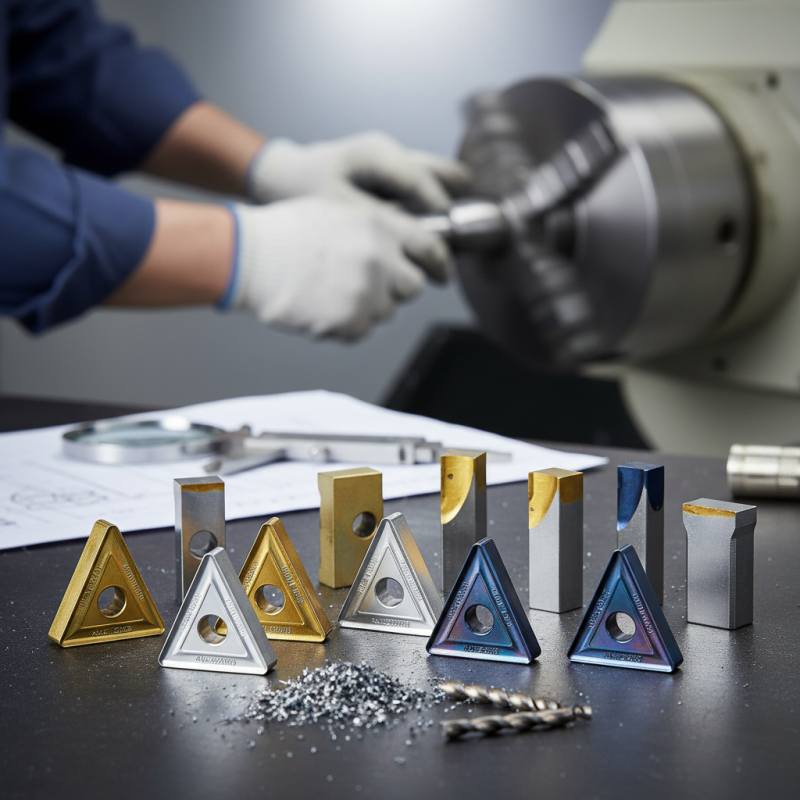
Understanding Carbide Threading Inserts: Types and Applications
Carbide threading inserts are essential tools for various machining applications. These inserts come in different types, each designed for specific materials and threading operations. Common types include coated and uncoated inserts, each offering unique benefits. Coated inserts tend to provide better wear resistance, making them suitable for challenging materials. Uncoated inserts, however, excel in softer materials where extreme wear isn't a concern.
Understanding the applications of these inserts can guide your choice. For example, if you're working with hardened steel, a carbide insert with a specific coating will increase tool life significantly. If precision is critical, a fine-pitched threading insert can produce cleaner threads. It’s crucial to assess the material you are threading. A mismatch between the insert type and the workpiece can lead to suboptimal results.
Choosing the right insert may also present challenges. The vast array of options can be overwhelming. A wrong choice may not only affect efficiency but also cause additional costs. Engaging with experienced professionals or seeking expert advice can help navigate these complexities. Ultimately, taking the time to research and understand the specific types and their applications will enhance your machining process.
Key Factors to Consider When Selecting Carbide Inserts for Threading
Choosing the right carbide threading inserts is crucial for achieving high-quality results in machining tasks. When selecting inserts, consider critical factors such as material, coating type, and geometry. Each of these elements significantly impacts tool performance and durability.
Material plays a vital role. Carbide inserts are renowned for their hardness and resistance to wear. However, not all carbide materials are created equal. Depending on your specific application, you might need a tougher insert or one that's optimized for high-speed machining.
Coating is another important consideration. Various coatings enhance performance by reducing friction and improving wear resistance. For example, TiN coatings can provide a hard surface, while TiAlN coatings are better for heat resistance. Assess the operating conditions before deciding on a coating type.
Geometry affects the chip formation and surface finish. Consider aspects like insert shape, edge geometry, and chip breaker design. Each geometry serves different applications and materials.
Tips for selecting the right inserts: always check the insert manufacturer's guidelines for compatibility. Test different options to see which performs best for your specific machining needs. Adjust your selections based on the results, and don't hesitate to explore unconventional geometry. This approach might lead to unexpected improvements in your work.
Material Properties: The Importance of Coating and Substrate in Inserts
Choosing the right carbide threading inserts requires attention to their material properties, particularly the coating and substrate. Coatings enhance hardness and reduce wear, while substrates provide the structural integrity necessary for effective cutting. Recent industry reports indicate that coated inserts can outperform uncoated options by up to 30% in lifespan, making them an essential consideration for high-performance applications.
Tip: Always assess the operational environment before selecting inserts. For example, if you're machining tough materials, a tough substrate combined with a wear-resistant coating will yield better results.
Many manufacturers focus on multilayer coatings, which can optimize cutting processes. Data show that inserts with titanium carbide (TiC) coatings improve tool life significantly. However, the challenge lies in balancing cost and performance. Some users have found that investing in higher-quality inserts pays off in reduced downtime.
Tip: Experiment with different insert materials and coatings to identify the most effective combination for your specific tasks. Regularly review performance data and adjust your approach accordingly.
Performance Metrics: Tool Life, Cutting Speed, and Feed Rates Explained
When selecting carbide threading inserts, understanding performance metrics is essential. Tool life is a key factor. Industry reports indicate that high-quality carbide inserts can achieve tool life spans exceeding 1000 components. However, frequent tool wear can lead to inconsistencies. Monitoring wear patterns ensures efficient usage and optimal results.
Cutting speed significantly influences productivity. Research shows that increasing the cutting speed can enhance throughput, as increased speeds often result in faster cycles. However, this must be balanced with heat generation. Excessive heat can lead to tool deterioration, causing failures. Hence, manufacturers recommend an optimal range based on material properties and insert geometry.
Feed rates also play a crucial role in threading operations. Many studies emphasize that adjusting the feed rate can minimize chatter and vibrations, which affects precision. Ideal feed rates depend on the workpiece material. Too high a rate may invite errors, while too low can slow productivity. Achieving the right balance requires experimentation and continuous evaluation of performance metrics in real-world applications.
Cost-Benefit Analysis: Evaluating Value for Money in Carbide Inserts
Evaluating the cost-effectiveness of carbide threading inserts requires a detailed look at their performance and longevity. In manufacturing, the efficiency of cutting tools significantly affects production costs. A study by the National Institute of Standards and Technology indicates that investing in high-quality carbide inserts can reduce tool change frequency by up to 30%. This leads to higher productivity and lower downtime.
When assessing value for money, consider the total cost of ownership. Premium carbide inserts may have a higher upfront cost. However, they often provide longer tool life and better surface finishes. Research suggests that using top-tier inserts can decrease machining time by as much as 15%. This reduction translates into lower labor costs and improved output consistency.
Decision-makers should reflect on their specific needs. Some industries may prioritize speed, while others focus on precision. Misjudging these needs can lead to overspending on inserts that do not meet operational demands. Regular analysis of performance data can help in selecting the right inserts. This continuous evaluation can identify potential savings and improve overall production efficiency.
How to Choose the Best Carbide Threading Inserts for Your Needs? - Cost-Benefit Analysis: Evaluating Value for Money in Carbide Inserts
| Insert Type | Material | Coating | Cost per Insert ($) | Tool Life (hours) | Performance Rating (1-10) | Value for Money Rating (1-10) |
| Standard | Cemented Carbide | Uncoated | 5.00 | 50 | 7 | 6 |
| High Performance | Cemented Carbide | TiN | 7.50 | 60 | 8 | 7 |
| Economical | Cemented Carbide | Uncoated | 4.00 | 40 | 6 | 5 |
| Premium | Cemented Carbide | TiAlN | 10.00 | 80 | 9 | 8 |
 English
  Česká republika
 Deutsch
 Dutch
Dutch Polska