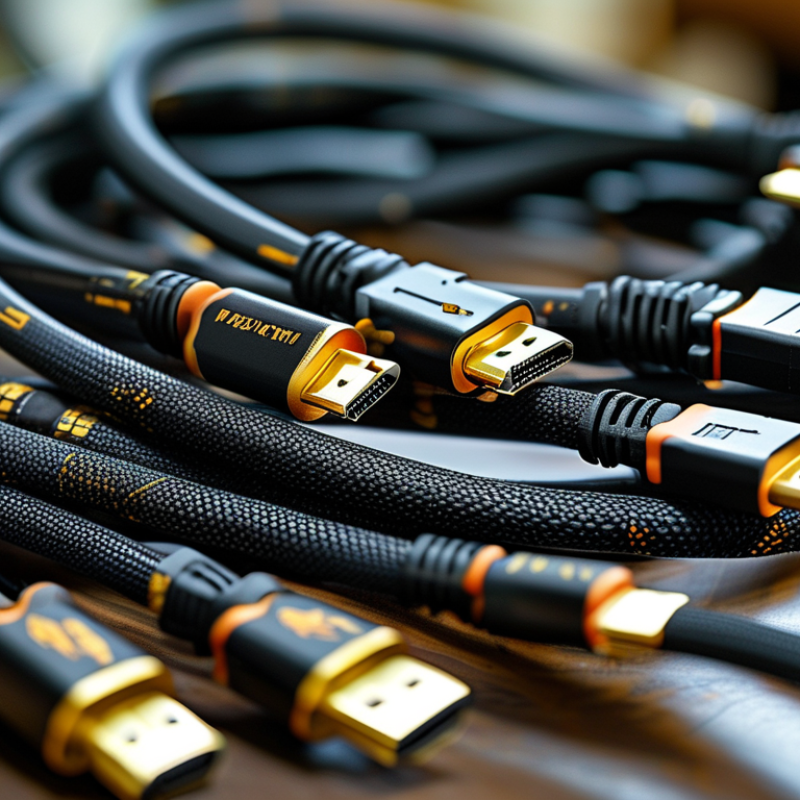
How to Choose the Best Consumer Electronics Cable for Your Needs?
Choosing the right Consumer Electronics Cable can significantly enhance your device's performance. Many options exist, and each serves a distinct purpose. Understanding these differences is critical to making an informed choice.
Consider your devices and their specific needs. For instance, HDMI cables are ideal for high-definition video. USB cables are versatile but vary in speed and power delivery. Many consumers overlook this, often choosing based solely on price. This can lead to compatibility issues and subpar performance.
The market is saturated with options. Some cables boast gold plating, while others highlight faster data transfer rates. However, not every claim is backed by real-world results. Research is essential. Reading reviews from trusted sources can help you avoid common pitfalls. Quality often matters more than brand name or flashy features.
Understanding the Different Types of Consumer Electronics Cables
Understanding the different types of consumer electronics cables is crucial when making informed decisions. HDMI cables, for instance, are commonly used for video and audio transmission. Recent industry data reveals that over 80% of households utilize HDMI cables for connecting devices like TVs and gaming consoles. Their ability to transmit high-definition video is especially valuable for modern entertainment systems.
Another important type is USB cables, which have evolved significantly. According to a report by the Consumer Electronics Association, approximately 50% of consumers face difficulties in choosing the right USB cable due to variations in types and specifications. USB-C has gained popularity for its versatility. Despite this, many consumers struggle to understand compatibility across devices.
Audio cables, including optical and RCA, remain relevant, especially among audiophiles. These cables are designed for specific sound quality needs. A survey indicates that roughly 30% of consumers express dissatisfaction with the audio experience due to inadequate cable choices. Inadequate knowledge of these cable types may lead to subpar performance. As technology advances, ensuring that you select the best cable based on your device requirements and intended use is more essential than ever.
Assessing Cable Specifications: Length, Gauge, and Compatibility
When selecting consumer electronics cables, understanding specifications is crucial. Length, gauge, and compatibility play significant roles in performance. For instance, a 2022 report from the Consumer Electronics Association noted that nearly 30% of users experience connectivity issues due to mismatched cable lengths. Choosing the right length ensures minimal signal loss, making it essential to measure your setup accurately.
Cable gauge is another vital factor. Thicker cables, such as those with a lower AWG (American Wire Gauge) number, can handle higher currents effectively. In contrast, thinner cables may suffer from overheating, leading to potential failures. According to industry studies, using the correct gauge can mitigate up to 50% of power loss over distance.
Compatibility cannot be overlooked. Some cables may not work seamlessly across different devices. This incompatibility can lead to frustrating experiences. Recent surveys indicate that 25% of users have faced device connection issues due to using the wrong cable type. Checking for compatibility with your devices is a step that shouldn’t be ignored. A mismatch wastes time and resources. Being mindful of your specific needs ensures a higher likelihood of success in your audio and video experience.
Evaluating Cable Quality: Materials, Shielding, and Durability
When choosing consumer electronics cables, understanding cable quality is crucial. One key factor is the material used. High-quality cables often feature copper conductors. Copper provides excellent conductivity, which enhances signal clarity. Cheaper alternatives may use aluminum, leading to signal loss and degradation over time. Always examine the cables you consider.
Shielding also plays a vital role in performance. Good cables utilize multiple shielding layers to prevent interference from other electronic devices. This feature is especially important in environments with many electronic signals. Look for cables that specify their shielding materials, like foil or braided wire. If a cable lacks this detail, it may not perform as expected.
Durability cannot be overlooked. Cables endure wear and tear from daily use. Look for cables with reinforced connectors and flexible sheathing. Some cables might look sturdy but fail under pressure. It's essential to assess how you plan to use each cable. Cables meant for travel may require even more durability. Consider these aspects carefully to ensure you make the best choice for your needs.
Identifying Your Specific Needs: Audio, Video, or Data Transfer
When selecting a consumer electronics cable, pinpointing your specific needs is crucial. Are you primarily focused on audio, video, or data transfer? Each category has distinct requirements that can significantly impact performance. For instance, audio cables, particularly those used in professional settings, should support high frequency ranges without distortion. The market research firm MarketsandMarkets reports that the global audio cable market is expected to grow by over 8% annually. This indicates a rising demand for quality audio connections.
Video cables, on the other hand, need to handle higher resolutions. HDMI cables support 4K and even 8K video resolutions. In fact, studies show that over 85% of consumers prefer 4K quality for their viewing experiences. If you're transferring data, USB options could be the better choice. USB-C cables are now widely recognized for their speed and versatility, with some variations offering up to 40 Gbps. Reflecting on personal use cases can also reveal oversight; many users overlook the significance of cable length, which can impact signal quality.
Compatibility is another aspect to consider. Not all cables fit all devices. For example, older HDMI cables might not support the latest features found in newer devices. Many people fail to check specifications, leading to reduced functionality. Understanding these factors will help you make an informed decision tailored to your specific needs.
Budgeting for Cables: Finding the Right Balance Between Cost and Quality
Choosing the right electronics cable is crucial for performance and durability. Budgeting can determine the quality you get. Many consumers find themselves torn between low-cost options and premium cables. A report by the Consumer Technology Association reveals that 35% of consumers prioritize price over quality when purchasing cables. This often leads to dissatisfaction with performance.
Cables are not all created equal. A cheaper cable may save you money initially, but it can lead to issues like signal loss and poor connectivity. Research indicates that high-quality cables can enhance data transfer speed by up to 30%. However, these also come with a higher price tag. Finding a middle ground becomes vital.
Reflect on your actual needs. If you use cables for gaming or high-definition video, investing in quality makes sense. Conversely, basic usage can justify a more economical choice. Being informed helps you avoid common pitfalls. Choose wisely to align quality with your budget.
Consumer Electronics Cable Quality vs. Price
 English
  Česká republika
 Deutsch
 Dutch
Dutch Polska