China Best Tote Shuttle Manufacturer for Global Buyers
Choosing the right China Tote Shuttle manufacturer requires more than comparing prices on a product page. Global buyers need dependable engineering, clear communication, and evidence from real warehouse applications. A capable supplier should understand tote dimensions, storage density, shuttle speed, battery performance, and software integration. These details shape daily productivity.
Experience matters on the warehouse floor. Engineers should explain how the system handles uneven loading, repeated cycles, dust, temperature changes, and maintenance access. Ask for test records, factory capabilities, quality procedures, and customer references where possible. A trustworthy manufacturer will discuss limitations openly, not only display impressive figures. That honesty often reveals practical competence.
No supplier is perfect. That matters. A quotation may omit installation conditions, spare-part costs, or operator training. Buyers should review these points before signing a technical agreement. Factory visits, video inspections, sample testing, and documented acceptance criteria can reduce uncertainty. Reliable manufacturers also provide manuals, remote support, commissioning guidance, and responsive after-sales service.
For international projects, compliance and communication deserve equal attention. The Tote Shuttle should match local safety expectations, electrical requirements, and warehouse operating practices. Technical documents should be accurate and easy to review. Small misunderstandings can become expensive delays. Therefore, the best manufacturer is not simply the lowest-cost option. It is a long-term equipment partner with measurable experience, responsible quality control, and the discipline to improve when a project exposes weaknesses. That is where confidence begins.
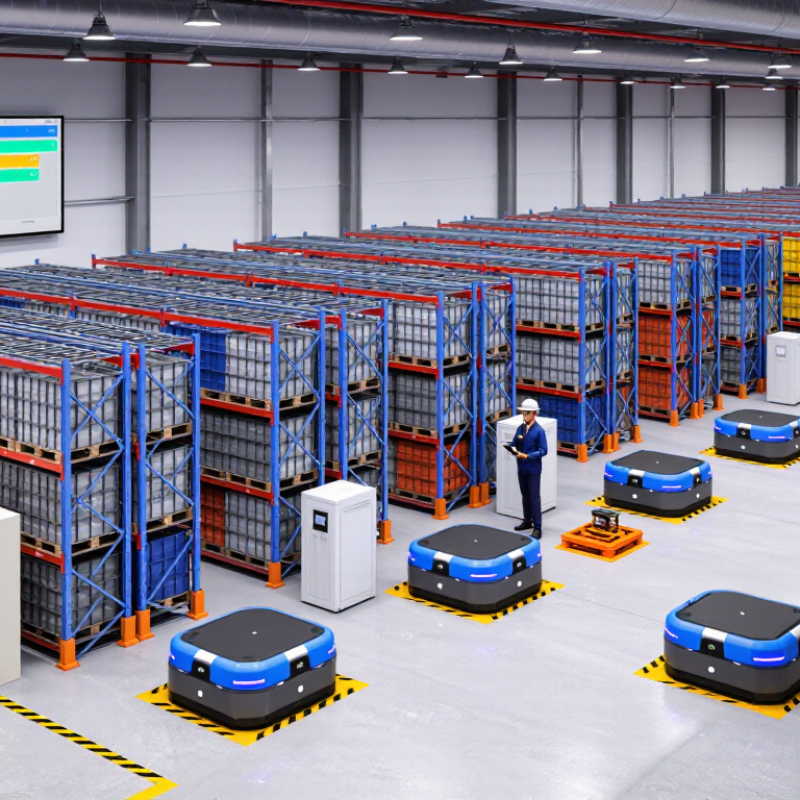
Tote Shuttle Systems: 50 kg Loads and Up to 1,000 Totes per Hour
China Best Tote Shuttle Manufacturer for Global Buyers
Tote shuttle systems are becoming practical tools for high-density storage and rapid order movement. A well-designed system can handle loads up to 50 kilograms and reach 1,000 totes per hour under defined test conditions. The actual result depends on tote spacing, aisle length, lift speed, order profiles, and software response. Numbers need context.
The MHI 2024 Annual Industry Report found that 55% of surveyed supply chain professionals increased technology investment during the previous year. It also reported that 88% expected investment to rise over the following three years. These figures support stronger interest in automated storage, but they do not guarantee a fast return. Site data still matters.
Operators should check load stability, barcode accuracy, battery charging, and emergency access before acceptance testing. A 50-kilogram tote needs firm support, controlled acceleration, and dependable sensors. Small delays can reduce hourly output quickly. This is often overlooked.
The 1,000-tote-per-hour figure should be verified with real order waves, not only empty tote cycles. The DHL Logistics Trend Radar identifies warehouse automation and robotics as important development areas, while also stressing integration and workforce readiness. That warning is useful. Hardware alone cannot fix poor slotting or unclear replenishment rules. In my view, the best manufacturer provides simulation data, factory testing, and measurable service commitments. Some assumptions will be wrong. Good engineering leaves room to correct them.
Core Technologies: Shuttle Robots, Racks, Conveyors, and Warehouse Control
China Best Tote Shuttle Manufacturer for Global Buyers
Core Technologies: Shuttle Robots, Racks, Conveyors, and Warehouse Control
A reliable tote shuttle system begins with accurate storage data and a clear operating target. Shuttle robots move totes through dense rack channels, reducing walking time and improving picking consistency. Their lift height, load capacity, battery cycle, and positioning accuracy must match daily demand. Small errors become expensive during peak hours.
The rack structure supports the entire system. Engineers should check beam strength, aisle clearance, seismic requirements, and tote alignment before installation. Conveyors then connect receiving, storage, picking, and dispatch areas. Sensors can detect tote position, while automatic stops prevent collisions and misplaced loads. Simple details matter.
Warehouse control software coordinates robots, conveyors, inventory locations, and order priorities. Good control logic can reroute work when a robot requires charging or a conveyor zone becomes blocked. Integration with existing warehouse systems also needs careful testing. Data delays can create false stock information. We have seen pilots perform well in demonstrations but struggle under uneven order patterns. That deserves honest review. A practical manufacturer should provide load testing, maintenance guidance, spare-part planning, and operator training. No design is perfect. Reliability grows through measured trials, clear records, and adjustments based on real warehouse behavior.
China Best Tote Shuttle Manufacturer for Global Buyers - Core Technologies: Shuttle Robots, Racks, Conveyors, and Warehouse Control
| Technology | Primary Function | Typical Technical Range | Recommended Tote Parameters | Operational Advantages | Key Selection Criteria |
|---|---|---|---|---|---|
| Tote Shuttle Robots | Move totes horizontally within storage levels and transfer them to lifts or conveyor interfaces. | Travel speed commonly 2–4 m/s; payload commonly 30–50 kg per tote; system throughput often 300–1,000 tote movements per hour per aisle, depending on layout and task mix. | Common footprint: 600 × 400 mm; usable tote heights typically 120–400 mm; payload should include both container and goods. | High storage density, scalable capacity, reduced manual travel, and suitable support for goods-to-person picking. | Payload, battery charging method, aisle width, lift compatibility, positioning accuracy, maintenance access, and emergency-stop coverage. |
| Multi-Deep Tote Racks | Provide structured storage locations for totes and guide shuttle movement at each level. | Typical clear storage height is approximately 2–20 m; storage depth commonly ranges from 2 to 6 tote positions per lane; steel frames are generally designed for repeated dynamic loading. | Designed around standardized 600 × 400 mm totes or equivalent modular containers; rack clearances must account for tote tolerances and deflection. | Improves cubic utilization and enables high-density storage of fast-, medium-, and slow-moving inventory. | Floor loading, seismic requirements, fire protection, rack deflection, tote access depth, installation tolerances, and future expansion. |
| Vertical Lifts | Transfer totes between rack levels, conveyors, picking stations, and inbound or outbound interfaces. | Lifting speed commonly 0.5–2.0 m/s; rated loads frequently range from 50–150 kg per carrier; service height is configured to the building and rack design. | Tote dimensions, center of gravity, carrier clearance, and transfer height must be defined before final design. | Connects multiple storage levels while reducing manual handling and improving vertical space utilization. | Cycle time, rated load, access doors, guarding, landing accuracy, fire-system coordination, and maintenance provisions. |
| Roller and Belt Conveyors | Transport totes between storage, picking, packing, sorting, replenishment, and dispatch areas. | Typical line speed is 0.3–1.5 m/s; practical throughput often ranges from 600–1,500 totes per hour per line, depending on tote spacing and routing. | Flat-bottom totes with consistent dimensions; barcode or RFID identification can be added for routing and tracking. | Continuous flow, predictable routing, modular expansion, and reduced forklift or cart traffic. | Noise level, accumulation method, transfer spacing, belt or roller compatibility, guarding, access points, and cleaning requirements. |
| Warehouse Control System (WCS) | Coordinates equipment commands, task sequencing, inventory locations, routing decisions, and real-time system status. | Common capabilities include real-time equipment monitoring, order release, route optimization, exception handling, dashboards, and event logging. | Supports tote IDs, item IDs, location IDs, task priorities, inventory status, and traceability records. | Creates coordinated control across robots, lifts, conveyors, scanners, picking stations, and warehouse-management interfaces. | API or messaging compatibility, redundancy, cybersecurity, user permissions, historical data, alarm management, and upgrade policy. |
| Tote Identification and Scanning | Identifies totes and confirms movement, storage, picking, replenishment, and dispatch events. | 1D and 2D barcode systems are widely used; RFID may be applied where non-line-of-sight reading or reusable-container tracking is required. | Labels should be placed on visible faces and remain readable after repeated handling, dust exposure, and routine cleaning. | Improves inventory accuracy, traceability, error detection, and automated routing. | Read rate, label location, lighting, scanning distance, verification logic, data format, and replacement procedures. |
| Goods-to-Person Workstations | Present totes to operators for picking, replenishment, kitting, quality checks, or order consolidation. | Ergonomic working height is commonly adjustable or configured around approximately 700–1,100 mm; performance depends on item profile and operator process. | Suitable for standard reusable totes, divided totes, cartons, and pick containers with clear identification. | Reduces walking distance, supports visual or pick-to-light guidance, and improves process consistency. | Ergonomics, operator reach zones, scan verification, replenishment workflow, workstation density, and exception handling. |
| Safety and Reliability Features | Protect personnel, equipment, inventory, and data during normal operation, maintenance, and fault conditions. | Common measures include guarding, interlocked access doors, emergency stops, safety scanners, overload detection, fault alarms, and controlled maintenance modes. | Totes should withstand repeated handling, remain stable under acceleration, and meet the defined load and dimensional tolerances. | Supports safer operation, faster fault recovery, better uptime, and more predictable maintenance planning. | Applicable local regulations, risk assessment, spare-parts availability, preventive-maintenance schedule, diagnostics, and operator training. |
Manufacturer Evaluation: Capacity, Accuracy, Safety, and ISO 9001 Compliance
China Best Tote Shuttle Manufacturer for Global Buyers
A capable tote shuttle manufacturer must prove capacity, accuracy, safety, and quality control. MHI’s 2024 Annual Industry Report found that 67% of supply chain leaders plan to increase technology investment. This demand makes factory evidence more important than attractive brochures. Ask for tested throughput under real tote weights, not empty-load demonstrations. Check storage density, shuttle availability, charging time, and recovery procedures. A practical acceptance test should record cycles per hour, positioning deviation, and order completion rates. Accuracy claims without test conditions remain weak.
Safety needs equal attention. Request risk assessments, emergency-stop tests, guarding details, and maintenance access drawings. Inspect whether operators can safely remove a damaged tote without entering hazardous zones. ISO’s 2023 Survey reported more than 1.2 million ISO 9001 certificates worldwide. Certification supports process discipline, but it does not guarantee excellent shuttle performance. Review calibration records, corrective-action reports, supplier controls, and traceability for motors, sensors, and batteries. Small gaps matter. One overlooked sensor can stop a full aisle.
Tips: Compare three manufacturers using the same load, tote dimensions, and software tasks. Require a witnessed factory acceptance test and sample production records. Measure noise, heat, restart time, and manual recovery. Do not accept “zero error” promises; controlled reliability data is more credible. A manufacturer may have impressive capacity, yet weak after-sales training. That is an uncomfortable finding, but buyers should include spare-part lead time and local technical response in the contract.
Global Buyer Guide: Comparing ROI, Storage Density, Lead Times, and Support
For global buyers, a tote shuttle investment should begin with measurable warehouse facts, not attractive product photos. In projects I have reviewed, storage density improved when aisles were reduced and tote sizes matched actual inventory. A 600 mm tote may appear efficient, but unused height can quietly reduce the benefit. Measure SKU dimensions, order profiles, peak volume, and replenishment frequency before comparing quotations.
ROI depends on more than equipment price. Include labor savings, energy use, maintenance, software integration, and expected throughput. A practical model should test normal days and seasonal peaks. A spreadsheet can look convincing and still be wrong. I would request a five-year calculation with clear assumptions, replacement costs, and downtime allowances. Payback under three years is attractive, but only when demand data is reliable.
Lead time also needs careful checking. Ask for production milestones, factory acceptance testing, shipping preparation, installation hours, and spare-parts availability. A quoted twelve-week delivery may exclude commissioning. Support quality becomes visible after installation. Confirm remote diagnostics, response times, technician coverage, training, and preventive maintenance procedures. Request references from facilities with similar tote weights and operating shifts. One overlooked detail matters: local electrical standards and site access can delay deployment. Clear documentation, realistic capacity figures, and honest limits usually indicate a more dependable manufacturing partner.
China Best Tote Shuttle Manufacturer for Global Buyers
Global Buyer Guide: Comparing ROI, Storage Density, Lead Times, and Support
This chart summarizes practical planning benchmarks for tote shuttle automation projects: approximately 30–60% higher storage density than conventional shelving, a typical payback period of 2–5 years, a project lead time of about 12–24 weeks, and technical support response commonly within 4–24 hours. Actual results depend on warehouse layout, SKU profile, throughput, integration scope, and service coverage.
Indicative industry planning ranges only; not a company-specific quotation or performance guarantee.
Applications and Trends: E-Commerce, Cold Storage, and Goods-to-Person Fulfillment
Global tote shuttle systems are gaining importance as e-commerce orders become smaller, faster, and more frequent.
UN Trade and Development reported global e-commerce sales above 27 trillion dollars in 2022. This scale demands dense storage and accurate tote handling. A shuttle system can place bins close to picking stations, reducing walking time and floor congestion. Speed matters. So does recovery.
MHI’s 2024 Annual Industry Report found that 55% of respondents expected higher technology investment.
For global buyers, the best tote shuttle manufacturer should provide measurable throughput, safe load handling, and clear service documentation. E-commerce sites need flexible software links and rapid order release. However, an impressive peak rate may hide weak performance during replenishment. Buyers should test mixed totes, irregular demand, and manual intervention.
Cold storage creates stricter conditions.
The Global Cold Chain Alliance has recorded worldwide refrigerated warehouse capacity above 700 million cubic meters. Low temperatures can affect batteries, sensors, lubrication, and plastic tote strength. Reliable systems need temperature-rated components, corrosion-resistant structures, and simple maintenance access. Goods-to-person fulfillment also requires ergonomic stations, barcode traceability, and controlled handoffs. A perfect layout rarely survives real operations. Experience shows that small access problems become costly delays. 久久精品
English
Česká republika
Deutsch
Dutch
Polska