 English
 Česká republika
 Deutsch
 Dutch
 Polska



What Are Bio Sanitizer Tablets and How Do They Work?
Bio Sanitizer Tablets are compact products designed to release an active sanitizing ingredient when dissolved or used as directed. Their formulas differ. Some are intended for water, while others are made for specific surfaces or equipment, so the label matters. A tablet is not automatically suitable for every setting.
In practical terms, the active ingredient must reach the target at the correct concentration and remain there for the stated contact time. Environmental microbiologist Dr. Charles Gerba has studied how microbes persist and spread in everyday environments. A careful paraphrase of the practical lesson from this field—not a verbatim quotation—is: “Sanitizing works only when the active ingredient reaches its target and has enough contact time.” That detail is easy to overlook.
A tablet may look simple, but results depend on how it is prepared, where it is used, and whether instructions are followed. Clear water, measured dilution, and a timed wait can matter. So can storage: moisture may damage some tablets before use. These products reduce certain microorganisms when used correctly; they do not make every surface sterile or replace cleaning when dirt is visible. It is also worth checking which organisms and uses the product label actually covers. This guide explains what Bio Sanitizer Tablets are, how their active ingredients work, and what practical limits to keep in mind. The chemistry can be useful. It is not magic.
What Bio Sanitizer Tablets Are
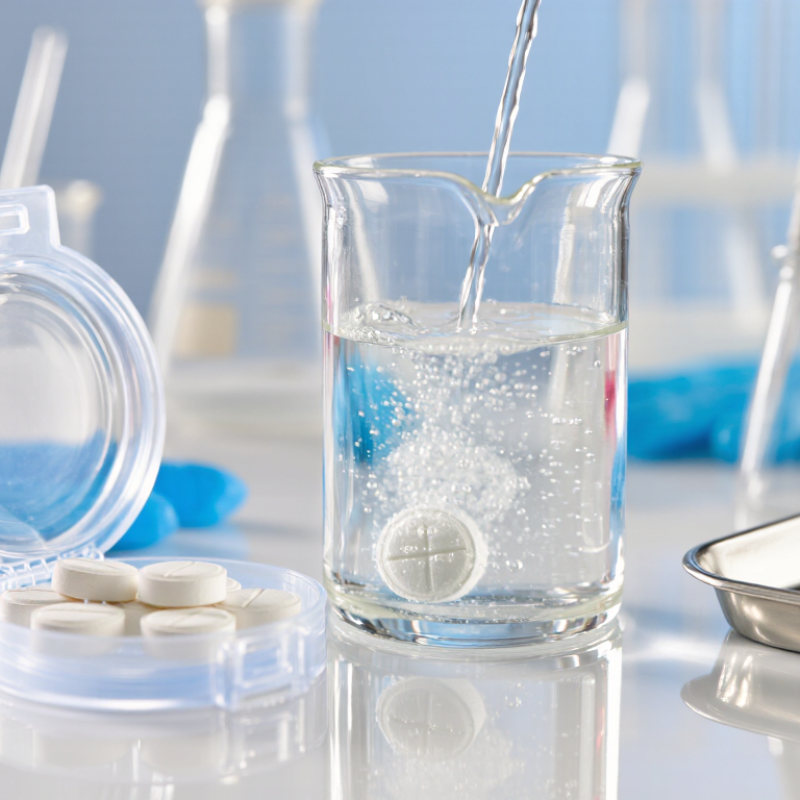
Bio sanitizer tablets are compact treatment products designed to support the breakdown of organic waste in places such as septic systems, portable toilets, and drains. Their formulas may contain selected microorganisms, enzymes, or both. The tablet dissolves in water and releases these ingredients, which act on organic material such as food residue and waste. Some products also contain other additives, so the word “bio” alone does not tell you exactly what is inside.
They are not automatically disinfectants. A tablet that helps digest waste should not be assumed to kill disease-causing germs or make water safe to drink. Check the product’s stated use and active ingredients. In a septic tank, for example, biological activity depends on conditions such as temperature, water flow, and the existing microbial community. Results can vary. The context matters: WHO/UNICEF’s Joint Monitoring Programme reported that 3.5 billion people lacked safely managed sanitation in 2022, underscoring the need for reliable sanitation systems. Tablets may support some systems, but they cannot replace proper containment, maintenance, or treatment. And the label can be confusing. A practical first step is to compare the tablet’s intended use with the system’s operating instructions.
| Aspect | Description | Practical note |
|---|---|---|
| What they are | Solid tablets intended to support biological treatment of organic waste. Depending on the product, they may contain selected microorganisms, enzymes, or both. | “Bio sanitizer” is not a single standardized product category; check the product label for its actual ingredients and intended use. |
| How they work | In a suitable, moist environment, microorganisms can break down some biodegradable material. Enzymes can help split particular organic compounds into smaller components that microbes may further process. | Performance depends on factors such as temperature, pH, oxygen availability, contact time, and the waste being treated. |
| Common applications | Some formulations are designed for septic systems, portable toilets, drains, or other waste-treatment settings. | Use a tablet only in the system and application specified by its manufacturer; products for one setting may not suit another. |
| What they may help with | When appropriately formulated and used, biological treatment products may support the breakdown of certain organic residues or help manage waste-system odors. | Results vary, and tablets are not a substitute for proper maintenance, cleaning, or professional servicing. |
| Not the same as a disinfectant | A biological waste-treatment tablet should not be assumed to kill bacteria, viruses, or other disease-causing organisms on surfaces or in water. | For disinfection or drinking-water treatment, use a product specifically labeled and approved for that purpose, following its directions. |
| Use and dosage | The required amount, placement, and treatment schedule differ by formulation and system size. | Follow the package directions. Do not infer a dose from another product or exceed the stated amount. |
| Compatibility and precautions | Some disinfectants, cleaning chemicals, or extreme environmental conditions may inhibit microbial activity, depending on the product and system. | Check label warnings before combining treatments. Keep tablets in their original packaging and follow the safety instructions. |
| Expected timing | Biological processes generally take time; any noticeable effect depends on the formulation, conditions, and the problem being addressed. | Do not expect instant sterilization, immediate odor removal, or a guaranteed repair of a blocked or failing system. |