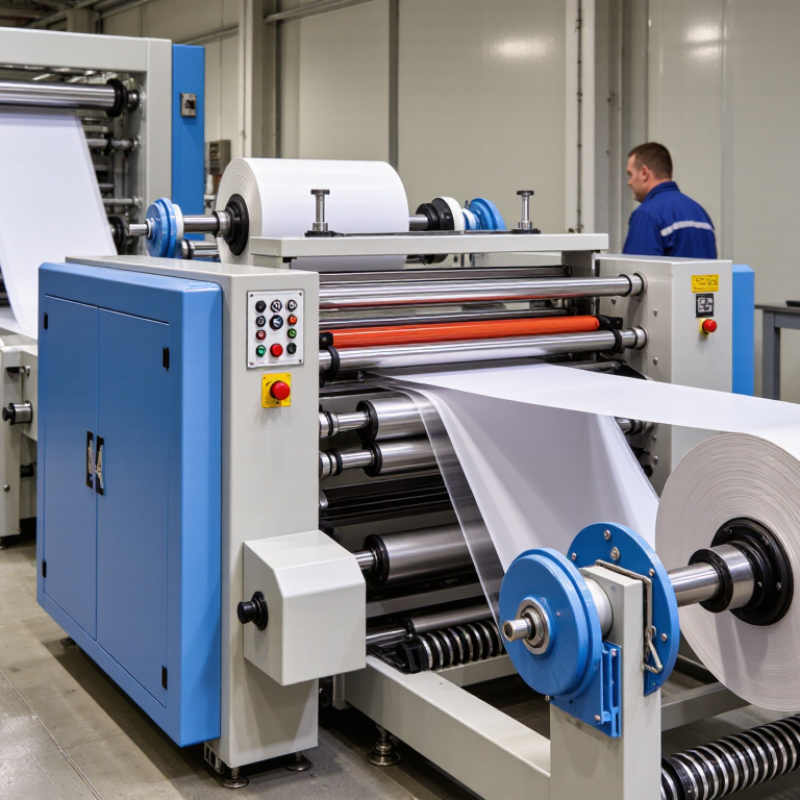
What Is the Best Scattering Laminating Machine in 2026?
Choosing the best Scattering Laminating Machine in 2026 depends less on a bold brochure claim than on the materials and work a shop handles each day. A machine that performs well on a narrow film may struggle with wider stock, uneven surfaces, or frequent product changes. Small details matter: adhesive spread, web tension, heat stability, working width, and the time needed for cleaning. A sample run can reveal more than a polished product photo.
This guide looks at how to compare machines using practical criteria, not a single “best” label. It considers operating speed alongside finish quality, setup demands, energy use, maintenance access, and the availability of technical support. Buyers should also check published specifications against their own materials and ask suppliers for trial results where possible. Real production conditions are rarely perfect. Dust, operator changes, and rushed adjustments can affect the finish, even on capable equipment. That matters. I would be cautious about any recommendation that ignores those variables or treats maximum speed as the only measure of value. The right choice should fit the intended workload, budget, and team experience, with clear documentation and support behind it. No machine is ideal for every line, and that is worth admitting before comparing models.
What Is a Scattering Laminating Machine?
What Is the Best Scattering Laminating Machine in 2026?
What Is a Scattering Laminating Machine?
A scattering laminating machine applies small particles, such as adhesive powder or decorative granules, across a sheet or web before bonding layers together. Depending on its design, it may use rollers or a metering system to control particle flow, followed by heat and pressure to secure the material. The finished surface can feel smooth, textured, or slightly raised. It is not one fixed machine type. The name can describe different processes, so check what materials and coatings a particular machine supports.
A typical setup includes a feeding section, a scattering unit, and a laminating or bonding stage. Operators adjust feed speed, particle coverage, temperature, and pressure to suit the substrate. Too much heat may distort thin film; uneven feeding can leave bare patches or clumps. Small changes matter. In practice, results depend on material consistency and careful calibration, not just the machine’s maximum speed. The terminology is not perfectly standardized, which can make comparisons confusing.
Tips: Ask for a trial using your actual substrate and particle size. Inspect coverage under bright light, then check adhesion after cooling. Record settings for repeat runs. If the sample looks good but peels easily, the process still needs adjustment.
How Does the Scattering and Lamination Process Work?
A scattering laminating machine spreads thermoplastic adhesive powder across a moving fabric or film. A vibrating feeder meters the powder, while a sieve helps create an even layer. Heat then softens or melts the adhesive. A second material meets the coated surface at a heated nip, where pressure bonds the layers. Cooling stabilizes the bond before the composite is wound or cut. Grand View Research estimated the global flexible packaging market at USD 261.5 billion in 2023, reflecting broad demand for layered materials. That figure does not predict demand for any single machine, but it shows why consistent bonding matters.
Tips: Check powder coverage under side lighting. Adjust feed rate and line speed together; changing only one can leave bare spots or create a stiff, heavy coating. Keep a sample from each trial. Small details matter.
In operation, temperature, powder size, substrate moisture, and nip pressure interact. Operators should validate settings with peel tests and visual inspection, not rely on the display alone. A glossy surface can look finished yet hide weak adhesion. That is easy to miss. Documenting each trial helps teams repeat useful settings, although different material batches may still behave differently. A short production run is often the honest test.
Which Features Define a High-Performance Machine in 2026?
A high-performance scattering laminating machine is defined by consistent coating, stable bonding, and controllable energy use—not peak speed alone. The U.S. Department of Energy’s Improving Motor and Drive System Performance sourcebook estimates that motor-driven systems use about 70% of industrial electricity. The IEA’s Energy Efficiency 2023 report puts industry at roughly 37% of global energy demand. These figures make efficient drives and standby controls worth checking, though they do not predict a machine’s actual consumption.
For adhesive-powder lines, inspect feeder accuracy, cross-web distribution, and temperature control across each heating zone. Ask for trial data showing coating-weight variation, line speed, and bond strength on your own material. A sharply printed control screen is not proof of repeatability.
Look for logged settings, accessible cleaning points, dust extraction, and a pressure nip that stays even across the working width. Small details matter. One compromise is common: higher speed may reduce the time available for melting and bonding, so test the real production recipe.
Tips: Request a sustained run, not a short demonstration. Weigh samples from both edges and the center, then check bonding after cooling. Record power use and changeover time, too; these are easy to overlook.
How Do Machine Types Compare Across Materials and Production Needs?
Choosing a scattering laminating machine starts with the bond, not the headline speed. Powder-scattering lines suit fabrics, nonwovens, and some foam laminations when a flexible bond matters. The scatter head applies hot-melt powder; an oven activates it, and a nip roller joins the layers. Fine powders can coat lightweight textiles evenly, but humidity or feed rate may cause drift and clogging. Film or web adhesive systems can provide steadier coverage on smooth, dense materials, though they may change softness or breathability. Different trade-offs.
For long runs, a continuous roll-to-roll line with adjustable width, oven zones, and nip pressure can reduce handling. Short orders with frequent material changes may favor a compact line and quick-clean scatter unit, even at lower output. Check the powder mesh, fabric weight, working width, and target coat weight against the machine’s stated range. Run your own samples. Inspect edges, peel strength, and hand feel after cooling, not just the fresh bond. No setting is universal; an uneven result may point to tension or heat issues rather than a faulty machine.
| What Is the Best Scattering Laminating Machine in 2026? - How Do Machine Types Compare Across Materials and Production Needs? A practical comparison of common powder-scattering and laminating configurations. The best choice depends on the substrate, adhesive, output format, and required production volume. | |||||
|---|---|---|---|---|---|
| Machine Type | Typical Process | Materials and Products | Production Fit | Main Advantages | Key Considerations |
| Batch or Flatbed Powder-Scattering Laminator | Hot-melt adhesive powder is applied to a cut sheet or panel, heated to activate or melt the adhesive, and bonded under pressure. | Suitable candidates can include textile panels, foam, nonwovens, and other sheet materials, provided the adhesive and heat are compatible with the substrate. | Low to medium volume Useful for samples, short runs, and varied sheet sizes. | Flexible for different jobs and relatively straightforward to set up for small batches. | Handling is often more manual than on a continuous line. Confirm that the material can tolerate the required heat and pressure. |
| Continuous Roll-to-Roll Powder-Scattering Line | Powder is metered onto a moving web, then heated and bonded through a continuous heating and pressure section. | Web-form materials such as compatible textiles, nonwovens, and selected flexible substrates; suitability depends on material width, thickness, and heat tolerance. | Medium to high volume Best suited to repeatable, long-run web production. | Continuous feeding can support consistent output and reduce repeated loading and unloading. | Requires stable web tension, even powder distribution, and coordinated line speed and heating. Changeovers may take longer than on batch equipment. |
| Powder Scattering with Separate Heating and Nip-Roll Bonding | Powder is scattered onto the substrate, heated in an oven or heating zone, and consolidated with a pressure roll or nip section. | Flexible webs and layered constructions where the selected adhesive can bond the materials without damaging them. | Medium volume Appropriate when process stages need independent adjustment. | Separate heating and bonding stages allow operators to tune thermal activation and pressure as distinct process variables. | Requires adequate line space and careful synchronization. Excessive heat or pressure can distort or mark sensitive materials. |
| Film-to-Substrate Roll Laminator | A pre-made adhesive or functional film is unwound, combined with the substrate, and bonded using heat and/or pressure. | Printed sheets, paper, compatible textiles, and other flat or web materials, depending on film construction and surface properties. | Medium to high volume Useful when a consistent film layer or surface finish is required. | Provides a controlled film layer and avoids loose-powder handling during the bonding step. | Film adds material cost and may not offer the same adhesive distribution or hand feel as a powder-based bond. Match film and substrate before production. |
| Adhesive-Coating and Laminating Line | Liquid or other coatable adhesive is applied to one surface, then the layers are brought together and bonded or cured. | Selected films, foams, textiles, paper, and composites, subject to adhesive chemistry, coating method, and substrate compatibility. | Medium to high volume Often chosen for continuous products with defined coating requirements. | Can provide controlled adhesive coverage and is adaptable to different coating patterns and layer combinations. | May require drying or curing equipment, ventilation, and additional process controls. Adhesive handling and cleanup differ from powder scattering. |
| Specialized Low-Temperature Laminating Configuration | A compatible low-temperature adhesive system is applied or supplied as a film, then bonded using a process designed to limit thermal exposure. | Heat-sensitive fabrics, foams, or coated materials may be candidates only when validated with the adhesive supplier and machine process. | Application-specific Useful when standard heat settings risk substrate damage. | Can reduce thermal stress on sensitive layers when the adhesive achieves adequate bonding at the chosen process conditions. | “Low temperature” does not guarantee compatibility. Verify bond strength, wash or use requirements, and substrate appearance through trials. |
Selection checklist: Test the actual substrate and adhesive together; confirm working width, line speed, powder or adhesive metering range, heating capacity, pressure control, changeover needs, and ventilation requirements. Production speed and bond quality vary with material construction, adhesive grade, and process settings, so request a representative material trial before choosing a machine.
What Factors Should Buyers Check Before Choosing a Model?
Before choosing a scattering laminating machine, check that its working width matches your material and planned batch sizes. Ask for a trial using your actual substrate and coating. Inspect the scatter pattern across the full web, especially at the edges. Uneven coverage is costly. Confirm adjustable feed rate, line speed, nip pressure, and temperature controls; these affect bonding and finish. A high advertised speed can look impressive, but it means little if the material wrinkles or the coating varies.
Smithers’ report The Future of Global Packaging to 2028 forecasts the market reaching about US$1.3 trillion by 2028. That growth makes reliable output and reduced material waste useful buying criteria, not just headline speed. Request measurable acceptance targets for coating weight, bond strength, and finished-product defects. Check whether operators can clean the scattering unit quickly, change settings without lengthy downtime, and access spare parts and technical support. Review safety guards and emergency stops in person. Details matter.
Tips: Bring a sample roll, record trial settings, and compare results across the center and edges. Ask for energy use per production hour. Keep one question open: can the machine handle your next material, not only today’s?
English
Česká republika
Deutsch
Dutch
Polska