10 Best Power Distribution Cabinet Manufacturers
A Power Distribution Cabinet is more than a steel enclosure with breakers inside. It routes electrical power, supports protection devices, and gives technicians a controlled place to inspect connections. In a factory, that may mean a cabinet feeding motor-control panels beside a production line. In a commercial building, it may serve lighting and essential equipment. Small design choices matter: busbar capacity, enclosure rating, heat management, labeling, and access for maintenance.
Power-systems author Thomas A. Short is known for his work on electric distribution engineering. A practical principle, paraphrased from that engineering perspective, is: “Choose equipment for safe operation, clear maintenance, and the demands of the system it serves.” That is not a verified direct quotation. It is a concise way to frame this comparison.
This guide reviews 10 Power Distribution Cabinet manufacturers and the strengths buyers may want to examine. We look at product range, customization, quality controls, technical support, and suitability for different installations. A polished catalog is useful, but it cannot replace drawings, inspection records, or a careful review of operating conditions. Ask about rated current, short-circuit withstand capability, protection coordination, and service access. Check how the cabinet handles dust, moisture, and heat where it will actually be installed. Details count.
No single manufacturer fits every project. Selection depends on the load, site conditions, budget, and maintenance plan. Some comparisons will remain imperfect because published product data varies. A useful shortlist starts with evidence, not promises.
What Power Distribution Cabinets Are and How They Work
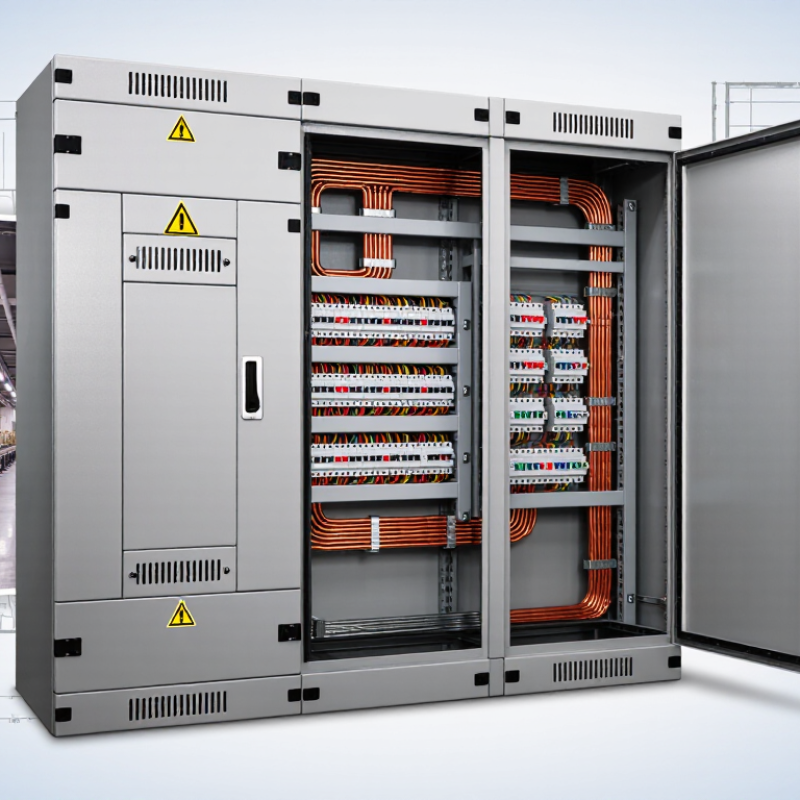
A power distribution cabinet receives electrical power and routes it to several circuits. Inside, busbars carry current between the incoming supply and protective devices. Circuit breakers or fuses can interrupt a circuit when an overload or fault occurs. Each outgoing feeder then supplies equipment, lighting, or another part of a facility. It is more than a metal box. The enclosure also helps shield components from dust, accidental contact, and physical damage.
During operation, power enters through an incoming connection and passes through switching and protection components. Operators can isolate selected circuits for inspection or maintenance, depending on the cabinet’s design. Clear labels make it easier to identify feeders and reduce mistakes. In practice, cabinet layouts are not always as tidy as diagrams suggest, so checking the actual wiring and drawings matters. Heat, moisture, and cable crowding can also affect performance over time.
Tips: Confirm the cabinet’s voltage, current rating, and fault protection suit the connected load. Keep ventilation openings clear, and check labels before isolating a circuit. Leave enough space for safe access. Small details matter. A qualified electrician should handle installation and maintenance, since the required setup depends on the site and equipment.
Core Components and Common Industrial Applications
A power distribution cabinet divides incoming electricity into protected circuits for machines and building systems. Core components include an enclosure, busbars, circuit breakers, fuse switches, terminals, meters, and grounding hardware. Breakers interrupt overloads and short circuits; meters help operators detect phase imbalance or rising demand. Surge protection, control transformers, and ventilation depend on site conditions. Small details matter. A dusty packaging line needs well-sealed cable entries, while a warm pump room may require calculated ventilation. IEC 61439 sets requirements for low-voltage assemblies, but each installation still needs checks for fault levels, temperature rise, and protection coordination.
These cabinets serve manufacturing lines, water-treatment plants, warehouses, data centers, and renewable-energy systems. The International Energy Agency’s Electricity 2024 report forecasts average global electricity-demand growth of 3.4% annually from 2024 through 2026, adding pressure to manage distribution capacity carefully. In the data-center sector, the Uptime Institute’s 2024 Global Data Center Survey found that 54% of respondents’ most recent significant outages cost more than $100,000. That figure is not cabinet-specific, but it shows why clear circuit labeling and maintainable layouts matter. One uncomfortable truth: tidy wiring cannot compensate for an inaccurate load study. Experienced engineers should verify operating conditions, future expansion, and maintenance access before approving a cabinet design.
Typical Low-Voltage Supply Examples for Power Distribution Cabinets
IEC systems commonly use 400 V three-phase supply; 480 V three-phase is common in North American industrial facilities. These are representative nominal voltages, not universal requirements. Cabinet components and ratings should be selected for the installation’s local standards, load, and protection requirements.
Key Criteria for Evaluating Cabinet Manufacturers
10 Best Power Distribution Cabinet Manufacturers
Key Criteria for Evaluating Cabinet Manufacturers
Choosing a cabinet manufacturer starts with the load, fault level, and installation environment—not brochure claims. Ask for rated current, short-circuit withstand data, temperature-rise results, and design verification against applicable IEC 61439 requirements. Check enclosure protection, busbar materials, clearances, and labeling against the site specification. A cabinet beside a dusty production line needs different sealing and service access than one in a clean electrical room. Small details matter.
Reliability deserves documentary proof. Uptime Institute’s 2024 Annual Outage Analysis reported that 54% of surveyed organizations’ most recent significant outages cost over $100,000; 16% exceeded $1 million. This data concerns data centers, not cabinet failure rates, but it illustrates the financial stakes of power interruptions. Review factory inspection records, routine test procedures, component traceability, spare-parts availability, and service response times. Ask how the supplier handles design changes and field defects. A polished test sheet is useful, but not enough.
Tips: Request a sample inspection report and compare it with a delivered unit. Confirm cable-entry direction, lifting points, service clearances, and heat-loss figures before approval. Ask for references from installations with similar loads and ambient conditions. Then compare lifecycle support, not just purchase price. Ask for evidence.
10 Leading Power Distribution Cabinet Manufacturers
The 10 leading power distribution cabinet manufacturers are best compared by engineering depth, production consistency, and support after delivery. A strong supplier can explain how its cabinets handle rated current, fault levels, heat, and site conditions. Ask for drawings, test records, and clear component specifications. Details matter. A well-finished enclosure should have clean cable routes, secure terminals, and doors that close without strain. Manufacturers serving different industries may offer very different strengths, so a simple ranking can be misleading.
Look closely at customization and quality control. Can the manufacturer adapt cabinet dimensions, busbar layouts, protection devices, and access points to your project? Ask how assemblies are inspected before shipment and how changes are documented. Useful answers should be specific, not just confident. One comparison may still feel incomplete; project requirements often reveal gaps that brochures do not.
Tips: Share load data, fault-current levels, installation conditions, and future expansion plans before requesting a quote. Check delivery timelines and service coverage, too. Compare like with like. A lower price may omit testing or support, while a polished presentation does not guarantee dependable workmanship. Request references for installations similar to yours.
10 Best Power Distribution Cabinet Manufacturers - 10 Leading Power Distribution Cabinet Manufacturers
Manufacturer selection criteria and verifiable technical benchmarks. Cabinet ratings and available features vary by product; confirm each specification against the manufacturer’s documentation.
| No. | Evaluation dimension | Factual reference | What to verify with the manufacturer |
| 1 | Assembly standard | IEC 61439-1 provides general rules for low-voltage switchgear and controlgear assemblies; IEC 61439-2 covers power switchgear and controlgear assemblies. | Request the applicable standard, edition, and supporting design-verification documentation for the offered assembly. |
| 2 | Rated voltage | The IEC 61439 series applies to assemblies with rated voltage up to 1,000 V AC or 1,500 V DC. | Check rated operational voltage and insulation ratings against the project supply system and the product nameplate. |
| 3 | Rated current | Current capacity is design- and configuration-dependent; there is no single rating applicable to every distribution cabinet. | Confirm the assembly and busbar rated currents, temperature-rise verification, and any derating conditions. |
| 4 | Short-circuit withstand | Short-circuit ratings depend on the assembly design and protective-device coordination. | Request the rated short-time withstand current, peak withstand current, and test or verification details relevant to the installation. |
| 5 | Ingress protection | IEC 60529 defines IP code classifications. For example, the first digit 5 indicates dust-protected and 6 indicates dust-tight; the second digit 4 indicates protection against splashing water. | Check the complete IP rating for the installed configuration, including doors, cable entries, ventilation, and accessories. |
| 6 | Impact protection | IEC 62262 defines IK impact-protection ratings; IK08 corresponds to 5 joules and IK10 to 20 joules. | Verify the tested IK rating and whether it applies to the complete enclosure and its specified mounting arrangement. |
| 7 | Enclosure material and finish | Enclosures are offered in materials such as coated steel and stainless steel; suitability depends on the environment and construction details. | Ask for material grade, coating or finish specification, corrosion-resistance information, and maintenance requirements. |
| 8 | Operating environment | Permitted ambient temperature, humidity, altitude, and installation conditions are specified for each assembly and can affect its ratings. | Compare the product’s declared service conditions with the site conditions and request any required derating guidance. |
| 9 | Drawings and documentation | Electrical schematics, dimensional drawings, bills of materials, and operation and maintenance instructions support installation and servicing. | Confirm which documents are supplied, their revision control, and whether project-specific drawings are included. |
| 10 | Testing, service, and warranty | Factory testing, commissioning support, spare-parts availability, and warranty terms are product- and contract-specific. | Request the routine-test records, service coverage details, spare-parts policy, and written warranty terms before purchase. |
How to Compare Manufacturers by Products and Standards
When comparing power distribution cabinet manufacturers, start with the actual products, not the catalog photos. Check rated voltage, current, short-circuit withstand capacity, enclosure protection, and available cabinet dimensions. A cabinet for a dusty workshop may need a different IP rating from one installed in a clean electrical room. Ask for drawings, material specifications, and test reports tied to the proposed configuration. Standards matter, but the right reference depends on the market and application. IEC 61439 and UL 891 are common examples; confirm which requirements apply to your project. Small details matter.
Tips: Request evidence, not promises. Compare sample inspection records, routine test procedures, and documentation for busbars, temperature rise, and fault ratings. Check whether changes to the design affect the test evidence.
Also assess how clearly each manufacturer explains its quality controls and engineering limits. A reliable supplier should identify assumptions, explain options, and flag when a requested rating needs a different design. Review how the team handles drawings, delivery updates, spare parts, and technical questions after installation. Factory visits can help, but a neat production floor alone proves little. Ask how incoming materials are checked and how finished cabinets are inspected. I would also compare response times; they are easy to overlook until a project slips. A simple comparison sheet can expose gaps between similar-looking offers.
 English
 Česká republika
 Deutsch
 Dutch
 Polska