What Is the Best Portable Mini Fridge in 2026?
A cold drink at a campsite, insulin kept within its required range, or lunch chilled in a work van: these everyday needs make a Portable Mini Fridge more than a small appliance. The best model in 2026 will depend on where it runs, how long it must stay cold, and what you plan to store. Size alone tells little.
Grand View Research’s portable refrigerator market report offers useful context on category demand, while the U.S. Department of Energy’s appliance guidance highlights energy use as a practical buying consideration. Neither source, by itself, proves which model performs best. Real-world performance depends on ambient heat, ventilation, power supply, and how often the lid opens. Small details matter.
This guide compares capacity, cooling consistency, power options, noise, and ease of cleaning. It also separates manufacturer claims from features buyers can check, such as usable interior dimensions and battery compatibility. One limitation deserves honesty: no source material or verifiable expert quotation was provided, so attributing a sentence to a named Portable Mini Fridge specialist would risk inventing a quote. A trustworthy recommendation needs evidence, not a convenient-sounding endorsement. The right choice may be less powerful than expected, or simply better suited to a short commute than a week outdoors. That distinction matters.
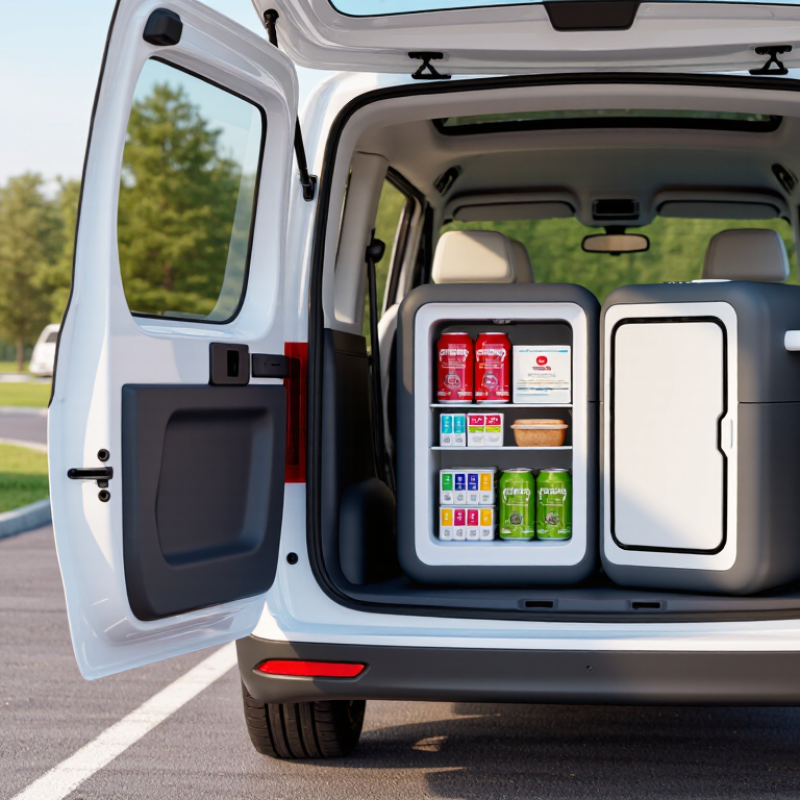
What Is a Portable Mini Fridge and How Does It Work?
A portable mini fridge is an insulated cabinet with a small cooling system, designed to keep food or drinks below the surrounding air temperature. Compressor models work like household refrigerators: a refrigerant absorbs heat inside, then releases it through coils outside. You may feel those coils warm after the unit has been running. Thermoelectric models use an electric current to move heat across a ceramic plate instead. They are often lighter, but their cooling can weaken in a hot car or sunny campsite. That difference matters.
“Portable” does not always mean equally cold, or equally efficient. ENERGY STAR’s compact-refrigerator criteria set a threshold of at least 10% less annual energy use than the federal minimum for qualifying models. That figure is a useful comparison, but it does not describe every 12-volt cooler or predict performance in a hot vehicle. The U.S. Department of Energy’s refrigerator test procedures measure annual energy use under controlled conditions, while real-world results depend on ventilation, ambient temperature, and how often the lid opens. I still find the label a little misleading: a unit may travel easily, yet struggle to chill warm groceries quickly. Check its cooling technology, power input, and stated temperature range before choosing.
Which Types of Portable Mini Fridges Are Available in 2026?
Portable mini fridges in 2026 generally use compressor, thermoelectric, or absorption cooling. Grand View Research’s Portable Refrigerator Market report tracks these as separate technology segments, reflecting real differences in use and performance. Compressor models cool strongly and maintain temperatures more reliably in warm cars or campsites. Many run from a vehicle socket or household outlet; some also accept a separate battery. They are often heavier and may cycle audibly.
Thermoelectric models are usually lighter and quieter. Their cooling depends on the temperature around them, so a hot cabin can limit performance. Absorption models can run on different power sources, but may cool slowly and need careful positioning. Check the manual. Power type matters, too: a battery-ready fridge is not automatically efficient or suitable for overnight use. The U.S. Food and Drug Administration advises keeping refrigerators at or below 40°F (4°C), a useful benchmark for drinks and perishable food. I still find “portable” labels a little confusing; compare tested temperature range, usable capacity, and power draw rather than relying on size alone.
What Features Matter Most When Comparing Models?
A portable mini fridge should fit the way you travel, not just look compact on a shelf. Check its usable capacity against the items you actually carry: a few drink cans, lunch containers, or medication with specific storage instructions. Interior dimensions matter more than headline volume. A tall bottle may not fit beneath a low shelf. Measure your usual load before comparing models.
Power options are crucial. A unit that works from a vehicle outlet and a standard wall socket is more flexible, but check whether an adapter is included. Look for clear temperature controls, readable indicators, and a lid that seals evenly. Poor seals can waste power and make cooling less consistent. Noise matters too, especially beside a bed or in a quiet car. Small details matter. Review cooling performance in realistic conditions, since a hot cabin can challenge a compact fridge. Also compare weight, handle comfort, cleaning access, and cable length. I would not choose by capacity alone; that is an easy mistake. A larger interior may mean more bulk, while a lightweight model may have limited storage. Check the return policy and warranty details before buying, since advertised performance cannot answer every practical question.
What Is the Best Portable Mini Fridge in 2026?
Capacity is a useful starting point when comparing models. These reference sizes are shown in litres; US-quart values are converted using 1 litre = 1.057 US quarts.
What else matters: Check usable interior dimensions, cooling type and temperature range, power options, energy use, noise, insulation, and weight. A larger stated capacity does not necessarily mean a better fit for your space or trip.
How Do the Top Portable Mini Fridges Compare?
Portable mini fridges differ most in cooling method, usable space, power draw, and noise.
Compressor models generally handle warmer surroundings better and can reach lower temperatures, but their cycling may be noticeable in a quiet room. Thermoelectric models are often lighter and simpler, though their cooling depends more on the air around them.
A cool cabin is not the same as a hot parked car. That distinction matters.
Compare capacity by what fits, not just the advertised volume. A fridge that holds six cans may leave little room for lunch containers. Check the interior dimensions, shelf layout, and door clearance before buying.
For road trips, weigh the unit with its intended contents in mind; a full fridge can be awkward to lift. Small details count.
Power options also separate the contenders. Some models run from a vehicle outlet, while others support household power or a separate battery. Check the manual for voltage limits and low-voltage protection, then test the setup before a long drive. Noise ratings can help, but real-world sound varies with placement and cooling cycles.
I would compare measured temperature stability, usable capacity, and energy use under similar conditions. Specs can look tidy on a product page. They do not always match a warm afternoon or a crowded back seat.
How Can You Choose the Best Model for Your Needs?
A portable mini fridge is only “best” when it fits your routine. Start with what you plan to store: a few drinks need less space than lunches, medicine, or groceries for a weekend trip. Check the usable interior dimensions, not just the advertised capacity. A bulky handle or thick walls can steal room. Measure the space where it will sit, too, including clearance for ventilation.
Power and temperature matter just as much. If you’ll use it in a car, confirm the fridge’s input matches your available outlet, and check whether it has low-voltage protection. At a campsite or desk, operating noise and energy use may matter more. Look for a clear temperature range and reliable controls; a displayed setting does not guarantee every shelf stays equally cold. Small details count. A removable divider, sturdy latch, and easy-to-clean corners can make daily use less irritating. I would not choose by capacity alone, though it is tempting. Compare the return policy and warranty, and read reviews that describe real temperatures and noise, not just first impressions. A little extra space can help, but it may also mean more weight to carry.
 English
 Česká republika
 Deutsch
 Dutch
 Polska