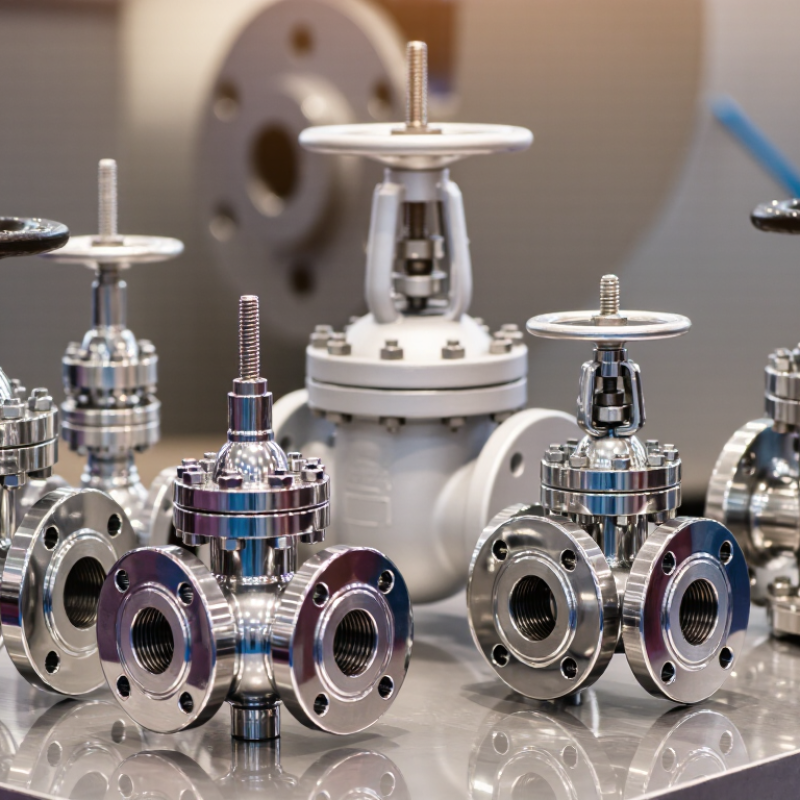
7 Best Chrome Plated Valve Manufacturers for Global Buyers
Choosing a dependable Chrome Plated Valve manufacturer requires more than comparing prices or polished product photos. Global buyers need evidence of manufacturing experience, stable quality control, and practical support after delivery. This guide introduces seven manufacturers that deserve closer evaluation for industrial, commercial, and specialized valve applications.
Our review considers material selection, chrome plating consistency, pressure performance, dimensional accuracy, and production capacity. It also examines certifications, inspection procedures, customization options, packaging, lead times, and communication quality. A valve may look bright and smooth, yet surface appearance alone cannot confirm corrosion resistance or service reliability. Technical documents matter. So do test records.
Each featured manufacturer is assessed from a buyer’s perspective. We look for clear specifications, traceable production information, responsive engineering teams, and realistic claims. Factory audits, sample testing, and reference checks remain valuable before placing a large order. This is especially important when valves will operate in humid plants, exposed pipelines, or systems with frequent pressure changes.
There is no universal best choice. A supplier serving water treatment may not fit a high-cycle industrial project. Some manufacturers may offer excellent customization but longer delivery times. Others may provide faster production with fewer finishing options. These trade-offs should be discussed openly.
A careful review can reduce avoidable purchasing risks. Still, no article can replace independent verification. Treat this list as a practical starting point, not a final decision. The strongest supplier is the one that consistently matches your technical requirements, budget, compliance expectations, and long-term maintenance plans.
What Chrome-Plated Valves Are and Why Global Buyers Choose Them
Chrome-plated valves are industrial valves with a chromium layer applied to selected surfaces, such as stems, balls, plugs, or internal passages. The coating can improve surface hardness, reduce friction, and slow corrosion in demanding service. It also creates a smooth finish that helps limit residue buildup during operation.
Global buyers often choose these valves for water systems, process equipment, compressed air lines, and selected chemical applications. A well-applied chrome layer may extend service life where repeated movement causes wear. It can also support more predictable maintenance and reduce unplanned replacement. Smooth surfaces matter. They are easier to inspect and clean.
Chrome is not a magic shield. Its performance depends on coating thickness, adhesion, base material, temperature, pressure, and fluid compatibility. Buyers should request material certificates, coating inspection records, pressure-test results, and traceable production data. Independent testing can reveal pores, weak bonding, or uneven coverage before installation. These details are easy to overlook.
Experienced procurement teams compare total service value, not only purchase price. They check machining accuracy, seal quality, delivery consistency, and technical support across regions. Some environments may require another coating or stainless construction instead. That choice deserves careful review. A reliable valve should match the actual medium, operating cycle, and maintenance conditions, not just a polished appearance.
7 Best Chrome Plated Valve Manufacturers for Global Buyers
What Chrome-Plated Valves Are and Why Global Buyers Choose Them
Chrome-plated valves use a hard-chrome surface layer on selected valve components to improve wear resistance, surface hardness, and service life in demanding applications. The chart compares the standardized ASME pressure-class designations commonly considered when selecting industrial valves. Actual allowable pressure depends on valve material, temperature, size, and design.
ASME pressure classes are designation values rather than universal pressure ratings. Buyers should verify pressure-temperature limits, plating specifications, corrosion conditions, sealing materials, and applicable regional standards before purchasing.
Key Standards for Evaluating Chrome-Plated Valve Manufacturers
Selecting chrome-plated valve manufacturers requires more than comparing prices and catalog photographs. Global buyers should examine production experience, engineering capability, and documented quality controls. A reliable manufacturer can explain valve design limits, plating methods, and inspection procedures in clear technical language. Vague answers deserve attention.
Material traceability is a practical benchmark. Ask for heat numbers, alloy certificates, and inspection records linked to each batch. Chrome thickness should be measured at several points, especially around threads, corners, and sealing areas. Adhesion testing and corrosion testing can reveal weaknesses hidden beneath a bright surface. The finish should look consistent, not merely attractive.
Pressure testing is equally important. Request records showing test medium, pressure, holding time, and acceptance criteria. Manufacturers should maintain calibrated gauges and controlled testing equipment. Relevant certifications, quality systems, and export documentation also support supplier credibility. However, paperwork alone proves little. During an audit, inspect storage conditions, machining areas, and rejected parts. Dusty packaging or mixed components may indicate careless handling. A polished brochure can still hide uneven process control. I have found that small production details often reveal more than impressive claims. No evaluation is perfect. Recheck critical evidence before approving a long-term supplier.
Seven Leading Chrome-Plated Valve Manufacturers and Their Strengths
Seven leading chrome-plated valve manufacturers stand out through different technical strengths. Manufacturer One focuses on precision machining, producing smooth stems and consistent sealing surfaces. Manufacturer Two is known for corrosion-resistant plating, especially for humid plants and outdoor pipelines. Manufacturer Three offers compact ball valves with low operating torque. This matters in frequent-cycle systems.
Manufacturer Four specializes in heavy-duty gate valves for water, energy, and process equipment. Manufacturer Five combines chrome plating with hardened stainless components, improving wear resistance around the stem.
Manufacturer Six provides flexible customization, including connection sizes, actuator options, and temperature ratings. Manufacturer Seven emphasizes inspection discipline, using coating-thickness checks, pressure testing, and batch traceability.
Practical experience shows that plating alone does not guarantee service life. Poor surface preparation can cause early flaking. That detail is easy to miss. Buyers should review material certificates, test records, and coating specifications before approval. A reliable supplier also explains limits clearly instead of promising universal performance. Ask about salt-spray exposure, working media, temperature cycles, and replacement parts. Factory audits can reveal whether inspection is routine or only documented afterward. Some manufacturers may offer excellent prices but weaker technical support. That trade-off deserves attention. Supplier selection should match the valve’s actual duty, not only its catalog appearance.
Product Quality, Customization, Certifications, and Production Capabilities
7 Best Chrome Plated Valve Manufacturers for Global Buyers
The best chrome plated valve manufacturers prove quality through repeatable testing, not polished brochures. Buyers should request pressure-test records, coating-thickness reports, and material certificates for each production batch. A smooth chrome surface matters, but adhesion matters more. Poor adhesion can cause peeling around threads, seats, or sharp edges. Manufacturers with ISO 9001 systems usually offer clearer inspection procedures and traceability. Still, certification alone cannot replace factory evidence.
Customization should match the operating environment. Ask about valve size, connection type, sealing material, pressure rating, temperature range, and chrome thickness. A capable supplier can provide drawings, samples, and controlled revisions before mass production. Strong production facilities often combine CNC machining, surface treatment, assembly, and final testing under one system. This can reduce delays and dimensional errors. However, stated capacity may not equal available capacity during peak seasons. Confirm monthly output, lead times, backup equipment, and inspection staffing.
Tips: Request a sample valve before signing a large order. Inspect threads, handle movement, coating uniformity, and leakage performance. Compare test results with your specifications, not only with the supplier’s claims. Ask for recent audit records and customer references where possible. A factory may appear technically strong but communicate poorly. That weakness can become expensive after customization begins. Build a written approval process, because small assumptions often create large production problems.
| Profile | Primary Product Focus | Chrome Plating and Material Options | Nominal Size and Pressure Range | Customization Capability | Quality Control and Testing | Common Certifications and Compliance | Production Capability and Lead Time |
|---|---|---|---|---|---|---|---|
| A | Chrome-plated ball valves for industrial fluid control | Hard chrome-plated carbon-steel or stainless-steel balls; corrosion-resistant stems; PTFE, graphite, or reinforced-seat options | DN15–DN300 Class 150–600 PN16–PN100 | Bore selection End connections Actuator mounting Private labeling | 100% shell and seat-pressure testing; dimensional inspection; coating thickness and adhesion checks; material certificates available | ISO 9001 quality systems; API 6D or equivalent design requirements where applicable; EN 10204 inspection documentation | Medium-to-high batch production; standard orders commonly shipped within 4–8 weeks after approval |
| B | Chrome-plated hydraulic valves and high-wear control components | Chrome-plated alloy-steel spools, plungers, and stems; optional electroless nickel or nitrided surfaces for selected applications | Hydraulic ports from 1/4 to 2 inches Working pressure up to approximately 350 bar, depending on design | Spool geometry Seal compounds Port configuration Surface hardness | Surface roughness measurement; hardness testing; leakage testing; cycle testing for custom hydraulic assemblies | ISO 9001; ISO 14001 may be available; RoHS and REACH declarations for export programs when required | Flexible production for OEM orders; prototype or sample tooling generally requires additional engineering time |
| C | Chrome-plated gate, globe, and check valves for oil, gas, and process piping | Chrome-plated trim and stems; forged or cast carbon steel, stainless steel, and alloy-steel body options | DN25–DN600 Class 150–1500 Temperature range determined by body, trim, and seal selection | Trim combinations Bonnet design Drain and vent options Actuation | Hydrostatic shell testing; seat leakage testing; PMI for alloy materials; NDE options such as dye penetrant or radiography | ISO 9001; API 600, API 602, API 6D, or ASME requirements depending on product type and project specification | Suitable for project-based manufacturing; typical engineered orders require 6–12 weeks including inspection documentation |
| D | Chrome-plated valves for chemical processing and corrosive media | Stainless-steel and duplex-steel bodies; hard chrome, nickel-based coating, or specialized trim selected according to media compatibility | DN15–DN250 PN10–PN63 Pressure and temperature limits depend on chemical service conditions | Wetted materials Lining options Seal selection Clean-service preparation | PMI and chemical composition verification; coating thickness inspection; vacuum or pressure leak testing; surface-finish inspection | ISO 9001; ATEX or IECEx documentation may be available for applicable hazardous-area assemblies; REACH and RoHS support | Small-to-medium production batches; custom material approvals can extend delivery to approximately 8–14 weeks |
| E | Chrome-plated compact valves for water treatment, utilities, and general industry | Chrome-plated brass, stainless-steel, or carbon-steel trim; EPDM, NBR, PTFE, and FKM sealing options | DN15–DN200 PN10–PN40 Threaded, flanged, grooved, and wafer configurations | Connection standard Handle and lever design Color coding Packaging | Pressure testing on finished units; visual inspection; torque testing; batch traceability for key components | ISO 9001; drinking-water approvals may include WRAS, NSF, ACS, or equivalent, subject to the exact material and market | High-volume standard production; common stock items may be available in 2–4 weeks, while customized batches require longer |
| F | Chrome-plated pneumatic and automated valve packages | Chrome-plated stems and internal wear surfaces; stainless-steel or aluminum actuator packages; PTFE and elastomer seal choices | Valve sizes typically DN15–DN300 Pneumatic supply commonly 3–8 bar Pressure class based on valve construction | Pneumatic actuators Electric actuators Positioners Solenoid valves | Functional cycling; air leakage testing; actuator torque verification; fail-open, fail-close, and fail-in-place checks | ISO 9001; CE marking support; ATEX, SIL, or IECEx documentation where the complete assembly is certified for the application | Assembly-based production with moderate customization; standard actuator packages often require 3–7 weeks |
| G | Chrome-plated valves for mining, heavy equipment, and abrasive-service applications | Thick hard-chrome wear surfaces; alloy-steel stems, balls, and sleeves; optional tungsten-carbide or carbide-enhanced trim | Application-specific sizes from approximately DN25–DN500 Pressure ratings commonly PN16–PN100 or equivalent | Abrasion-resistant trim Heavy-duty body Special coatings Replacement parts | Coating hardness and thickness testing; dimensional checks; pressure testing; endurance or abrasive-media testing when specified | ISO 9001; project compliance may include API, ASME, EN, or customer-specific engineering standards | Low-to-medium volume engineered production; lead times typically range from 8–16 weeks for specialized wear-resistant designs |
How to Compare Suppliers and Select the Right Global Partner
Global buyers need more than a polished catalog when comparing chrome-plated valve manufacturers. They need evidence of consistent performance, clear communication, and dependable after-sales support. A useful comparison begins with the valve’s operating pressure, temperature range, media compatibility, and installation environment. Then review chrome thickness, surface uniformity, corrosion resistance, and sealing performance. Ask for inspection records, material certificates, pressure-test reports, and production photos. Look closely.
For each of the seven candidates, compare lead times, minimum order quantities, customization limits, packaging methods, and warranty terms. A reliable supplier should explain its quality process without hiding behind vague claims. Factory audits, sample testing, and video inspections can reveal more than a sales presentation. Check whether production records are traceable from raw material to final shipment. Relevant quality certifications are useful, but they do not replace independent verification. One overlooked detail is communication after payment. Delayed replies can become costly during urgent replacements.
Tips: Request identical samples from shortlisted manufacturers and test them under the same conditions. Record leakage, torque, coating appearance, and packaging damage. Ask how rejected units are handled. A strong partner welcomes specific questions and documents corrective actions.
However, no manufacturer is perfect. Even an experienced buyer can overvalue a low price or attractive finish. Recheck assumptions before signing a long-term agreement, especially when delivery schedules or technical specifications remain unclear. Reliability is built through repeated results, not promises.
English
Česká republika
Deutsch
Dutch
Polska